scip-wyrhta, m.n: a shipwright, builder of ships. (SHIP-WUER-h’ta / ˈʃɪp-ˌwyrx-ta)

scip-wyrhta, m.n: a shipwright, builder of ships. (SHIP-WUER-h’ta / ˈʃɪp-ˌwyrx-ta)
ge-monian, wk.v: to admonish, exhort, remind. (yeh-MO-nee-yan)
mǣl, n.n: a measure; a mark, sign, cross, crucifix; fixed, suitable, appointed time, season, occasion; the time for eating, a meal. (MAL)
sǣ-fōr, f.n: a journey by sea, a voyage. (SA-vor)
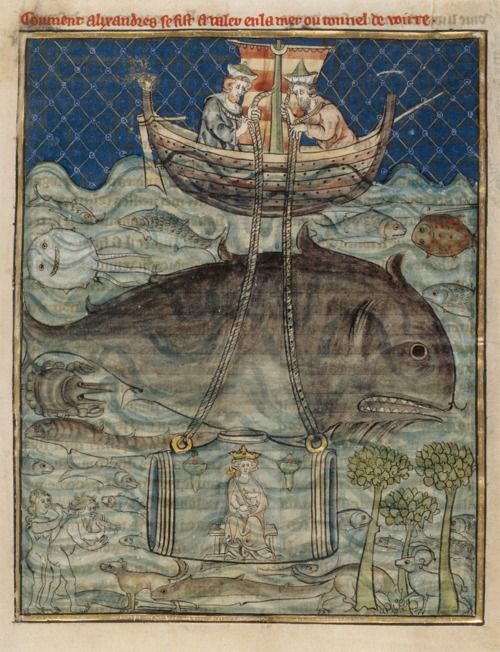
Alexander the Great inside a glass barrel lit by two oil lamps. Miniature from Histoire du bon roi Alexandre. France, 14th century. [pinterest.co.uk]
gyrstan-dæg, m.n: yesterday. (YUER-stahn-DAIE / ˈjyr-stan-ˌdæj)
hǣlu-tīd, f.n: a time of well-being, a happy time. (HA-lu-teed)
This week’s Wordhord Wednesday post is about the spear-leek. Read it on Patreon.
fǣmne, f.n: a virgin, damsel, maid, woman. (FAM-neh)
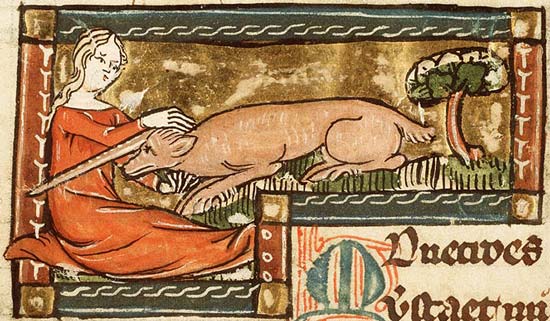
Jacob van Maerlant’s Der Naturen Bloeme. Flanders, c. 1350. Hague, Koninklijke Bibliotheek, KB, KA 16, f. 63r. [bestiary.ca]
hēafod-wōþ, f.n: the voice (lit. head-sound). (HAY-ah-vod-WOATH)
sciccels, m.n: a cloak, mantle. (SHIH-chells)
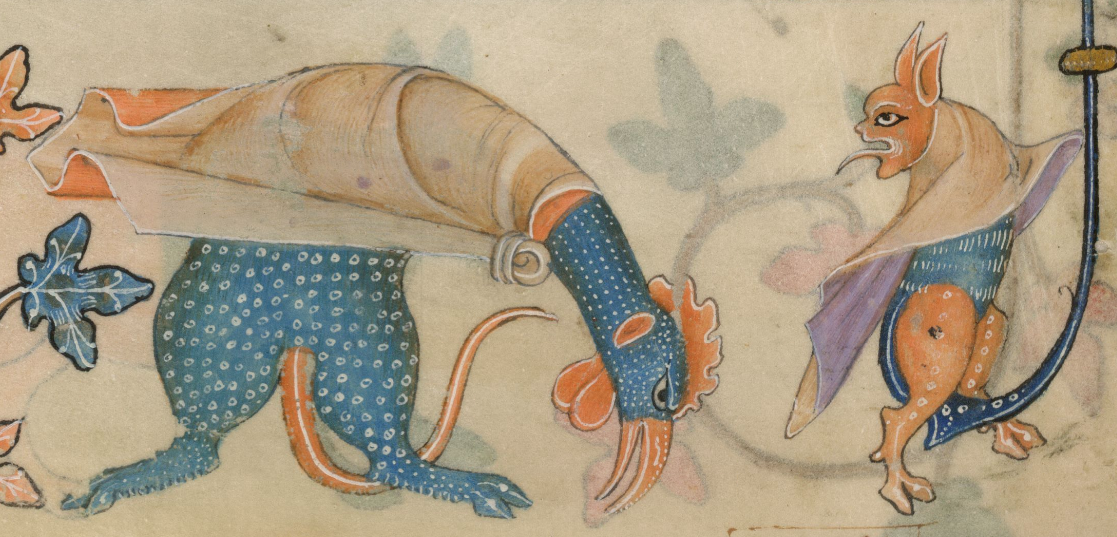
The Luttrell Psalter. England (Lincolnshire), 1325-1340. British Library, Add MS 42130, f. 156v. [bl.uk]
gār-lēac, n.n: garlic. (GAR-LAY-ock / ˈgaːr-ˌleːak)
 Old English Wordhord