niht-wacu, f.n: a night-watch. (NIHT-wah-koo)
milisc
milisc, adj: honeyed, sweet, mellow, (of drink) mulled. (MILL-ish)
It’s the 100th week of Wordhord Wednesday! To celebrate I’m making post #100 free for everyone to read, whether or not you’re a subscriber. Read about Apollonius, harp-master extraordinaire, on Patreon.
hearpe-streng
hearpe-streng, m.n: a harp-string. (HAY-ar-peh-STRENG)
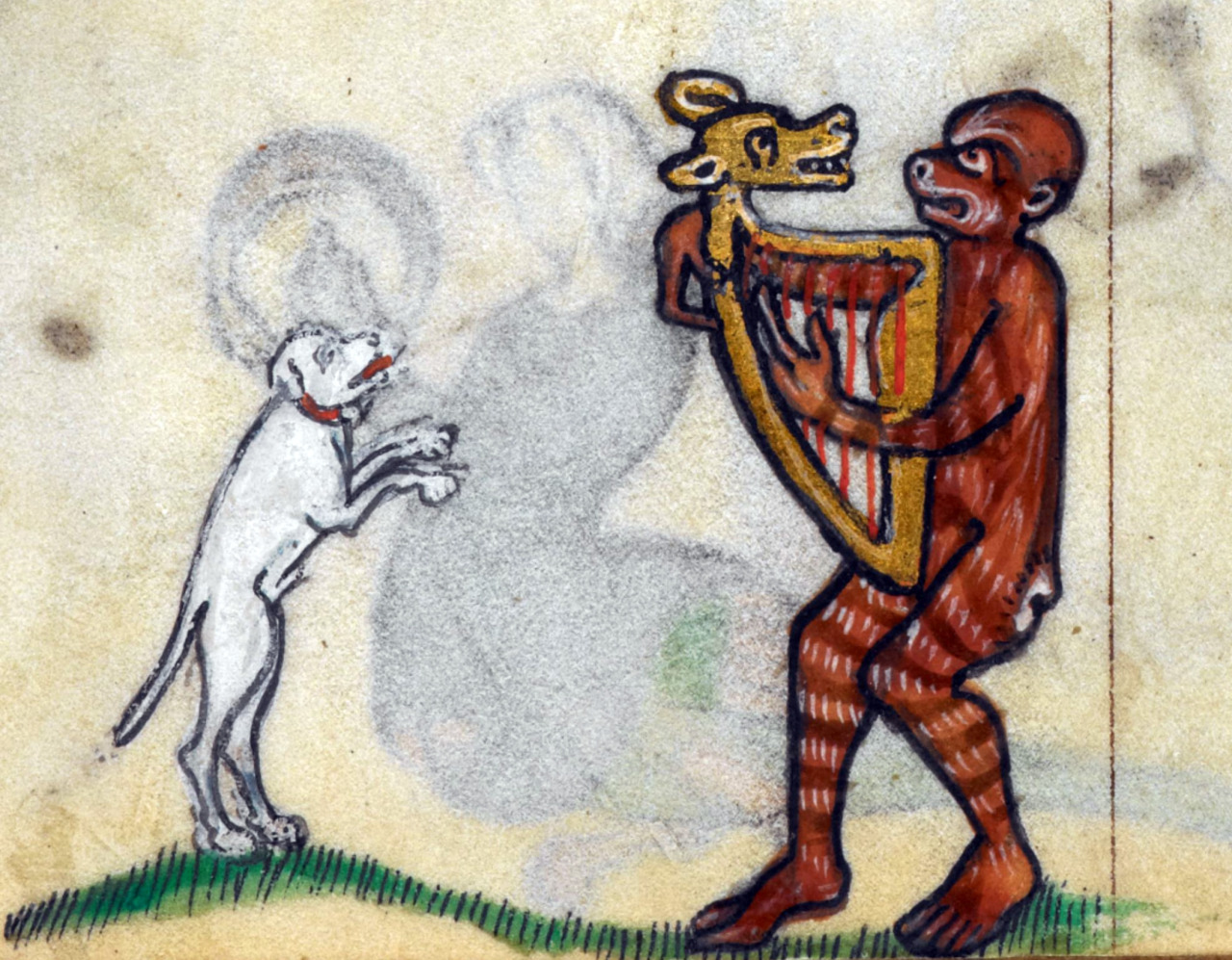
The Maastricht Hours. Netherlands (Liège), 1st quarter of the 14th century. British Library, Stowe MS 17, f. 245r. [bl.uk]
cweðs ðū lā
cweðs ðū lā, interjection: Oh, you say! (KWETHS-thoo-LA / ˈkwɛθs-θuː-ˌlaː)
swinsung-cræft
swinsung-cræft, m.n: music. (SWIN-zung-KRAFT)
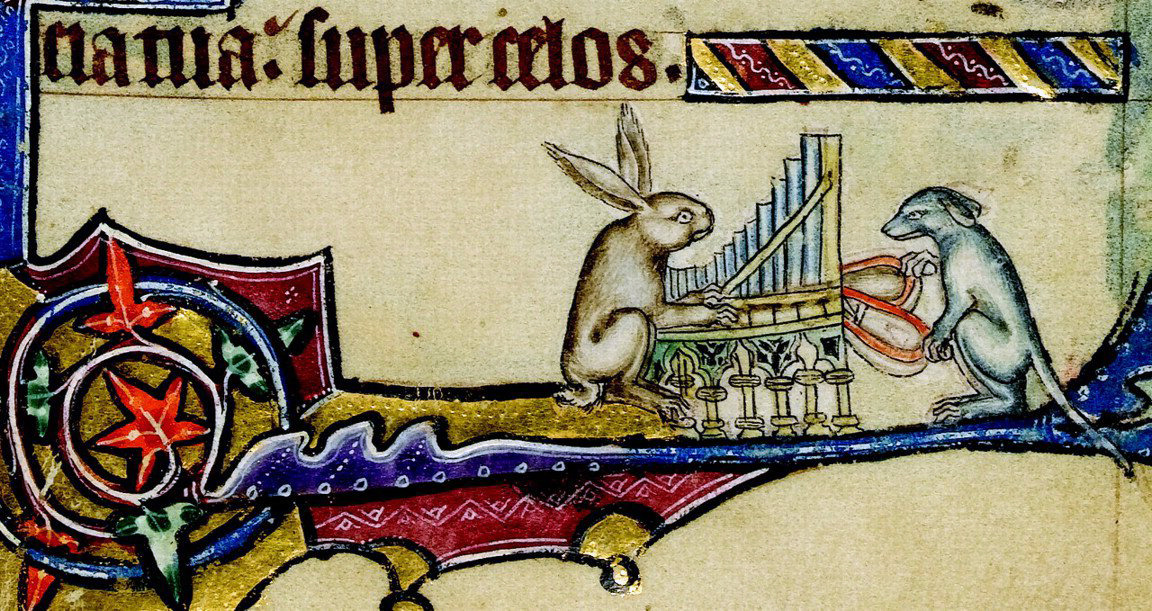
A rabbit plays the pipe-organ as a dog works the bellows. The Macclesfield Psalter. England (East Anglia), c. 1330-1340. Cambridge, Fitzwilliam Museum, MS 1-2005, f. 15r. [fitzwilliam.cam.ac.uk]
wār
wār, n.n: seaweed; sand, strand. (WAHR)
sulh
sulh, n/f.n: a plough; the quantity of land which could be cultivated with one plough. (SULH)
fald-gang
fald-gang, m.n: fold-going, putting sheep in fold to manure the land. (FALD-gong)
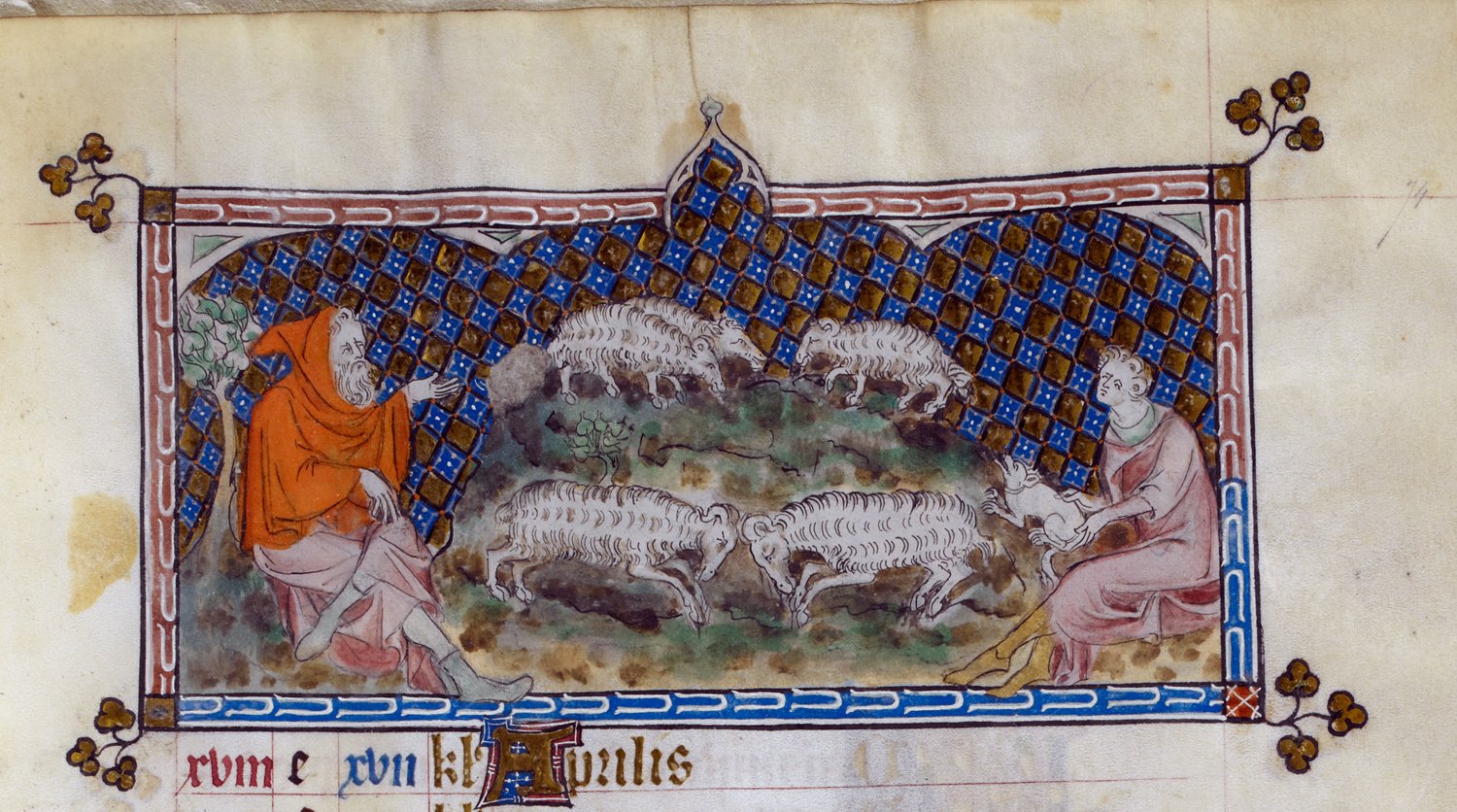
The Queen Mary Psalter. England, between 1310 and 1320. British Library, Royal 2 B VII, f. 74. [bl.uk]
gāst-berend
gāst-berend, m.n: a spirit-bearer, soul-bearer, living person, man. (GAHST-beh-rend)
This week’s Wordhord Wednesday post is on the many meanings of mæl. Read it on Patreon.
fierd
fierd, f.n: an army, force, expedition. (FYERD)
 Old English Wordhord