wracnian, wk.v: to be or travel in a foreign country, be a pilgrim or stranger. (WRACK-ni-ahn / ˈwrak-nɪ-an)
frox
frox, m.n: a frog. (FROKS)
This week’s Wordhord Wednesday post is on medieval frogs. Read it on Patreon.

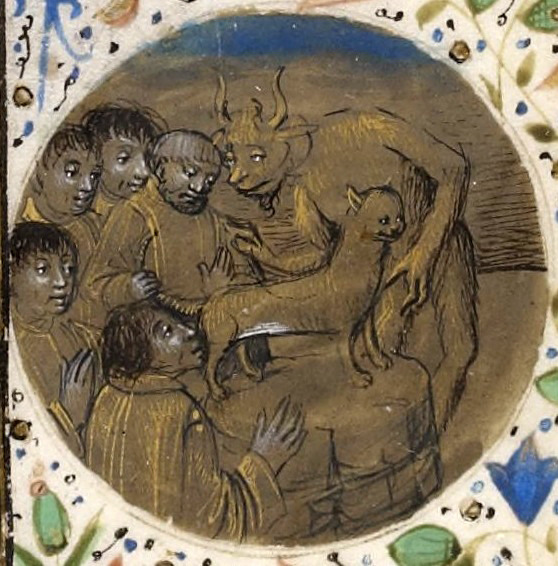
Institutes of Justinian. France, 15th century. Montpellier, Bibliothèque interuniversitaire, Section Médecine, H 418, f. 23v. [discardingimages.tumblr.com]
enge
enge, adj: narrow, anxious. (EN-yeh)
wyrt-geard
wyrt-geard, m.n: kitchen garden. (WUERT-YEH-ard / ˈwyrt-ˌjɛard)
mēdren
mēdren, adj: maternal, (of lineage) on the mother’s side. (MAY-dren)

Book of Hours. France (Angers or Nantes), c. 1440. New York, Morgan Library, MS. M.63, f. 65r. [ica.themorgan.org]
steding-līne
steding-līne, f.n: a rope that supports a mast, a stay. (STEH-ding-LEE-neh)
met-cund
met-cund, adj: metrical. (MET-KUND)
cū-cealf
cū-cealf, n.n: a cow’s calf. (KOO-CHEH-alf / ˈkuː-ˌtʃɛalf)

wind-sele
wind-sele, m.n: a windy hall. (WIND-sell-eh)
This week’s Wordhord Wednesday post is about butterflies. Read it on Patreon.
un-gedēfe
un-gedēfe, adj: troublesome, disagreeable. (un-yeh-DAY-veh)