hearpere, m.n: a harper. (HAY-arp-eh-reh)
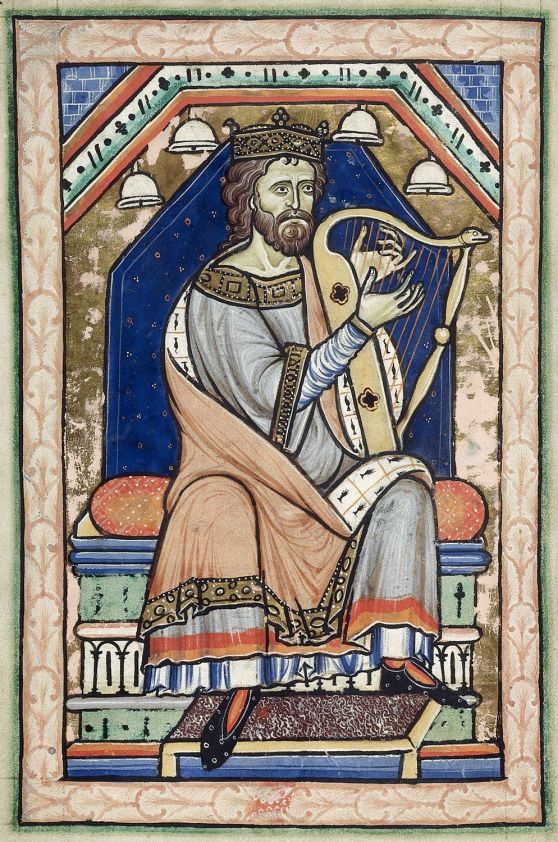
David playing the harp in the Westminster Psalter. S. England (Westminster or St Albans), c. 1200. British Library, Royal 2 A XXII, f. 14v. [bl.uk]
hearpere, m.n: a harper. (HAY-arp-eh-reh)
David playing the harp in the Westminster Psalter. S. England (Westminster or St Albans), c. 1200. British Library, Royal 2 A XXII, f. 14v. [bl.uk]
hlēoðrian, wk.v: to sound, make a sound (with the voice), to speak, sing, cry, exclaim, resound. (HLAY-oth-rih-yahn)
ciris-æppel, m.n: a cherry. (CHIR-iz-APP-ell)
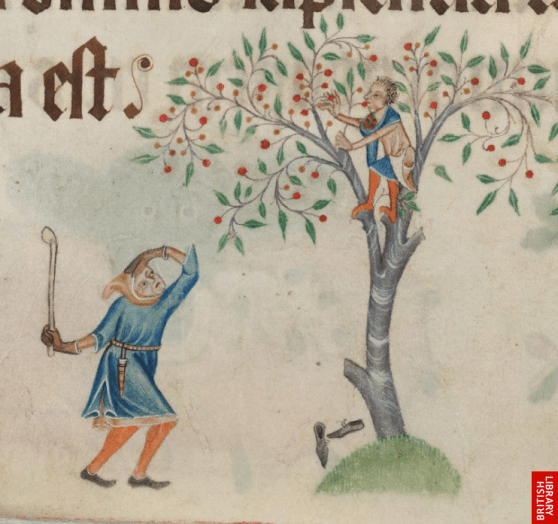
A boy stealing cherries from a tree. The Luttrell Psalter. Northern England (Lincolnshire), 1325-1340. British Library, Add MS 42130, f. 196v. [bl.uk]
ealo-wǣge, n.n: ale-cup. (AY-ah-lo-WÆ-yeh)
This week’s Wordhord Wednesday post is about Judith, the clever, sword-wielding beauty who saved her people. Read it on Patreon.
ofer-mǣte, adj: beyond measure, excessive, immoderate, immense. (OH-ver-MAT-eh)
mēowle, f.n: a maid, damsel, virgin, woman. (MAY-oh-leh)
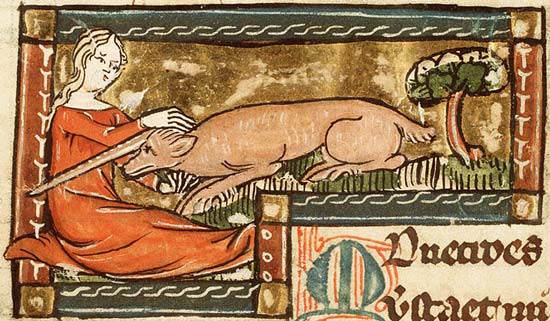
A unicorn resting its head in a maiden’s lap. Most depictions of this scenario have a hunter stabbing the poor unicorn but in this image we can imagine the two are simply good friends. Jacob van Maerlant’s Der Naturen Bloeme. Flanders, c. 1350. Hague, Koninklijke Bibliotheek, KB, KA 16, f. 63r. [bestiary.ca]
hār-wenge, adj: hoary, grey-haired. (HAR-WENG-guh / ˈhaːɹ-ˌwɛŋ-gə)
sǣ-burh, f.n: a maritime town. (SÆ-burh)
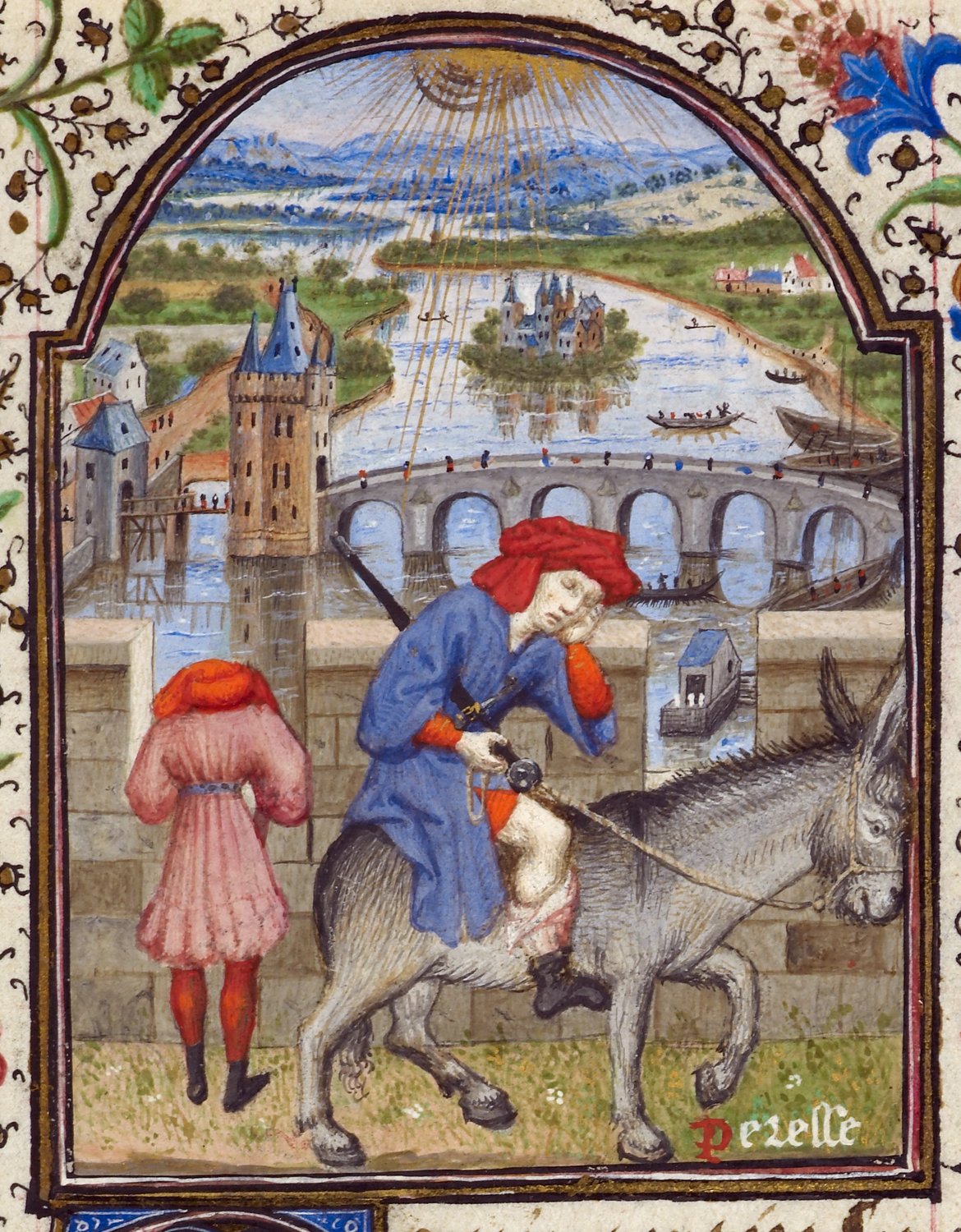
A man riding on a donkey, head in hand, across a bridge, as a personification of Idleness (Peresse). The Dunois Hours. Central France (Paris), c. 1440 – c. 1450 (after 1436). British Library, Yates Thompson 3, f. 162r. [bl.uk]
bēcn, n.n: a sign, beacon. (BAKE-n)
Patrons, you have one week to send me your requests for Goldgifa Week! Find out more on Patreon.
wracnian, wk.v: to be or travel in a foreign country, be a pilgrim or stranger. (WRACK-ni-ahn / ˈwrak-nɪ-an)
 Old English Wordhord