weoloc-rēad, adj: of the red colour that is got from the weoloc (a kind of shellfish or whelk), scarlet, purple. (WEH-ol-ock-RAY-ahd / ˈwɛɔ-lɔk-ˌɹeːad)

weoloc-rēad, adj: of the red colour that is got from the weoloc (a kind of shellfish or whelk), scarlet, purple. (WEH-ol-ock-RAY-ahd / ˈwɛɔ-lɔk-ˌɹeːad)
weoloc, m.n: a kind of shell-fish, a whelk, cockle; also the dye obtained from such fish. (WEH-ol-ock / ˈwɛɔ-lɔk)
lyb, n.n: medicine, drug. (LUEB / ˈlyb)
gellan, str.v: to yell, sing, chirp. (YELL-ahn)
snacc, f.n: a swift-sailing vessel. (SNAWK / ˈsnak)
lytel, adj: little. (LUE-tell / ˈly-tɛl)
wyrmǣte, adj: worm-eaten. (WURM-at-teh)
This week’s Wordhord Wednesday post is on St Andrew’s thoughtful speech. Read and hear it on Patreon.

A sumptuously-dressed noble lady in a tomb with coats of arms, while below her skeleton is devoured by worms and insects. A Carthusian miscellany of poems, chronicles, and treatises. A Yorkshire or Lincolnshire Carthusian monastery (Axholme, Mountgrace or Kingston-upon-Hull?), 1460-1500. British Library, Add MS 37049, f. 32v. [bl.uk]
hēah-fæst, adj: very fixed (lit. “high-fast”). (HAY-ah-vast)
frēond-lēas, adj: friendless. (FRAY-ond-LAY-ahs)
It’s Goldgifa Week, which means some of the words are chosen by Wordhord patrons. Find out more on Patreon.
Goldgifa Avren Keating says, “I’ve heard there’s no word for ‘lonely’ in Old English and Middle English, is this true? I figure something like nabban-cynne could work?”
I’d never thought about this before, but I think that’s true of Old English. There are words like ān-floga (lone flier) and ān-stapa (lone wanderer), but I can’t think of an adjective that specifically means “lonely” or “loneliness”. I like the idea of nabban-cynne (or perhaps næbbende-cynne would be more grammatical?). I think the closest word that actually exists in extant Old English literature is frēond-lēas, friendless. Cynn-lēas would mean kin-less, but it doesn’t appear in extant literature so there’s no proof it was used.
Any thoughts on this?
Thanks, Avren, for the interesting question!
hearpestre, f.n: a female harper. (HAY-arp-est-reh)
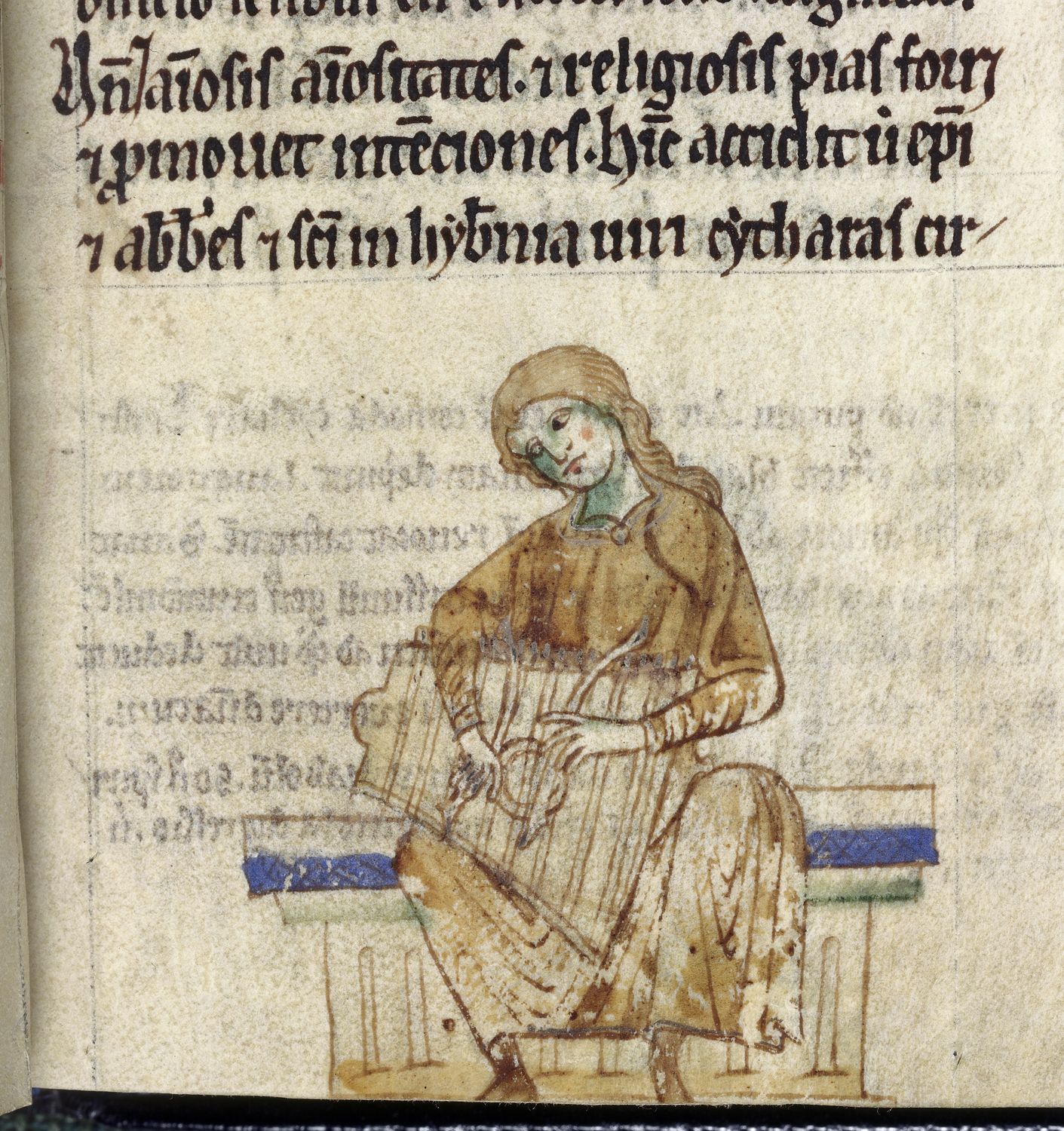
A woman playing a harp. Gerald of Wales’s Topographia Hiberniae. England, N. (Lincoln?), c. 1196-c. 1223. British Library, Royal 13 B VIII, f. 26r. [bl.uk]
 Old English Wordhord