ge-hæg, n.n: enclosed piece of land. (yeh-HAIE / jɛ-ˈhæj)
āscian
āscian, wk.v: to ask, question, interrogate; to learn, find out by inquiry. (AH-ski-on)
mete-awul
mete-awul, m.n: a meat-hook, flesh-hook (a culinary tool used to retrieve large chunks of meat from cooking pots). (MEH-teh-AH-wul)
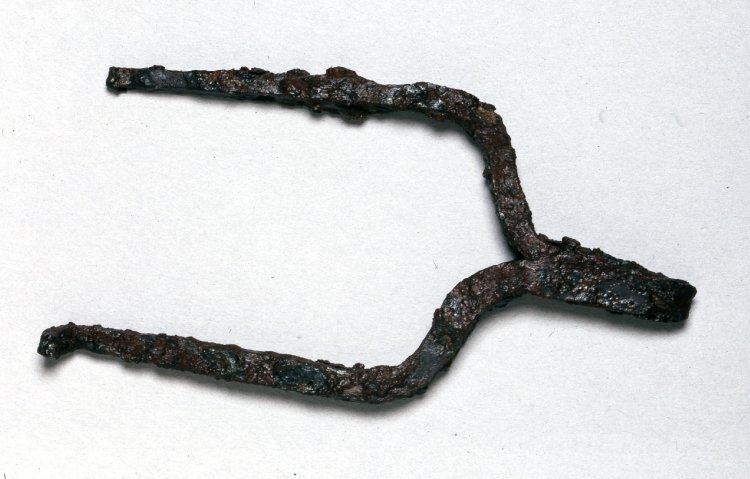
Anglo-Saxon iron flesh-hook. Northumbria (England), 9th-10th century. British Museum 1995,0901.20. [britishmuseum.org]
wiþer-breca
wiþer-breca, m.n: an adversary. (WITH-er-BREH-ka / ˈwɪ-θɛɹ-ˌbɹɛ-ka)
This week’s Wordhord Wednesday post is on the gloomy word rēonig. Read it on Patreon.
scēawend-wīse
scēawend-wīse, f.n: a jesting song, song of a jester. (SHAY-ah-wend-WEE-zeh)
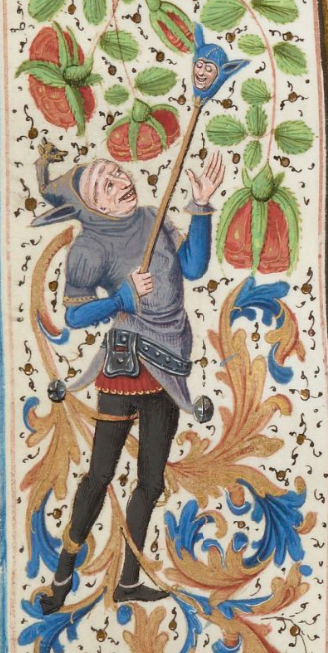
Chroniques sire Jehan Froissart. France, 15th century. Bibliothèque nationale de France, Département des manuscrits, Français 2643, f. 312v. [gallica.bnf.fr]
styrman
styrman, wk.v: (of weather) to storm, rage; (of persons) to storm, make a great noise, cry aloud, shout. (STUR-mon)
fregen-seldlic
fregen-seldlic, adj: very strange, very wonderful. (FRAY-yen-SELD-lich)
hǣmed-ceorl
hǣmed-ceorl, m.n: a married man. (HAM-ed-CHAY-orl)
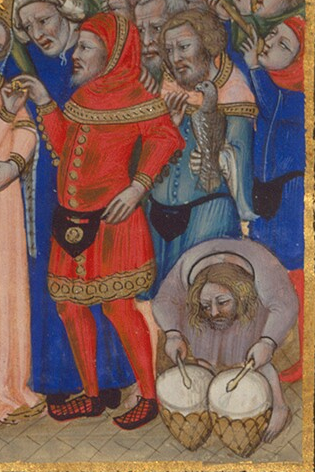
Detail of groom. Miniature on vellum by Niccolò di Giacomo da Bologna, 1350s. Washington, DC, Rosenwald Collection 1961.17.5. [nga.gov]
hǣmed-wīf
hǣmed-wīf, n.n: a married woman. (HAM-ed-WEEF)
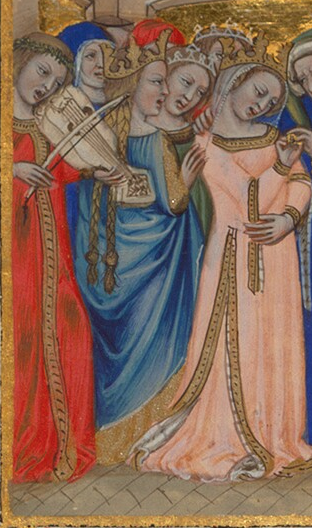
Detail of bride and musicians. Miniature on vellum by Niccolò di Giacomo da Bologna, 1350s. Washington, DC, National Gallery of Art, Rosenwald Collection 1961.17.5. [nga.gov]
rēonig
rēonig, adj: mournful, sad, gloomy, weary. (RAY-oh-neeγ)
 Old English Wordhord