mǣg-lagu, f.n: law regulating the duties and responsibilities of kinsmen, e.g. in the matter of paying or receiving certain parts of the wergild (‘man price’) if one of their number slew or was slain. (MAG-lah-goo)
gorst-bēam
gorst-bēam, m.n: a bramble. (GORST-BAY-ahm)
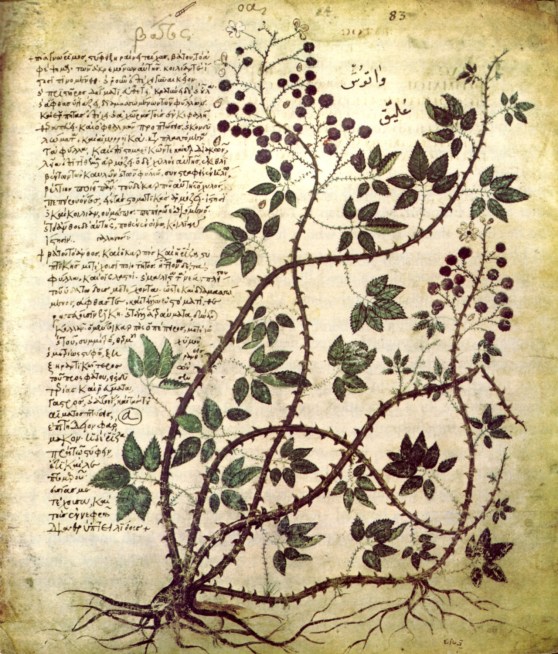
Bramble in the Vienna Dioscurides. Constantinople (Byzantine Empire), c. 515. Vienna, Österreichische Nationalbibliothek, Codex Vindobonensis med. gr. 1, f. 83r. [commons.wikimedia.org]
ge-neahhe
ge-neahhe, adv: enough, sufficiently, abundantly, frequently, very much, earnestly, instantly. (yeh-NAY-ah-heh)
regol
regol, m.n: a rule; pattern, standard, norm; a canon, prescript; the body of rules which guide a particular order of ecclesiastics. (REH-gol)

St Benedict handing his disciple St Maurus his Rule. Nîmes, 1129. British Library, Add MS 16979, f. 21v. [bl.uk]
bēcniendlīce
bēcniendlīce, adv: allegorically or by parable. (BAKE-ni-end-LEE-cheh)
fēa
fēa, m.n: joy. (FAY-ah / ˈfeːa)
wræc-lāst
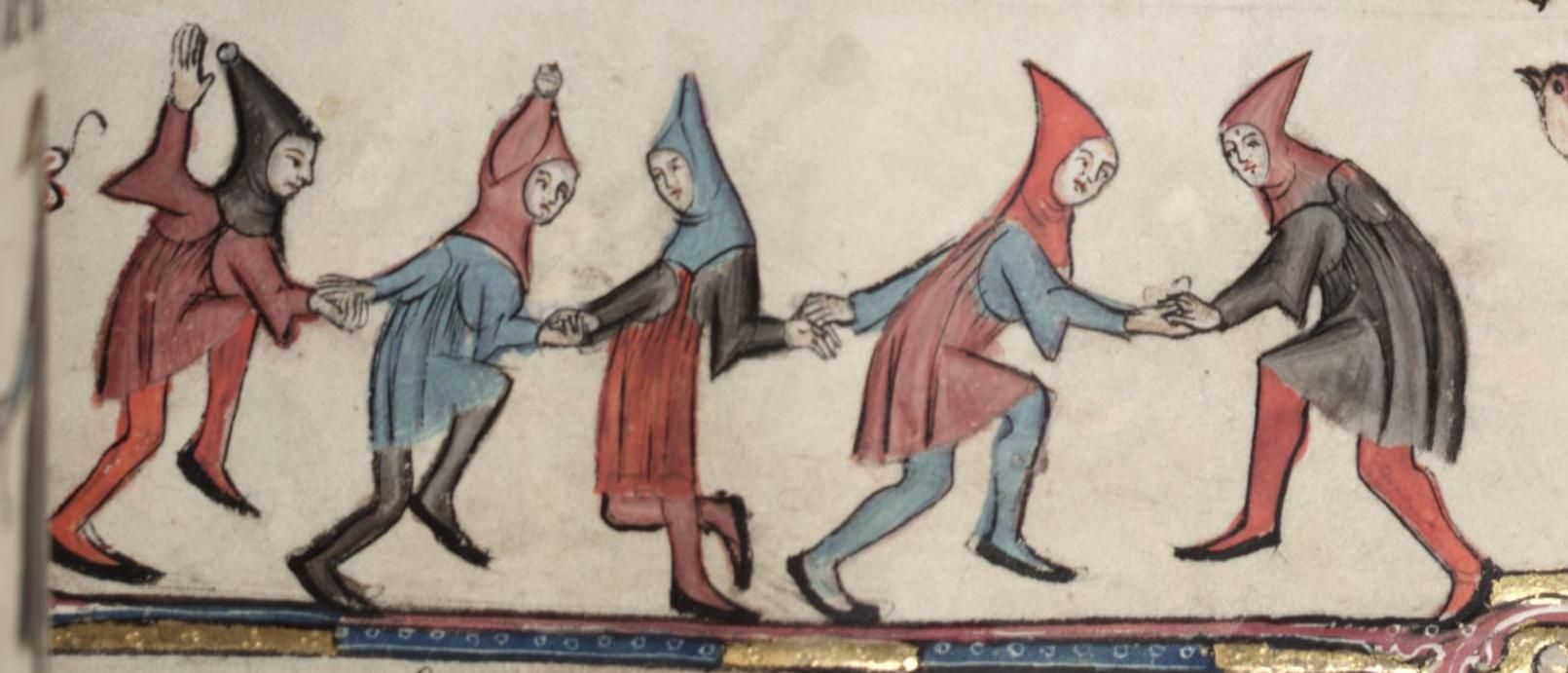
wræc-lāst, m.n: the track of an exile. (WRACK-lost)
This week’s Wordhord Wednesday post is about the medicinal properties of dog drool and other medieval hund facts. Read it on Patreon.
cirio-mangung
cirio-mangung, f.n: church-mongering, the sale or purchase of ecclesiastical offices, simony. (CHIR-ee-oh-MAHN-gung)
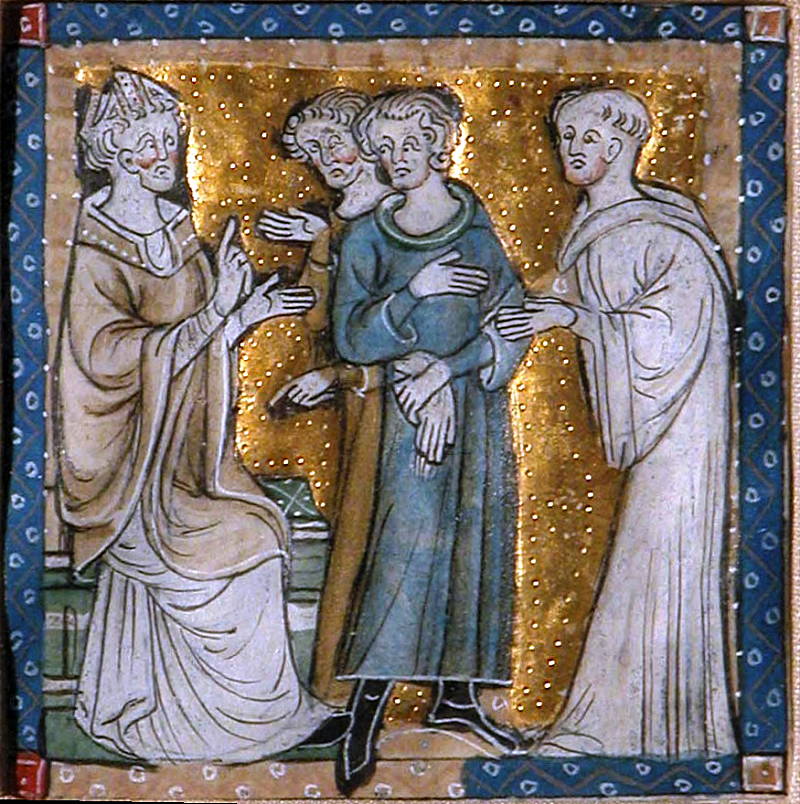
A bishop accused of simony by two fornicators. Miniature on a cutting from a leaf from Gratian’s Decretum (Causa VI), attributed to an artist of the Milemete group. 67 × 66 mm. England, c. 1320-1330. Apparently stolen: if you see (or have seen) it, please contact info@samfogg.com. [mssprovenance.blogspot.com]
hund
hund, m.n: hound, dog. (HUND / ˈhʌnd)

hrēow-līce
hrēow-līce, adv: miserably, cruelly, grievously; in a way to excite pity. (HRAY-oh-LEE-cheh)
 Old English Wordhord