gristbātian, wk.v: to gnash the teeth. (GRIST-BAH-tee-ahn)
nīþ-gæst
nīþ-gæst, m.n: a malicious, malignant demon / stranger / guest / foe). [NEETH-gast]
This week’s Wordhord Wednesday post is about peace-candles. Read it on Patreon.
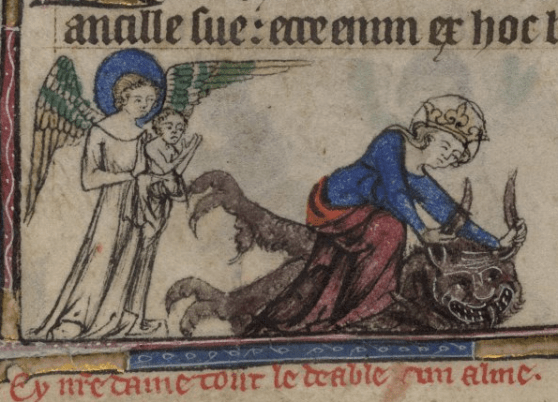
The Virgin Mary beats up a devil; an angel carrying a rescued soul observes. The Taymouth Hours. England (London?), 14th century. British Library, Yates Thompson 13, f. 155v. [bl.uk]
scīn-lǣce
scīn-lǣce, f.n: a woman who practises magic, a sorceress. (SHEEN-LATCH-eh)
hell-waru
hell-waru, f.n: the body of the inhabitants of hell. (HELL-WA-ruh)
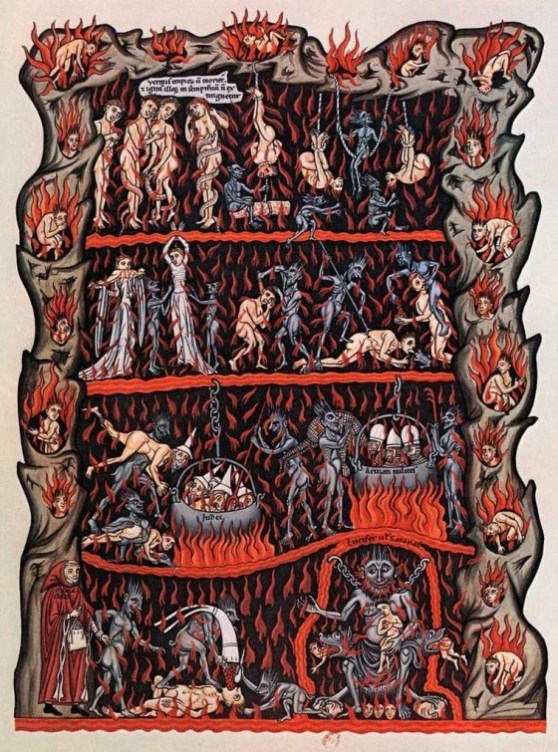
Hell. Hortus deliciarum (Garden of Delights), an illuminated manuscript by the nun Herrad of Landsberg. France (Alsace), c. 1130-1195. Public Domain. [wikipedia.org]
friþ-candel
friþ-candel, f.n: ‘peace-candle’, the sun. (FRITH-KAHN-dell / ˈfrɪθ-ˌkan-dɛl)
gūþ-floga
gūþ-floga, m.n: one that flies to battle, a dragon. (GOOTH-FLO-ga)
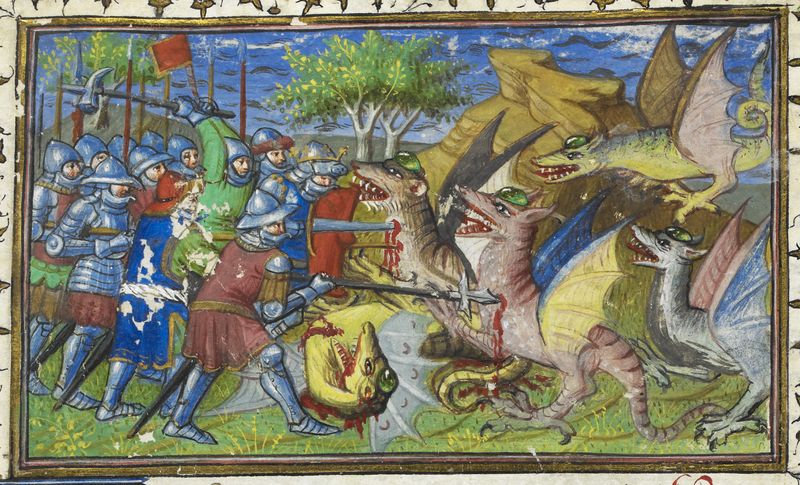
Alexander the Great battling winged dragons with emeralds in their foreheads. Le livre et la vraye hystoire du bon roy Alixandre. France (Paris), c. 1420-c. 1425. British Library, Royal MS 20 B XX, f. 73r. [blogs.bl.uk]
lēod-rūne
lēod-rūne, f.n: incantation, enchantment. (LAY-odd-ROO-nuh / ˈleːɔd-ˌruː-nə)
weol-dēaþ
weol-dēaþ, m.n: a violent death. (WAY-ol-DAY-ath)
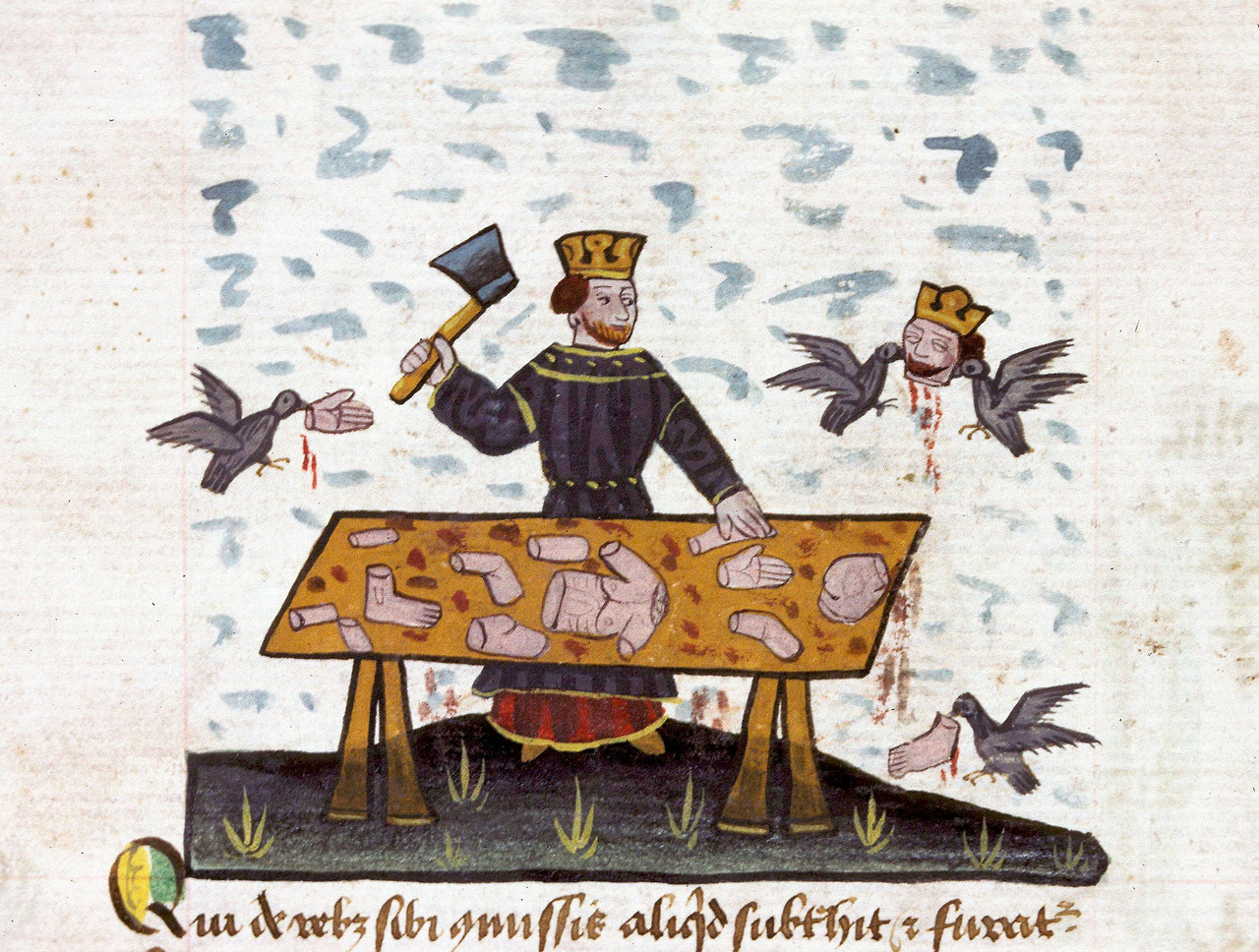
Evil Merodach cutting his father’s body into 300 pieces. Speculum humanae salvationis. France, 1462. Lyon, Bibliothèque municipale, Ms. 245, f. 145r. [numelyo.bm-lyon.fr]
niht-scūa
niht-scūa, m.n: the darkness, shades of night. (NI’HT-SHOO-ah)
This week’s Wordhord Wednesday post is on”shelter-feathers” and an annoying story from Genesis. Read it on Patreon.
hlēow-feðer
hlēow-feðer, f.n: a sheltering wing. (HLAY-oh-FETH-er)
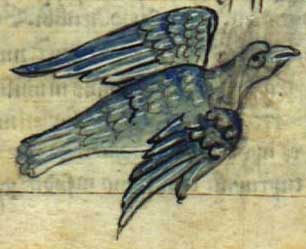
Turtledove from the Bestiary of Ann Walsh. England, 15th century. Copenhagen, Kongelige Bibliotek, Gl. kgl. S. 1633 4º, f. 44r. [bestiary.ca]
 Old English Wordhord