here-fugol, m.n: a bird which attends an army, eagle, vulture, raven. (HEH-reh-FUH-goll)
strēaw-berige
strēaw-berige, f.n: a strawberry (plant or fruit). (STRAY-aw-BAIR-ee-yeh)
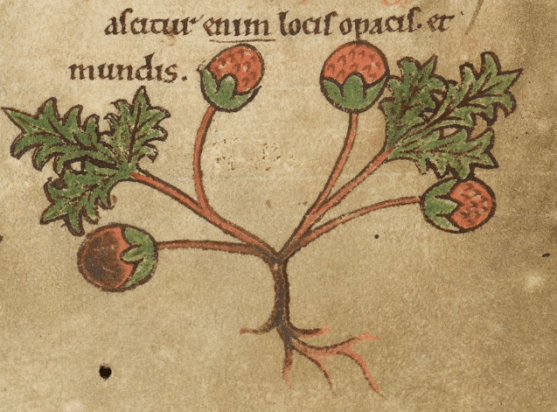
Herbarium of Pseudo-Apuleius Platonicus. Southern Netherlands (Meuse Valley), 3rd quarter of the 12th century. London, British Library, Harley MS 1585, f. 30r. [bl.uk]
strēaw
strēaw, n.n: straw, hay. (STRAY-aw)
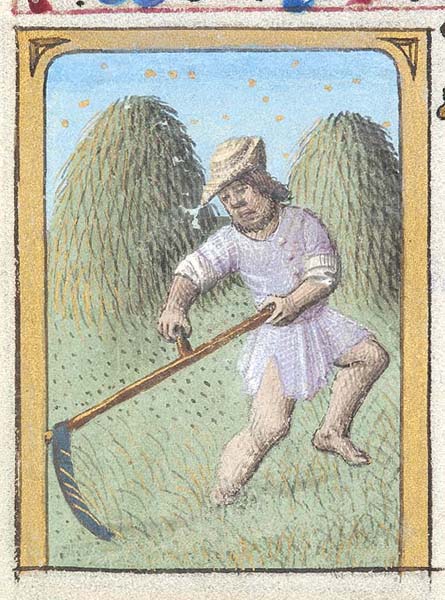
Book of Hours. France, c. 1475. New York, Pierpont Morgan Library, MS M.73, f. 3v. [ica.themorgan.org]
ēad-hrēðig
ēad-hrēðig, adj: happy, blessed. (AY-odd-HRAY-thee)
mis-cweðan
mis-cweðan, str.v: to speak amiss or incorrectly. (mis-KWETH-on)
This week’s Wordhord Wednesday post is on ‘sowl’. Read it on Patreon.
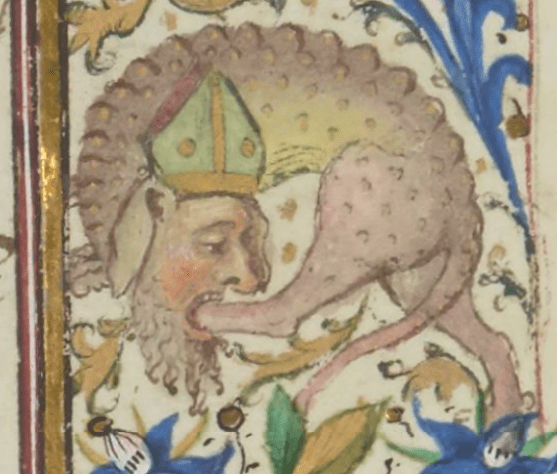
Les grandes Chroniques de France. France, 15th century. Paris, Bibliothèque nationale de France, Département des manuscrits, Français 2609, f. 137r. [gallica.bnf.fr]
a-cēosan
a-cēosan, str.v: to choose, select. (ah-CHAY-oh-zahn)
sufel
sufel, n.n: anything (meat, fish, vegetables) eaten with bread. (SUH-vell)
In Pembrokeshire ‘sowl’ is anything used to flavour bread, such as butter or cheese.
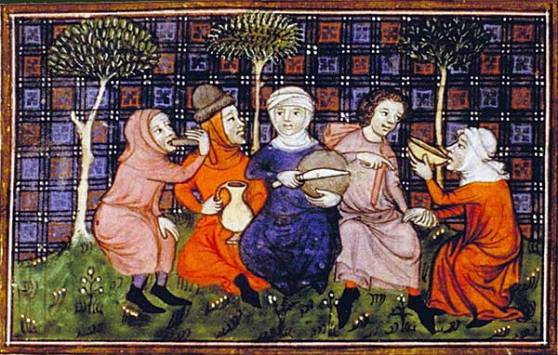
Livre du roi Modus et de la reine Ratio. France (Paris), 14th century. Paris, Bibliothèque nationale, Département des manuscrits, Français 22545, f. 72. [commons.wikimedia.org]
frōfor
frōfor, m.n: comfort, solace, consolation, help, benefit, profit, refuge. (FRO-vor)
dūst-swearm
dūst-swearm, m.n: a cloud of dust (of the motes in the sunlight). (DOOST-SWAY-arm)
blōt
blōt, n.n: a sacrifice. (BLOAT)
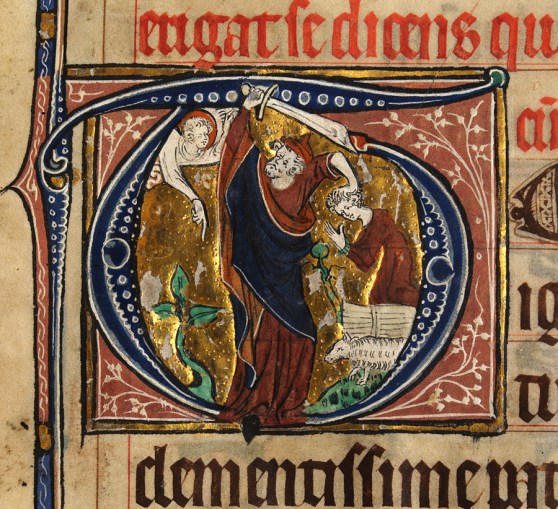
Abraham about to sacrifice Isaac. Sherbrooke Missal. England (East Anglia), 1310-1320. Aberystwyth, National Library of Wales, MS. 15536E, f. 230r. [viewer.library.wales]
 Old English Wordhord