wyrm-hord, n.n: a treasure held by a serpent, dragon’s hoard. (WURM-hord)

The Gorleston Psalter. England (Suffolk), 1310-1324. British Library, Add MS 49622, f. 5v. [bl.uk]
wyrm-hord, n.n: a treasure held by a serpent, dragon’s hoard. (WURM-hord)
The Gorleston Psalter. England (Suffolk), 1310-1324. British Library, Add MS 49622, f. 5v. [bl.uk]
geard, m.n: enclosure, yard, garden, court, dwelling, region; fence, hedge. (YEH-ard / ˈjɛard)
gliew-mēden, n.n: a glee-maiden, female musician. (GLIH-ew-MAY-den)
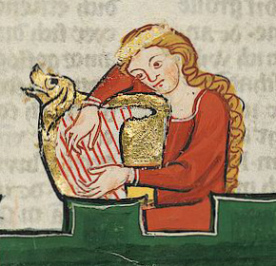
Woman playing a harp in the Codex Manesse. Zurich, c. 1300-c. 1340. Universitätsbibliothek Heidelberg, Cod. Pal. germ. 848, f. 412r. [digi.ub.uni-heidelberg.de]
hlūd-swēge, adv: with a loud voice. (HLOOD-SWAY-yeh)
In this week’s Wordhord Wednesday post hear about the Teeth Tyrant. Listen on Patreon. Also, patrons have one week to send requests for Goldgifa Week!
flōd-wudu, m.n: ship (water-wood). (FLOAD-WUH-duh / ˈfloːd-ˌwʌ-dʌ)

ǣfen-lēoht, n.n: evening light. (AV-en-LAY-oht)
wynn, f.n: delight, pleasure, joy; name of the W-rune ᚹ. (WUEN / ˈwyn)
dwæscan, wk.v: to extinguish, put out. (DWASK-on)
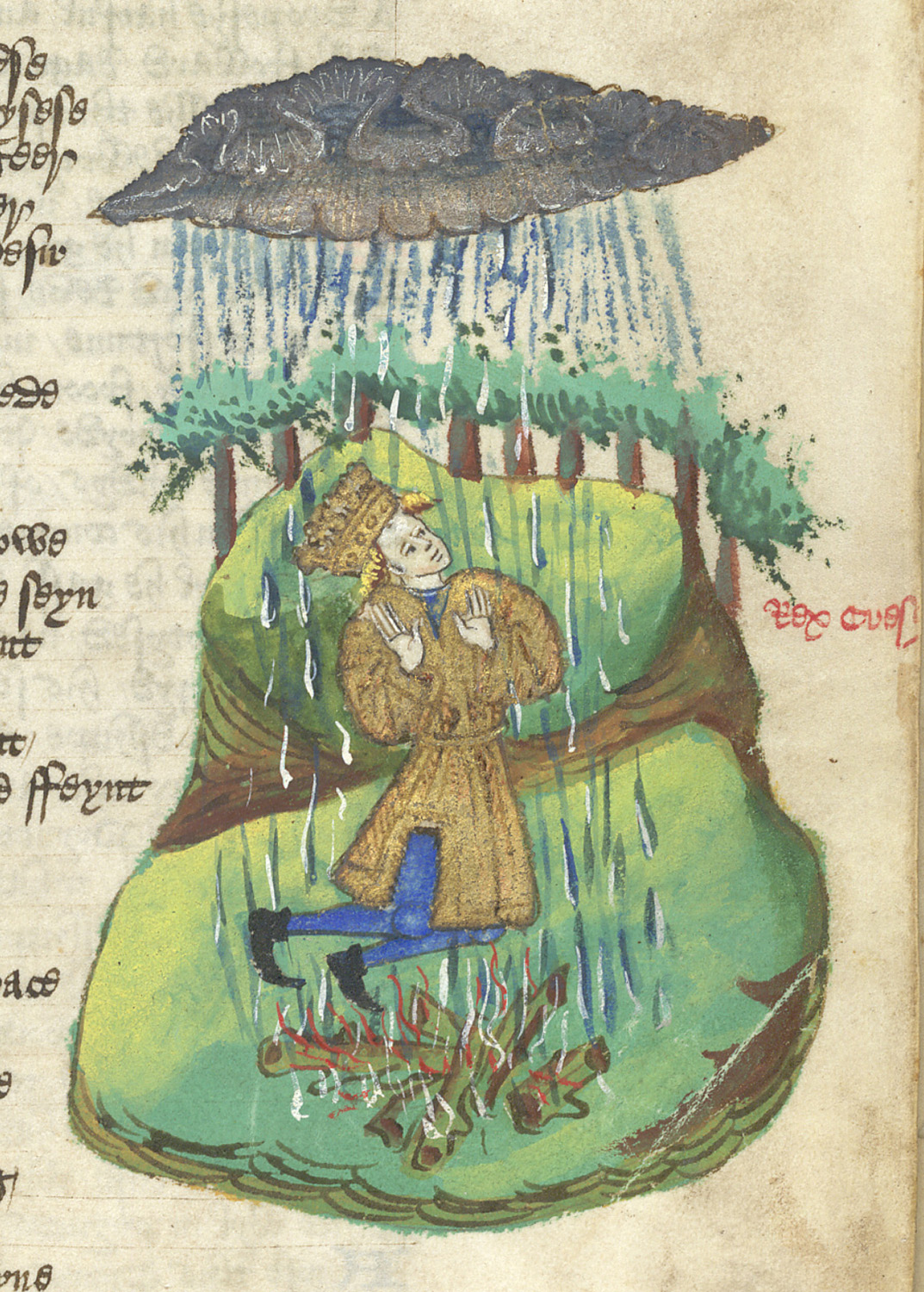
Croesus kneels in a fire which is extinguished by the rain pouring from a cloud above. John Lydgate’s translation of Boccaccio’s The Fall of Princes. SE England (probably Suffolk, possibly Bury St Edmunds), c. 1450-c. 1460. British Library, MS Harley 1766, f. 133r. [bl.uk]
ge-liþewācian, wk.v: to render gentle, soften a person; to mitigate, soften the rigour of misery, pain, etc. (yeh-LITH-eh-WOCK-yawn)
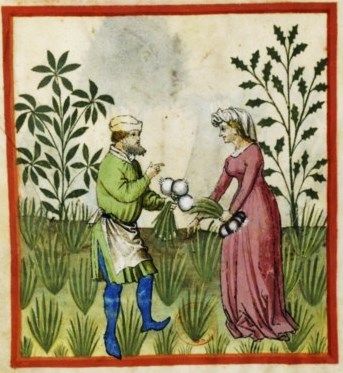
enne-lēac, n.n: onion. (EN-nuh-LAY-ock / ˈɛn-nə-ˌleːak)
 Old English Wordhord