bēcniendlīce, adv: allegorically or by parable. (BAKE-ni-end-LEE-cheh)
fēa
fēa, m.n: joy. (FAY-ah / ˈfeːa)
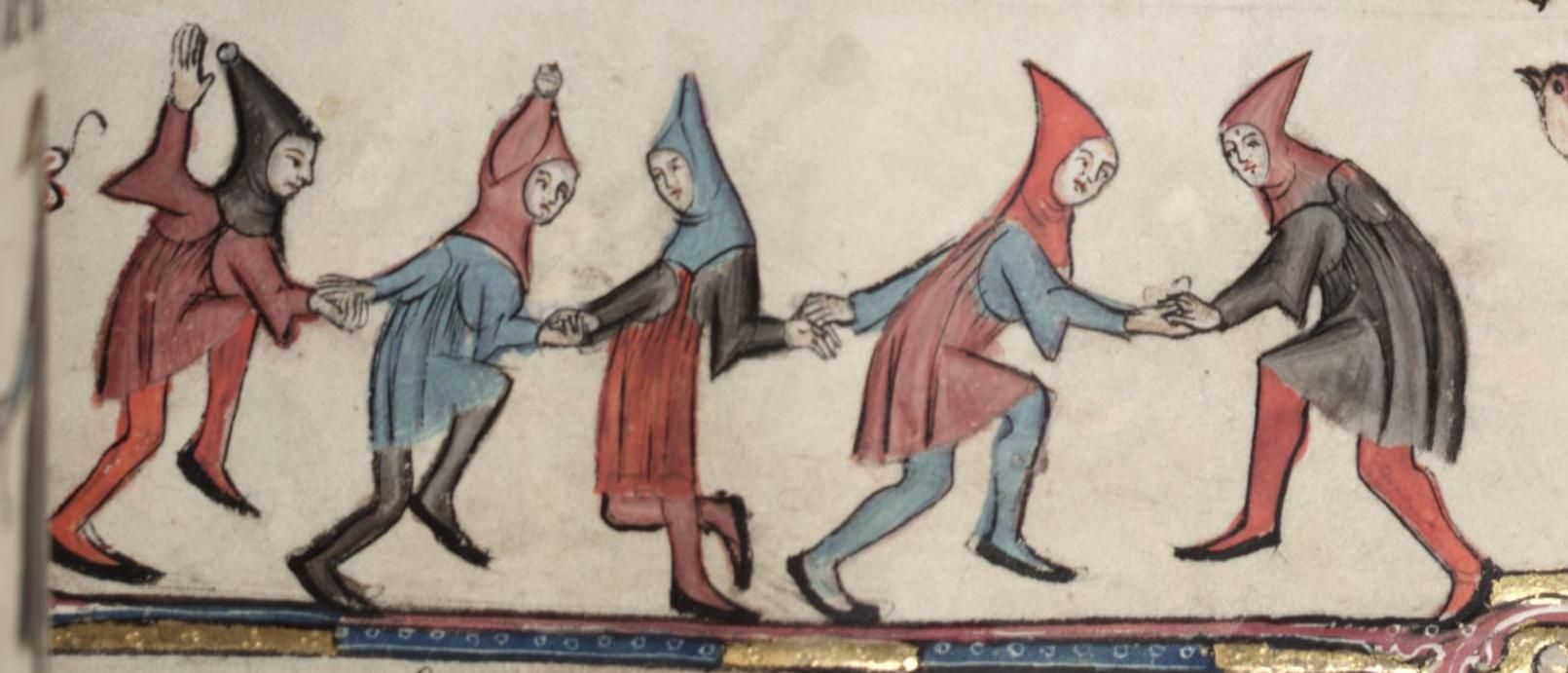
wræc-lāst
wræc-lāst, m.n: the track of an exile. (WRACK-lost)
This week’s Wordhord Wednesday post is about the medicinal properties of dog drool and other medieval hund facts. Read it on Patreon.
cirio-mangung
cirio-mangung, f.n: church-mongering, the sale or purchase of ecclesiastical offices, simony. (CHIR-ee-oh-MAHN-gung)
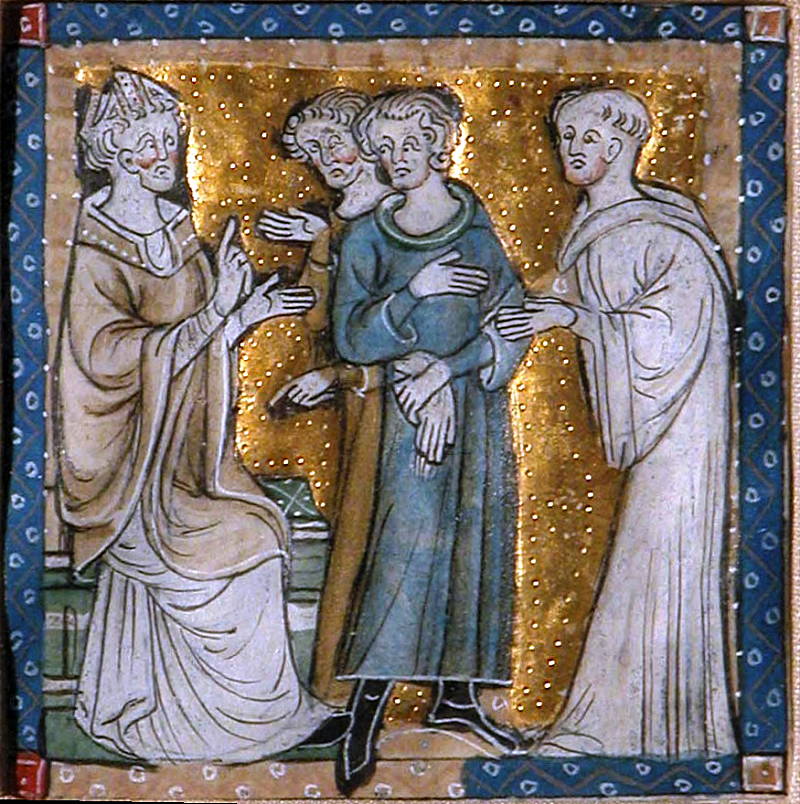
A bishop accused of simony by two fornicators. Miniature on a cutting from a leaf from Gratian’s Decretum (Causa VI), attributed to an artist of the Milemete group. 67 × 66 mm. England, c. 1320-1330. Apparently stolen: if you see (or have seen) it, please contact info@samfogg.com. [mssprovenance.blogspot.com]
hund
hund, m.n: hound, dog. (HUND / ˈhʌnd)

hrēow-līce
hrēow-līce, adv: miserably, cruelly, grievously; in a way to excite pity. (HRAY-oh-LEE-cheh)
ge-hæg
ge-hæg, n.n: enclosed piece of land. (yeh-HAIE / jɛ-ˈhæj)
āscian
āscian, wk.v: to ask, question, interrogate; to learn, find out by inquiry. (AH-ski-on)
mete-awul
mete-awul, m.n: a meat-hook, flesh-hook (a culinary tool used to retrieve large chunks of meat from cooking pots). (MEH-teh-AH-wul)
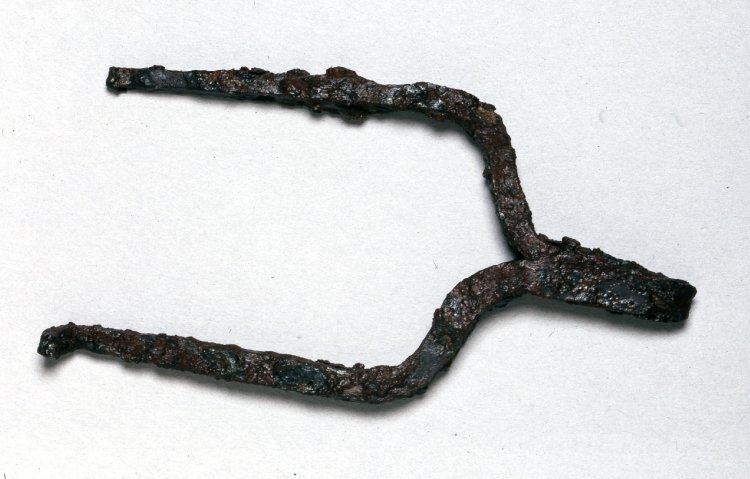
Anglo-Saxon iron flesh-hook. Northumbria (England), 9th-10th century. British Museum 1995,0901.20. [britishmuseum.org]
wiþer-breca
wiþer-breca, m.n: an adversary. (WITH-er-BREH-ka / ˈwɪ-θɛɹ-ˌbɹɛ-ka)
This week’s Wordhord Wednesday post is on the gloomy word rēonig. Read it on Patreon.
 Old English Wordhord