wann-fȳr, n.n: lurid fire. (WAHN-fur)
sige-cwēn
sige-cwēn, f.n: victory-queen, victorious queen. (SIH-yuh-KWAIN / ˈsɪ-jə-ˌkweːn)

folc-firen
folc-firen, f.n: a folk-crime, public crime. (FOLK-fir-en)
Patrons, you have one week to send me your requests for Goldgifa Week! Find out more on Patreon.
bēo
bēo, f.n: a bee. (BAY-oh / ˈbeːɔ)

word-cwide
word-cwide, m.n: a saying, words; speech, language. (WORD-cwid-eh)
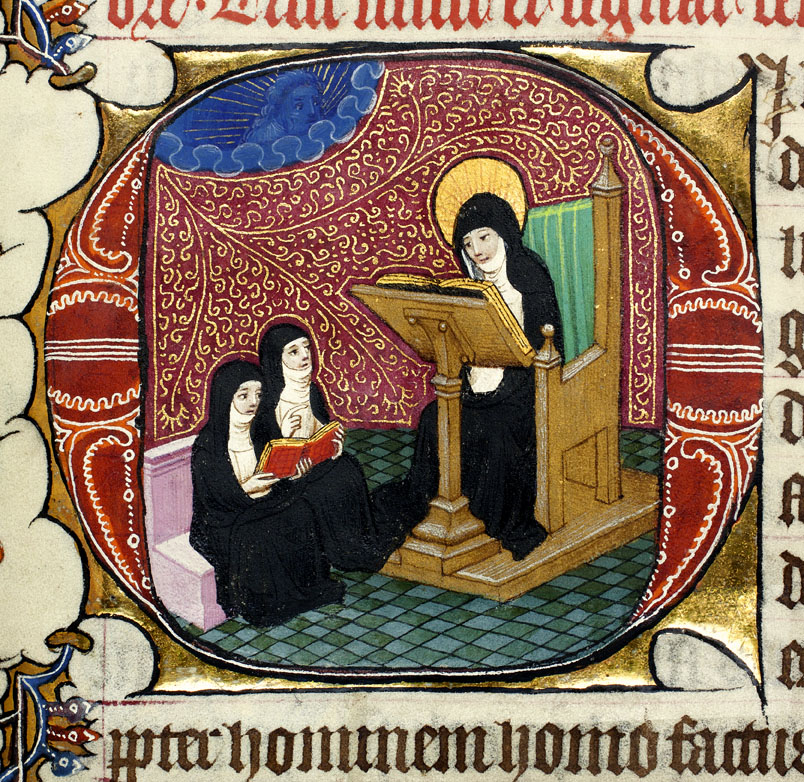
nunne
nunne, f.n: a nun. (NUN-nuh / ˈnʌn-nə)
This week’s Wordhord Wednesday post is on St Augustine’s arrival in England. Read it on Patreon.
mǣg-lagu
mǣg-lagu, f.n: law regulating the duties and responsibilities of kinsmen, e.g. in the matter of paying or receiving certain parts of the wergild (‘man price’) if one of their number slew or was slain. (MAG-lah-goo)
gorst-bēam
gorst-bēam, m.n: a bramble. (GORST-BAY-ahm)
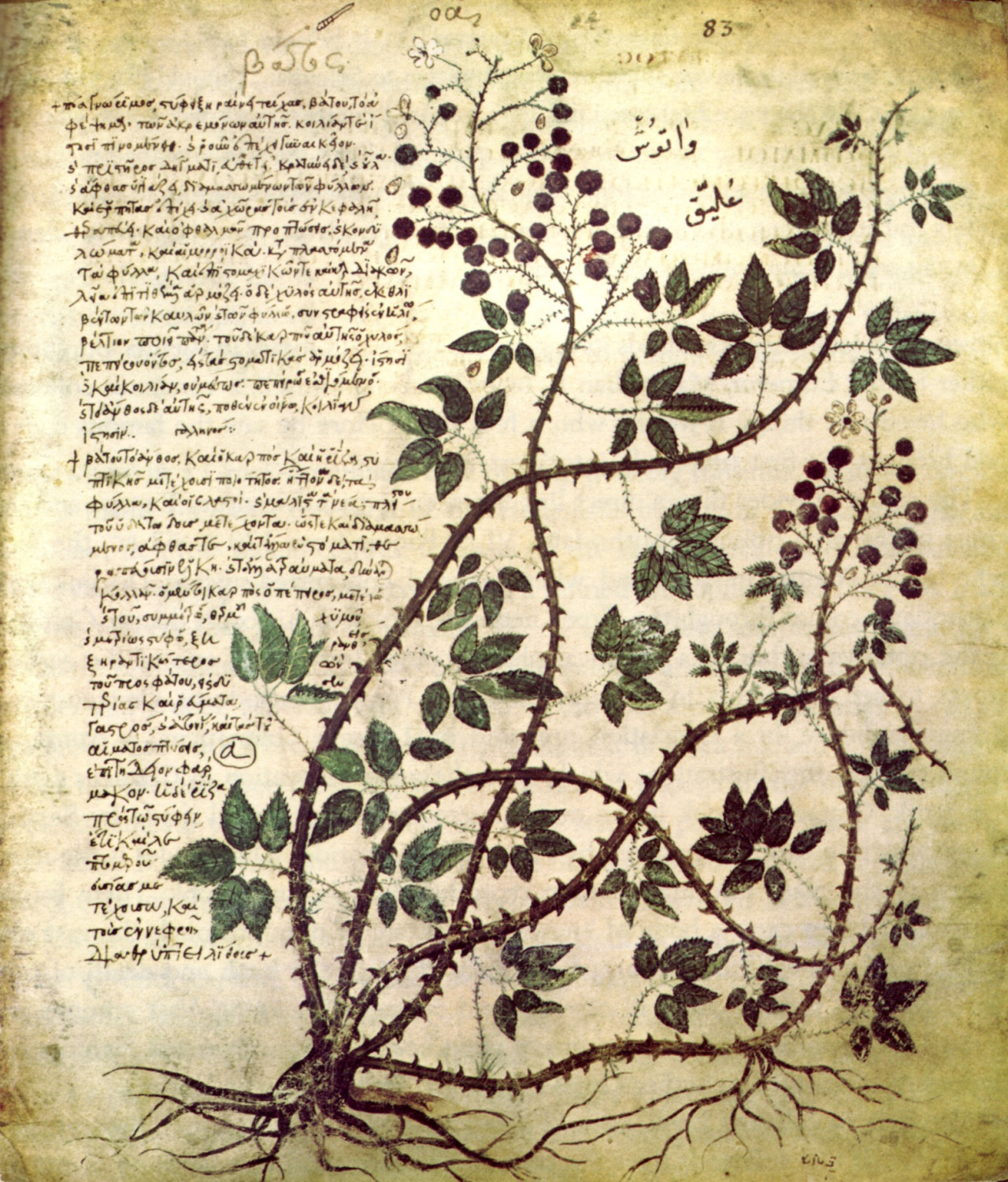
Bramble in the Vienna Dioscurides. Constantinople (Byzantine Empire), c. 515. Vienna, Österreichische Nationalbibliothek, Codex Vindobonensis med. gr. 1, f. 83r. [commons.wikimedia.org]
ge-neahhe
ge-neahhe, adv: enough, sufficiently, abundantly, frequently, very much, earnestly, instantly. (yeh-NAY-ah-heh)
regol
regol, m.n: a rule; pattern, standard, norm; a canon, prescript; the body of rules which guide a particular order of ecclesiastics. (REH-gol)
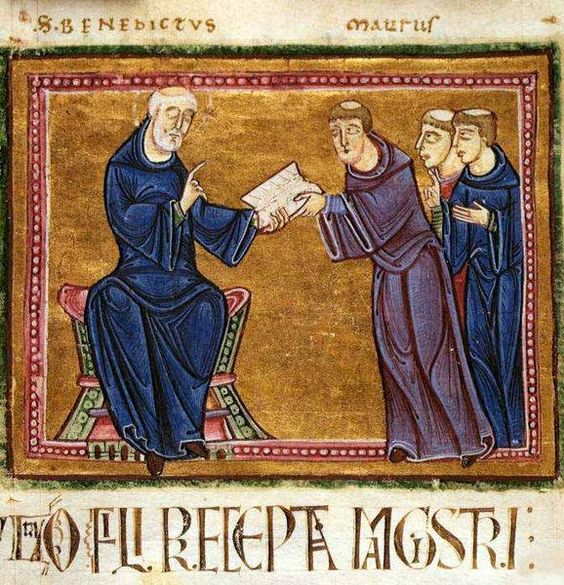
St Benedict handing his disciple St Maurus his Rule. Nîmes, 1129. British Library, Add MS 16979, f. 21v. [bl.uk]
 Old English Wordhord