swegel-wundor, n.n: a heavenly wonder, a wondrous sound. (SWAY-yell-WUN-dor)
This week’s Wordhord Wednesday post is on St Guthlac and his musical death. Read it on Patreon.
swegel-wundor, n.n: a heavenly wonder, a wondrous sound. (SWAY-yell-WUN-dor)
This week’s Wordhord Wednesday post is on St Guthlac and his musical death. Read it on Patreon.
folc-cwide, m.n: a popular saying. (FOLK-kwid-eh)
land-būend, m.n: a cultivator of the land, husbandman; an inhabitant of a country, a native, a dweller on earth. (LOND-boo-end)

Luttrell Psalter. N. England, 1325-1335. British Library, Add. MS 42130, f. 171r. [bl.uk]
þēodan, wk.v: to join (trans. or intrans.), attach; to join as a companion, associate with, attach oneself to a person, society, place, etc. (THAY-oh-don)
gram, adj: angry, wrathful; hostile, fierce. (GROM / ˈgram)
sigel, n.n: sun; name of the S-rune ᛋ. (SI-yell / ˈsɪ-jɛl)

ge-myndig, adj: mindful, remembering. (yeh-MUEN-dih / jɛ-ˈmyn-dɪj)
scolu, f.n: a school; a band or troop of people, a shoal, school (in school of fishes). (SHOLL-uh)
This week’s Wordhord Wednesday post concerns a sea-ready funeral ship. Listen and read on Patreon.
wan-spēd, f.n: poverty, indigence. (WAHN-spade)
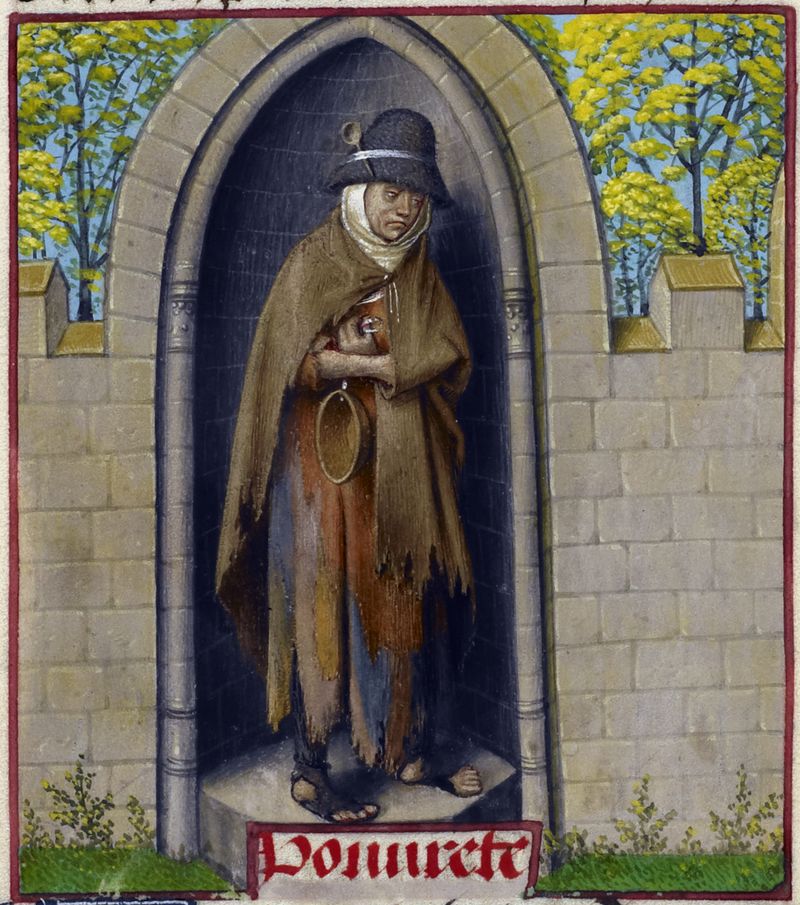
Pouvrete (Poverty) in Roman de la Rose, by Guillaume de Lorris and Jean de Meun. Southern Netherlands (Bruges), c. 1490-c. 1500. British Library, Harley MS 4425, f. 11v. [bl.uk]
ūt-fūs, adj: ready to sail. (OOT-foos)
 Old English Wordhord