wlite-scēawung, f.n: a word used to translate ‘Zion’, the biblical place name. Literal meaning is ‘beauty-contemplation’ or ‘glory-contemplation’. [WLIT-eh-SHAY-ah-wung]
Category Archives: religion
cōf-godas
cōf-godas, pl.m.n: household-gods. (KOHV-GOD-as / ˈkoːv-ˌgɔ-das)
This week’s Wordhord Wednesday is ‘Shame on you, sceand!’ Read it on Patreon.
capitol-mæsse
capitol-mæsse, f.n: early or morning mass, first mass. [KAH-pit-ol-MÆSS-eh]
oflǣt-hlāf
oflǣt-hlāf, m.n: a loaf of the bread used for the Eucharist. [OV-læt-HLOFF]
oflǣte
oflǣte, f.n: an oblation, offering; a sacramental wafer. [OH-vlæt-eh]
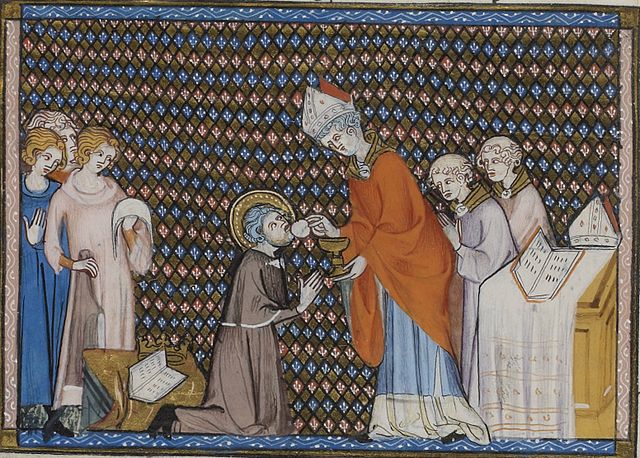
Louis IX of France receiving communion. Guillaume de Saint-Pathus’s Vie et miracles de saint Louis (1330-1340). Bibliothèque nationale de France, Français 5716, f. 62. [zh.wikipedia.org]
amel
amel, m.n: a vessel for holy water. [AH-mell]
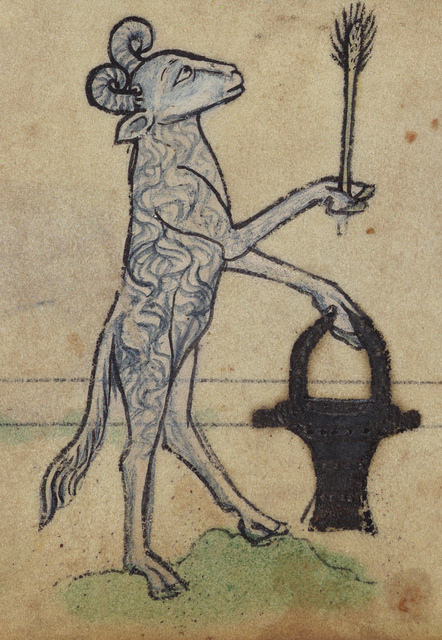
Book of Hours, ram, with situla, sprinkling holy water with an aspergillum. Walters Art Museum, MS. W.102, f. 80r. [flickr.com]
þrowend
þrowend, m.n: scorpion; martyr; Thrond (member of a people in northern Norway). (THRO-wend / ˈθrɔ-wɛnd)
This week’s Wordhord Wednesday post is on the double meaning of þrowend. Read it on Patreon.

fæder
fæder, m.n: father (a human father or God the Father). (FADD-er / ˈfæ-dɛr)
Happy Father’s Day!

ūht-sang
ūht-sang, m.n: one of the services of the church, nocturns or matins. (OO’HT-SAHNG / ˈuːxt-ˌsaŋ)
hālig-dōm
hālig-dōm, m.n: holiness, sanctity; holy things, relics, holy work, a sacrament; a holy place, sanctuary. (HA-lih-DOAM / ˈhaː-lɪj-ˌdoːm)

