Eāster-sunnandæg, m.n: Easter Sunday. [EH-ah-ster-SUN-nan-dæγ]
Happy Easter!
Eāster-sunnandæg, m.n: Easter Sunday. [EH-ah-ster-SUN-nan-dæγ]
Happy Easter!
crīstel-mǣl, n.n: a cross; the sign of the cross. [KREE-stell-MÆL]
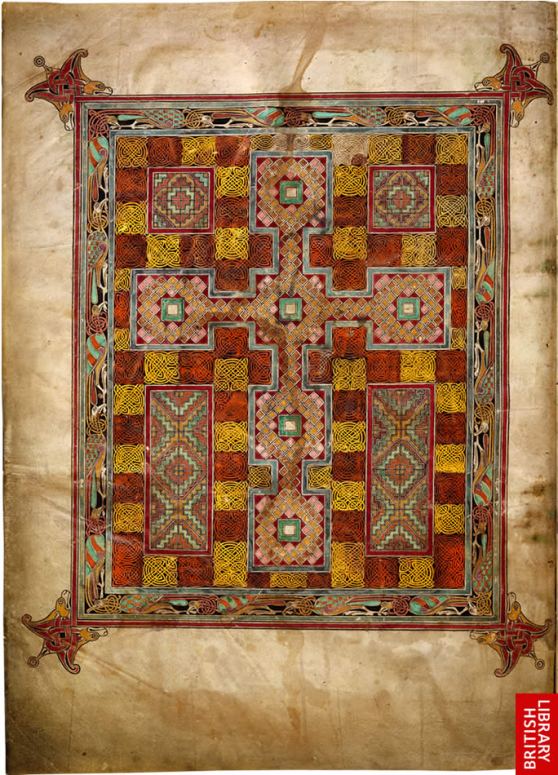
A carpet page from the Lindisfarne Gospels. England (Northumberland), c. 710-715. British Library, Cotton MS. Nero D.IV, fol. 2v. [bl.uk]
sunn-feld, m.n: Elysium (the abode of the blessed after death in classical mythology; paradise). [SUN-feld]
heofon-wōma, m.n: a heavenly sound, the sound heard at the day of judgment. [HAY-oh-von-WOH-ma]
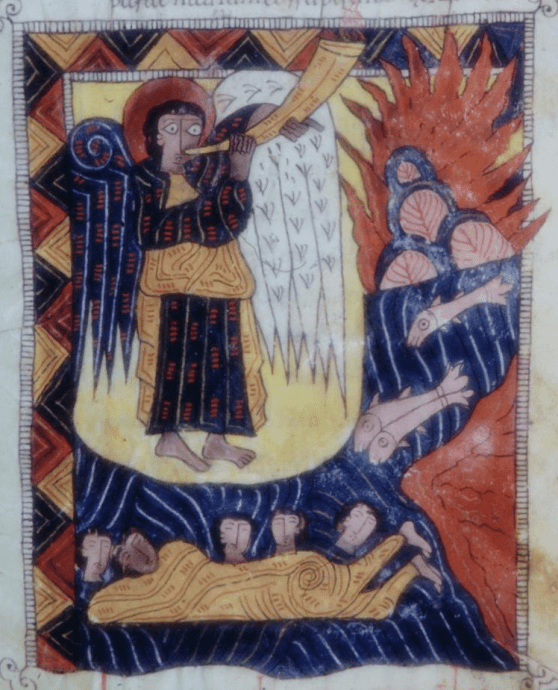
The Escorial Beatus (Escorial, Biblioteca Monasterio, Cod. & II. 5, p. 20), a 10th-century illuminated manuscript of the Commentary on the Apocalypse by Beatus of Liébana. [arachne.uni-koeln.de]
cristenest, adj: the most Christian, pious, holy. [KRIS-ten-est]
Sweotolung-dæg, m.n: Epiphany (lit. ‘manifestation day’). [SWAY-oh-toh-lung-DÆγ]

Adoration of the Magi, with female saints in niches: the Virgin Mary crowned with a lily-sceptre; St Clare (?) with a book; St Catherine with her wheel; St Margaret with a long cross and a dragon; a female saint with no emblem; and St Mary Magdalene with her pot of ointment). The Queen Mary Psalter. England, 1310-1320. British Library, Royal MS 2 B VII, f. 112v. [bl.uk]
wuldor, f.n: glory. (WUL-dor / ˈwʌl-dɔr)
ymbren-dæg, m.n: an Ember-day (the Wednesday, Friday and Saturday between the third and fourth Sundays of Advent). (UM-bren-DAIE)
This week’s Wordhord Wednesday post is about the etymology of Ember-days. Read it on Patreon.
wlite-scēawung, f.n: a word used to translate ‘Zion’, the biblical place name. Literal meaning is ‘beauty-contemplation’ or ‘glory-contemplation’. [WLIT-eh-SHAY-ah-wung]
cōf-godas, pl.m.n: household-gods. (KOHV-GOD-as / ˈkoːv-ˌgɔ-das)
This week’s Wordhord Wednesday is ‘Shame on you, sceand!’ Read it on Patreon.

