hell-waru, f.n: the body of the inhabitants of hell. (HELL-WA-ruh)
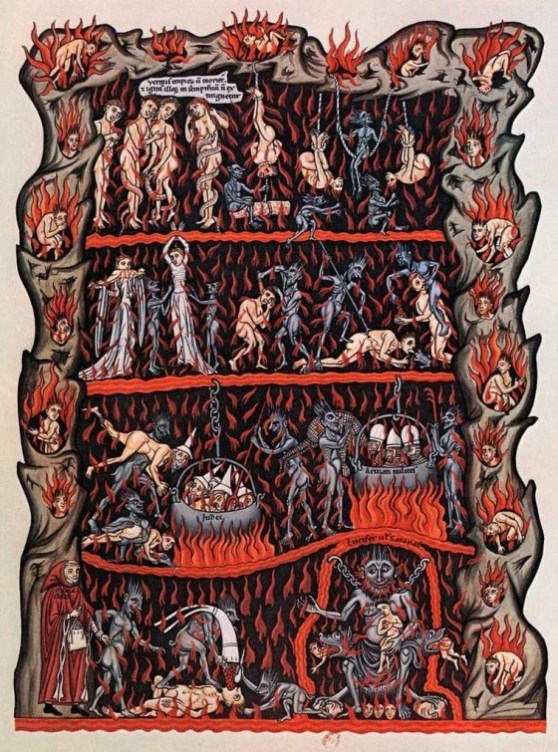
Hell. Hortus deliciarum (Garden of Delights), an illuminated manuscript by the nun Herrad of Landsberg. France (Alsace), c. 1130-1195. Public Domain. [wikipedia.org]
hell-waru, f.n: the body of the inhabitants of hell. (HELL-WA-ruh)
Hell. Hortus deliciarum (Garden of Delights), an illuminated manuscript by the nun Herrad of Landsberg. France (Alsace), c. 1130-1195. Public Domain. [wikipedia.org]
mynster-gang, m.n: going into a monastery, entering on a monastic life. (MUN-ster-GONG)

Vitae patrum. Italy (Naples), between 1350 and 1375. New York, The Morgan Library & Museum, MS M.626, f. 134r. [ica.themorgan.org]
swegel-wundor, n.n: a heavenly wonder, a wondrous sound. (SWAY-yell-WUN-dor)
This week’s Wordhord Wednesday post is on St Guthlac and his musical death. Read it on Patreon.
mǣl, n.n: a measure; a mark, sign, cross, crucifix; fixed, suitable, appointed time, season, occasion; the time for eating, a meal. (MAL)
nunne, f.n: a nun. (NUN-nuh / ˈnʌn-nə)
This week’s Wordhord Wednesday post is on St Augustine’s arrival in England. Read it on Patreon.
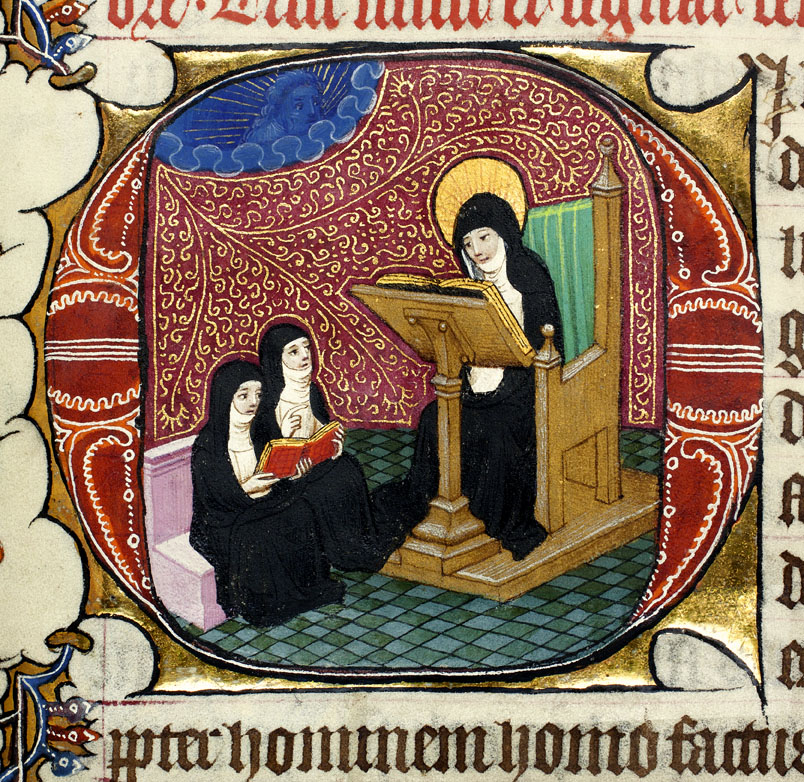
regol, m.n: a rule; pattern, standard, norm; a canon, prescript; the body of rules which guide a particular order of ecclesiastics. (REH-gol)
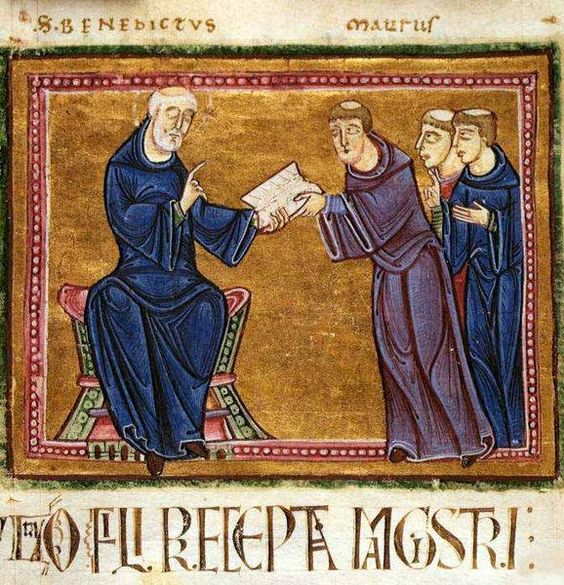
St Benedict handing his disciple St Maurus his Rule. Nîmes, 1129. British Library, Add MS 16979, f. 21v. [bl.uk]
cirio-mangung, f.n: church-mongering, the sale or purchase of ecclesiastical offices, simony. (CHIR-ee-oh-MAHN-gung)
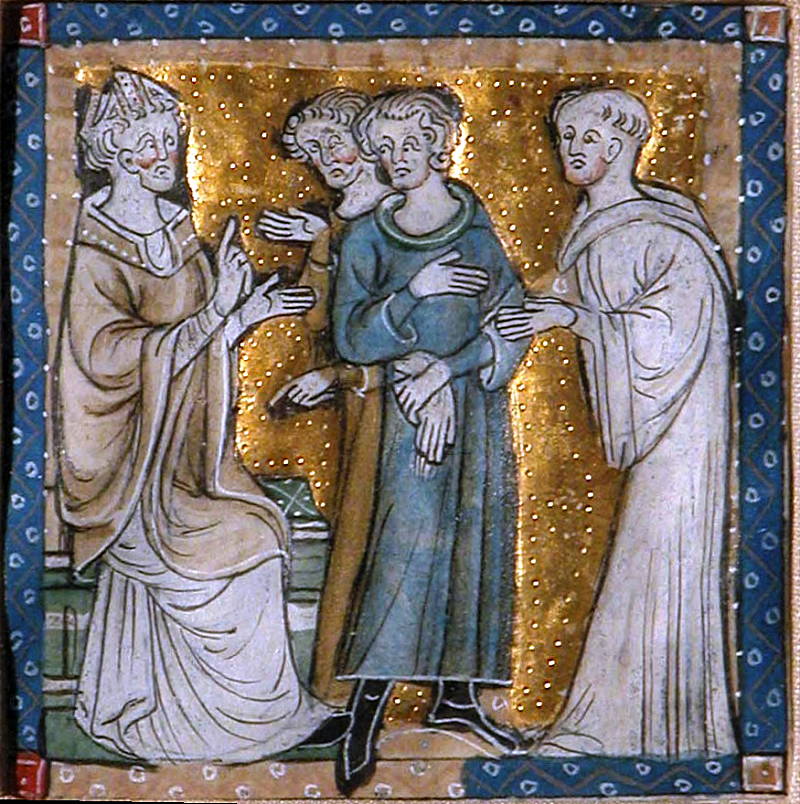
A bishop accused of simony by two fornicators. Miniature on a cutting from a leaf from Gratian’s Decretum (Causa VI), attributed to an artist of the Milemete group. 67 × 66 mm. England, c. 1320-1330. Apparently stolen: if you see (or have seen) it, please contact info@samfogg.com. [mssprovenance.blogspot.com]
gāst-cyning, m.n: spirit-king, God. (GAHST-KUE-ning / ˈgaːst-ˌky-niŋ)
hearga, m.n: a place sacred to a god, with an idol and an altar; a temple, fane; an idol. (HAY-ar-ga)
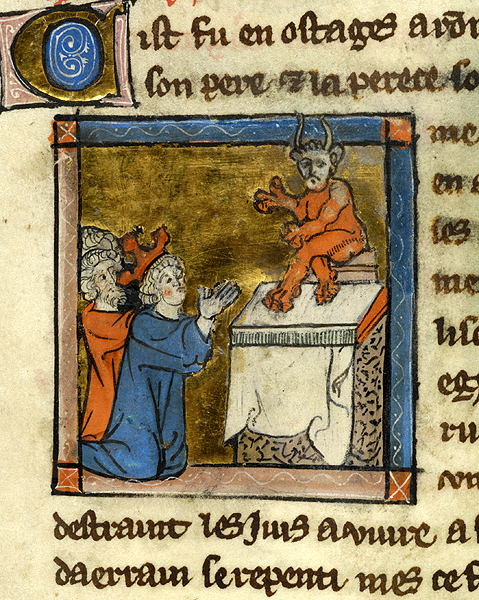
Antiochus IV, crowned, with joined hands raised, kneels with two men, partially visible, before draped altar on which sits horned idol. Abrégé des histoires divines. France (possibly Amiens), between 1300 and 1310. New York, Morgan Library, MS M.751, f. 29v. [ica.themorgan.org]
Cristes bōc, f.n: Christ’s book, the gospel (an account of Jesus’s life and teachings). [KRIST-ess BOAK]
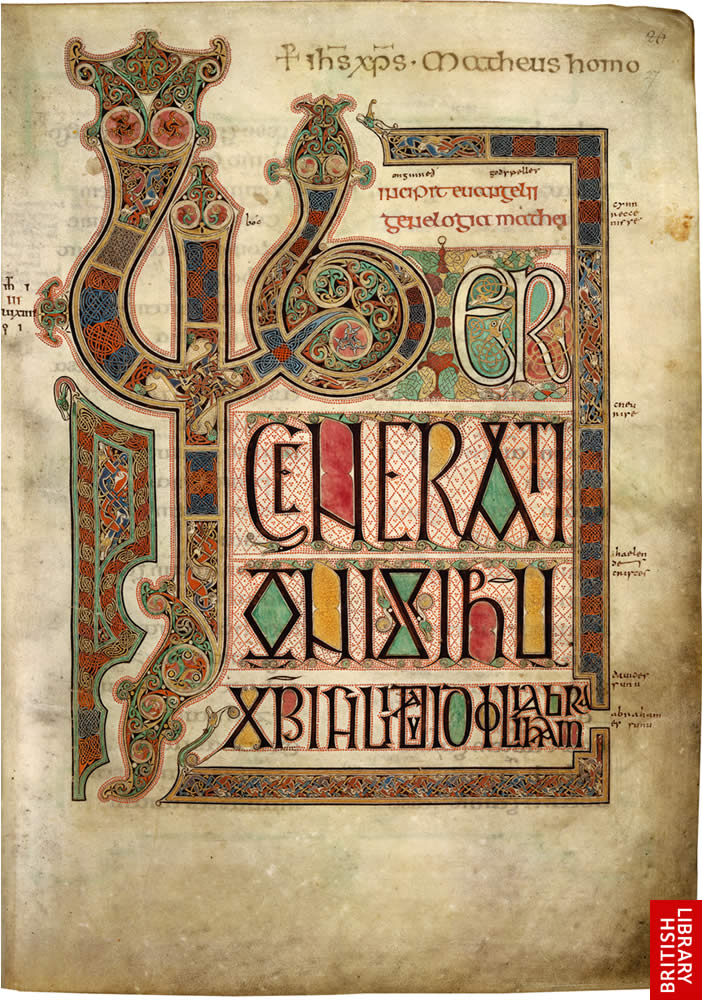
Lindisfarne Gospels, the beginning of St Matthew’s Gospel. England (Lindisfarne), late 7th or early 8th century. British Library, Cotton Nero D. IV, f. 27r. [bl.uk]

