Old English Wordhord

Old English Word of the Day

Navigation

Skip to content
  • About
  • Linktree
  • Books
    • The Wordhord: Daily Life in Old English
    • The Deorhord: An Old English Bestiary
    • Book Illustrations
  • App
  • Events
  • Podcasts
  • Merch
  • More content on Patreon
  • Goldgifa Page
  • Pronunciation
  • Not “Anglo-Saxon”
  • Medieval Resources

Category Archives: animals

Post navigation

← Older posts
Newer posts →

wǣg-bora

Posted on November 26, 2018 by Hana Videen

wǣg-bora, m.n: a wave-bearer, a creature that lives beneath the waves. (WAγ-BO-ra)
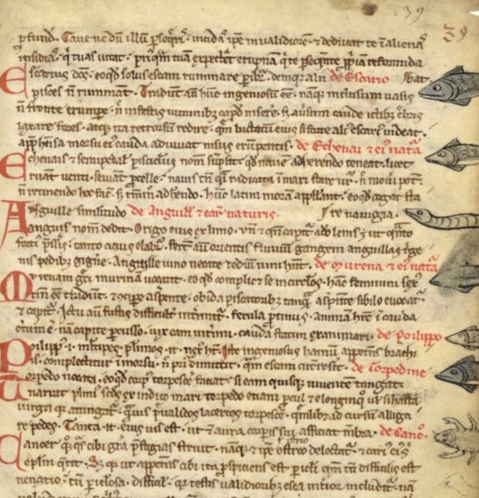
 A variety of fish swimming onto the page of a bestiary. Northern France, 13th century. Paris, Bibliothèque Nationale de France, lat. 6838B, f. 39r. [visualiseur.bnf.fr]

Posted in animals, water Leave a comment

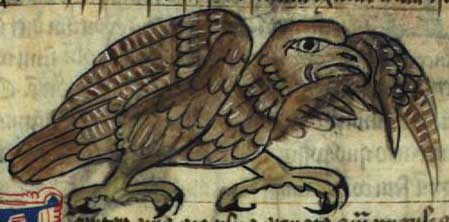
here-fugol

Posted on November 11, 2018 by Hana Videen

here-fugol, m.n: a bird which attends an army, eagle, vulture, raven. (HEH-reh-FUH-goll)

Posted in animals, battle Leave a comment

gūþ-floga

Posted on October 27, 2018 by Hana Videen

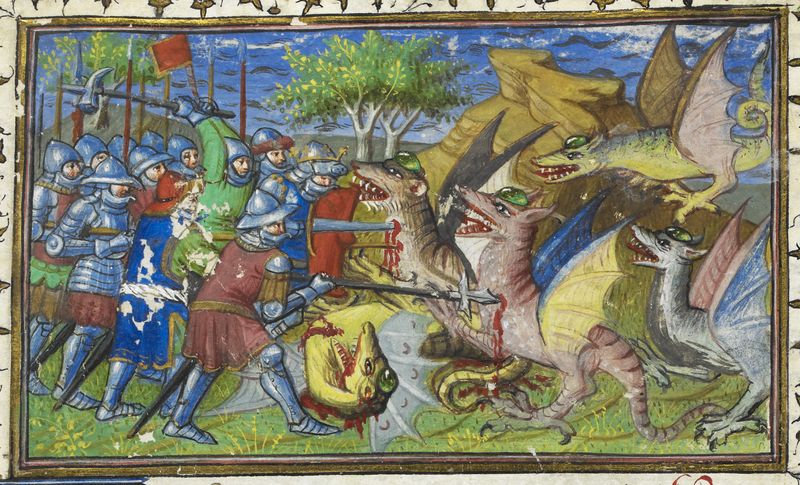
gūþ-floga, m.n: one that flies to battle, a dragon. (GOOTH-FLO-ga)
6a00d8341c464853ef01a511a51304970c-800wi

Alexander the Great battling winged dragons with emeralds in their foreheads. Le livre et la vraye hystoire du bon roy Alixandre. France (Paris), c. 1420-c. 1425. British Library, Royal MS 20 B XX, f. 73r. [blogs.bl.uk]

Posted in animals, battle Leave a comment

gūþ-fugel

Posted on October 14, 2018 by Hana Videen

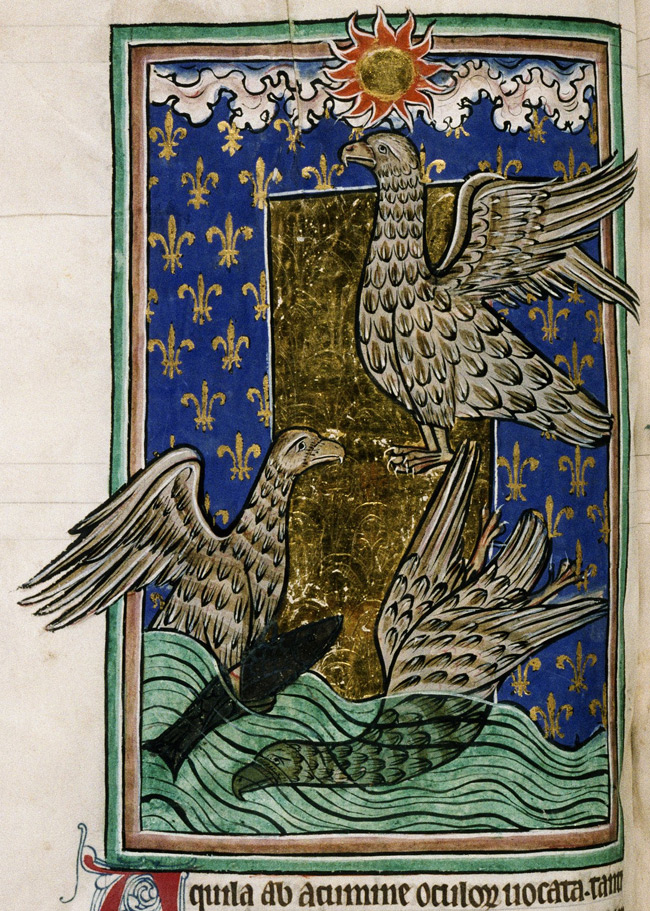
gūþ-fugel, m.n: war-bird (an epithet for the eagle). (GOOTH-FUH-yell / ˈguːθ-ˌfʌ-jɛl)

To find out more about medieval eagles, visit my blog Dēor-hord: a medieval and modern bestiary.
guthfugel
Bestiary. England, c. 1225-1250. Oxford, Bodleian Library, MS. Bodley 764, f. 57v. [bestiary.ca]
Posted in animals, battle, deorhord book Leave a comment

scolu

Posted on September 26, 2018 by Hana Videen

scolu, f.n: a school; a band or troop of people, a shoal, school (in school of fishes). (SHOLL-uh)

This week’s Wordhord Wednesday post concerns a sea-ready funeral ship. Listen and read on Patreon.

Posted in animals, education + knowledge Leave a comment

gāt

Posted on September 22, 2018 by Hana Videen

gāt, f.n: goat. (GAHT / ˈgaːt)

img9003
Bestiary. England, c. 1225-1250. Bodleian Library, MS. Bodley 764, f. 20v. [bestiary.ca]

Posted in animals, deorhord book Leave a comment

hafoc

Posted on September 14, 2018 by Hana Videen

hafoc, m.n: a hawk. (HA-vock)

0914 hafoc

Bestiary of Ann Walsh. England, 15th century. Copenhagen, Kongelige Bibliotek, Gl. kgl. S. 1633 4º, f. 42r. [bestiary.ca]

Posted in animals Leave a comment

fald-gang

Posted on September 6, 2018 by Hana Videen

fald-gang, m.n: fold-going, putting sheep in fold to manure the land. (FALD-gong)
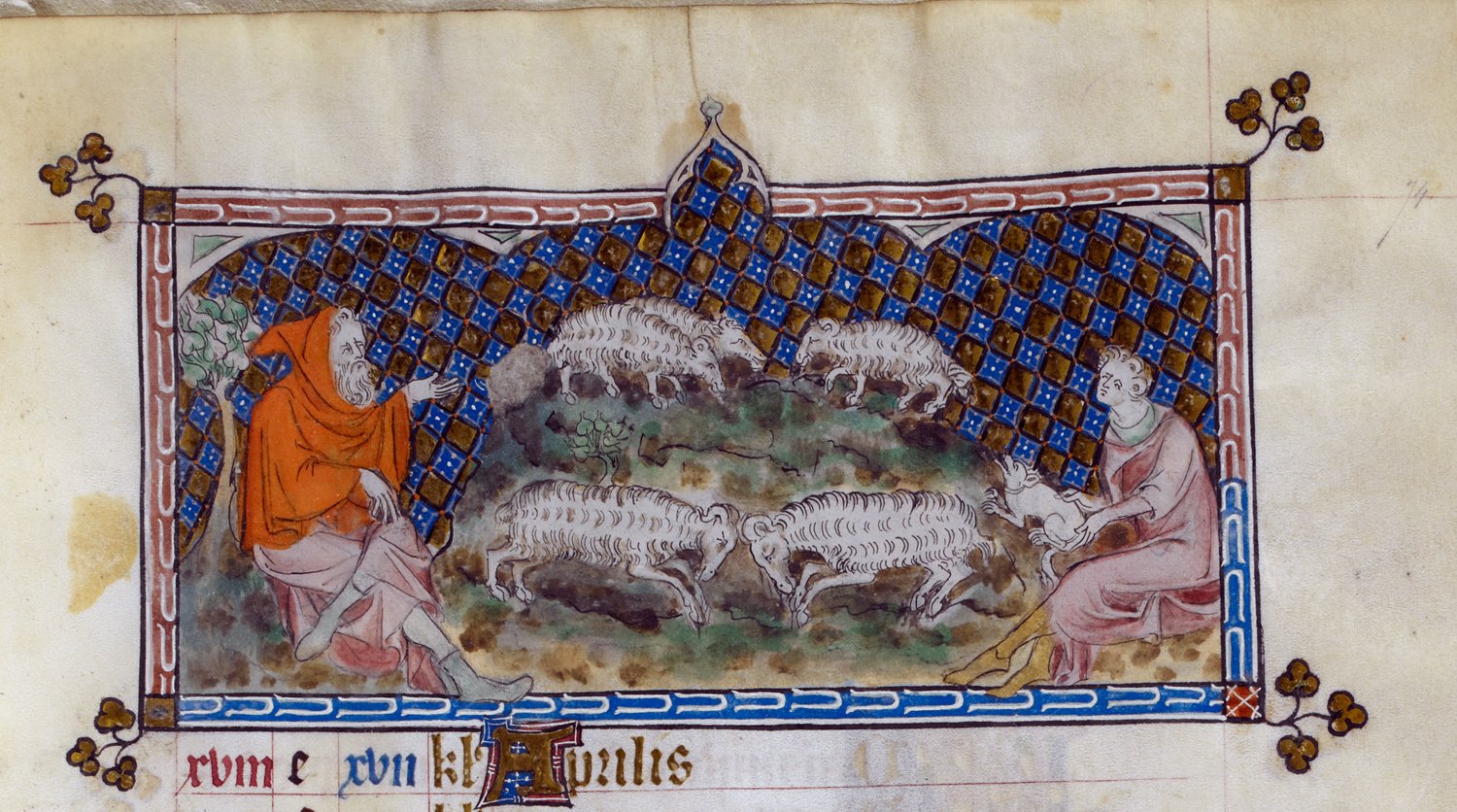
0906 faldgang

The Queen Mary Psalter. England, between 1310 and 1320. British Library, Royal 2 B VII, f. 74. [bl.uk]

Posted in animals Leave a comment

bēo

Posted on August 17, 2018 by Hana Videen

bēo, f.n: a bee. (BAY-oh / ˈbeːɔ)

bee
The Maastricht Hours. Netherlands (Liège), 1st quarter of the 14th century. British Library, Stowe MS 17, f. 148r. [bl.uk]
Posted in animals, wordhord book Leave a comment

hund

Posted on August 6, 2018 by Hana Videen

hund, m.n: hound, dog. (HUND / ˈhʌnd)

A dog mourning the murder of its master, possibly pointing out the murderer. The Bestiary of Ann Walsh. England, 15th century. Copenhagen, Kongelige Bibliotek, Gl. kgl. S. 1633 4º, f. 18r. [bestiary.ca]
Posted in animals, deorhord book, wordhord book Leave a comment

Post navigation

← Older posts
Newer posts →

Find Posts

Support

Become a Goldgifa to support my work and read additional content.

  • Patreon

Follow

  • Bluesky
  • Instagram
  • Facebook
  • Mastodon
Download on the App Store

Website Powered by WordPress.com.
Privacy & Cookies: This site uses cookies. By continuing to use this website, you agree to their use.
To find out more, including how to control cookies, see here: Cookie Policy
  • Subscribe Subscribed
    • Old English Wordhord
    • Join 744 other subscribers
    • Already have a WordPress.com account? Log in now.
    • Old English Wordhord
    • Subscribe Subscribed
    • Sign up
    • Log in
    • Report this content
    • View site in Reader
    • Manage subscriptions
    • Collapse this bar
Loading Comments...