gōs, f.n: a goose. (GOHS / ˈgoːs)
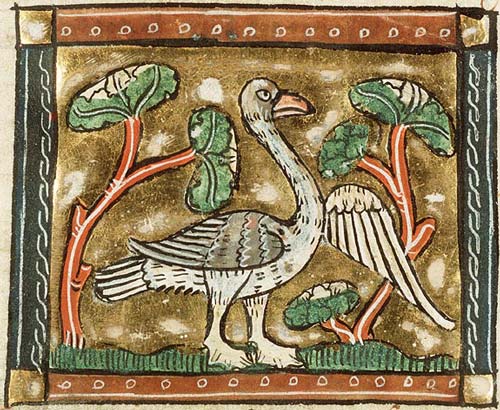
gōs, f.n: a goose. (GOHS / ˈgoːs)
wyrm-hord, n.n: a treasure held by a serpent, dragon’s hoard. (WURM-hord)
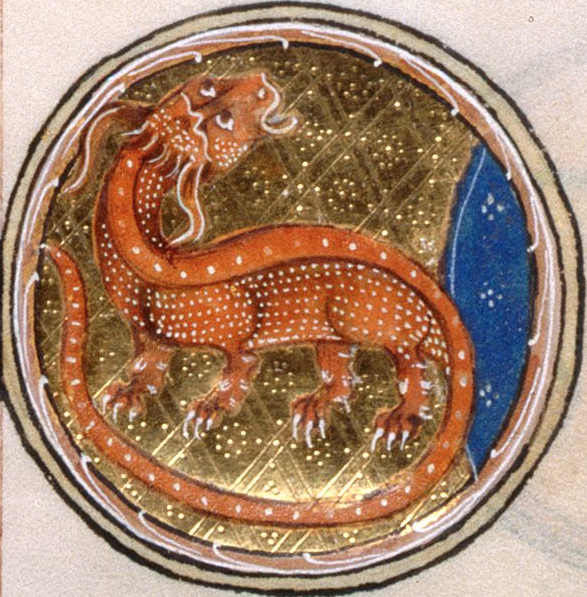
The Gorleston Psalter. England (Suffolk), 1310-1324. British Library, Add MS 49622, f. 5v. [bl.uk]
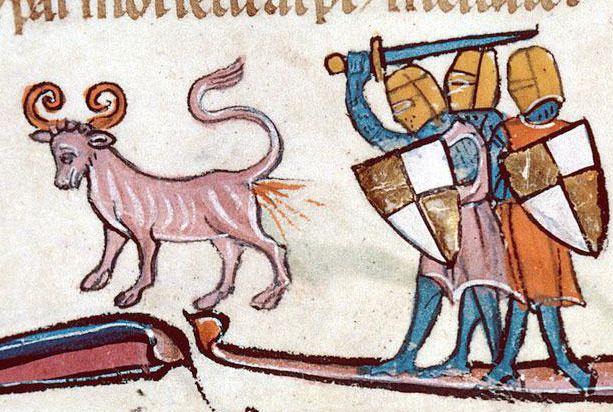
cū-ēage, f.n: a cow’s eye. (KOO-AY-ah-yuh / ˈkuː-ˌeːa-jə)

cūe mesa, m.n: cow’s dung. (KOO-eh-MEH-za / ˈkuː-ɛ-ˌmɛ-za)
This week’s Wordhord Wednesday post is about Windsor and its first appearance in writing. Read it on Patreon.
hearma, m.n: a field-mouse or a dormouse. (HAY-ar-ma)
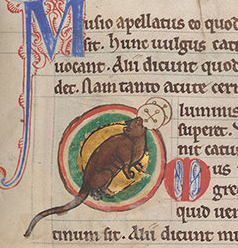
Worksop Bestiary. England, c. 1185. New York, Morgan Library, MS M.81, f. 47r. [ica.themorgan.org]
wæter-bucca, m.n: an aquatic insect, a water-spider. (WAT-er-BUCK-kah)
weoloc, m.n: a kind of shell-fish, a whelk, cockle; also the dye obtained from such fish. (WEH-ol-ock / ˈwɛɔ-lɔk)
frox, m.n: a frog. (FROKS)
This week’s Wordhord Wednesday post is on medieval frogs. Read it on Patreon.
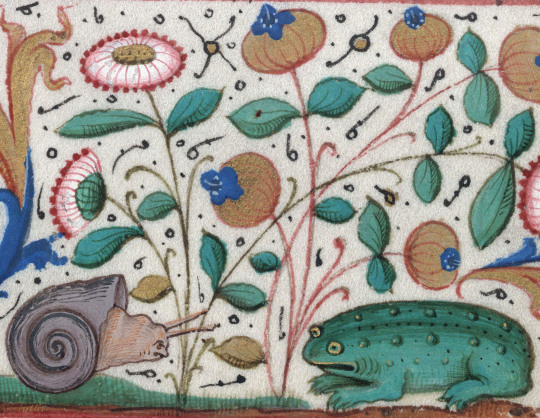
Institutes of Justinian. France, 15th century. Montpellier, Bibliothèque interuniversitaire, Section Médecine, H 418, f. 23v. [discardingimages.tumblr.com]
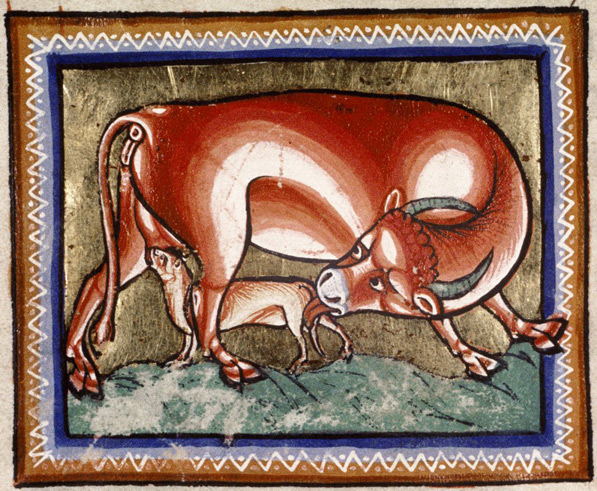
cū-cealf, n.n: a cow’s calf. (KOO-CHEH-alf / ˈkuː-ˌtʃɛalf)
fīfalde, f.n: another word for butterfly. (FEE-vald-eh)
See also buter-flēge.
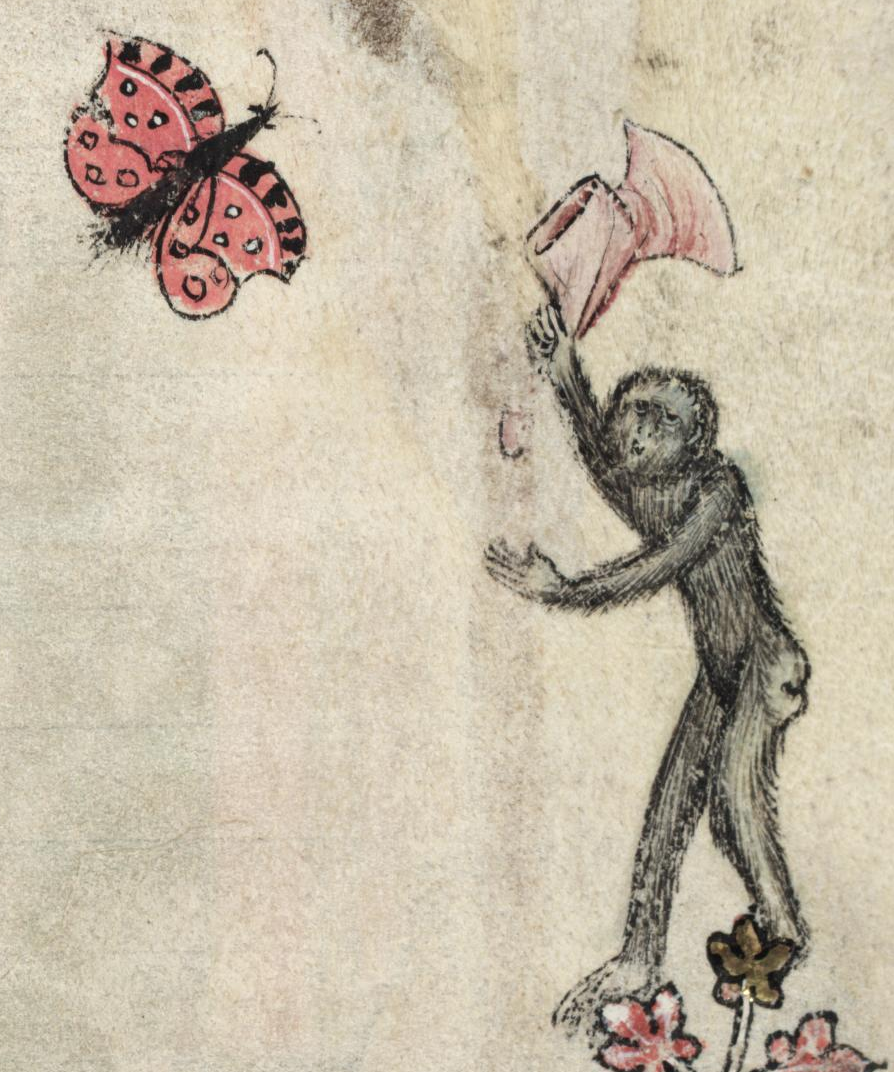
Romance of Alexander in French verse, from the workshop of Jehan de Grise. Flemish (Bruges?), 1338-1344. Oxford, Bodleian Library, MS Bodl. 264, f. 67r. [image.ox.ac.uk]

