weorf-tord, n.n: dung of beasts. (WAY-orv-TORD)
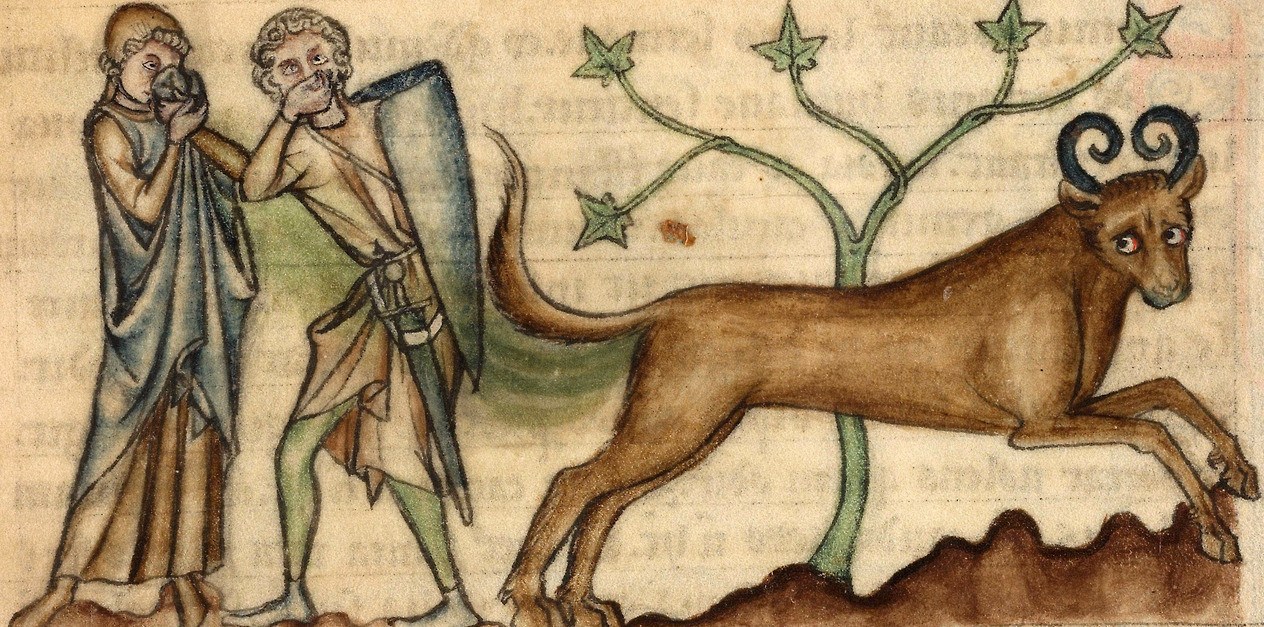
weorf-tord, n.n: dung of beasts. (WAY-orv-TORD)
mǣw, m.n: gull. (MAE-ew / ˈmæːu)
cū-horn, m.n: a cow’s horn. (KOO-HORN / ˈkuː-ˌhɔrn)
Patrons, you have one week to send me your requests for Goldgifa Week! Find out more on Patreon.
mūs, f.n: mouse. (MOOS / ˈmuːs)

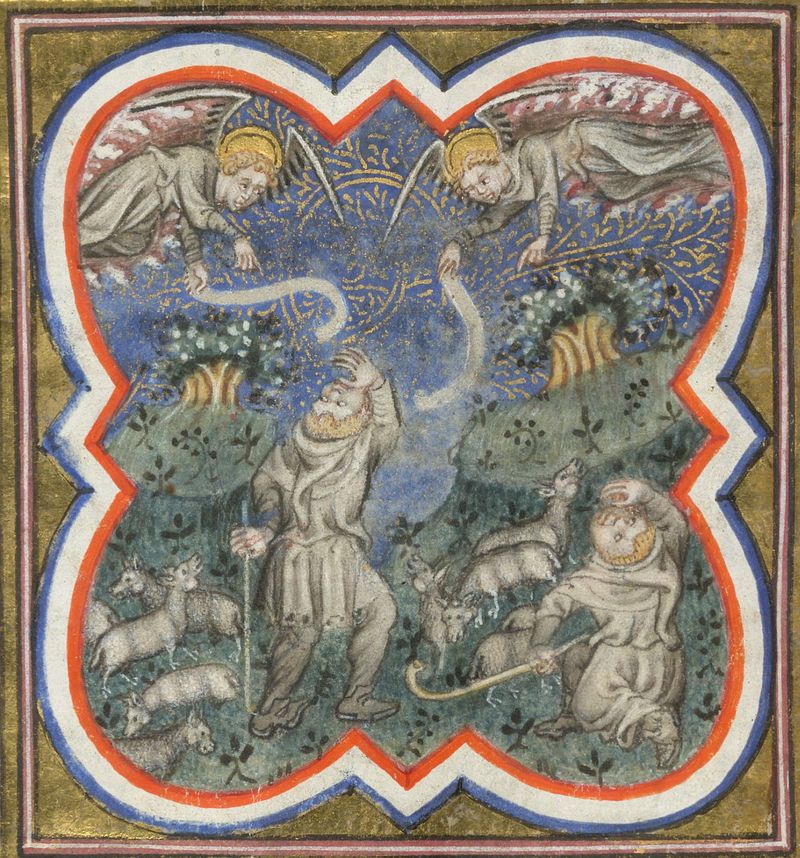
scēap-heord, f.n: a flock of sheep. (SHAY-op-HAY-ord)
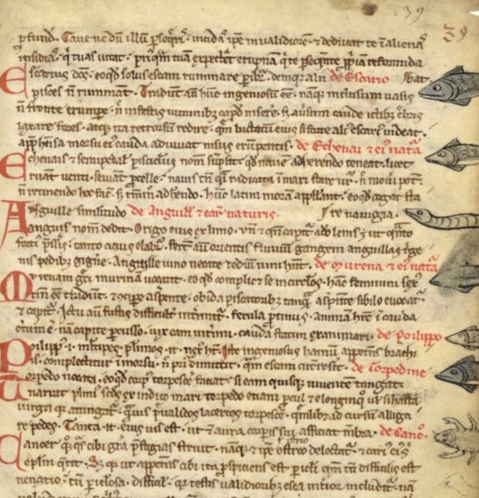
wǣg-bora, m.n: a wave-bearer, a creature that lives beneath the waves. (WAγ-BO-ra)
here-fugol, m.n: a bird which attends an army, eagle, vulture, raven. (HEH-reh-FUH-goll)
gūþ-floga, m.n: one that flies to battle, a dragon. (GOOTH-FLO-ga)
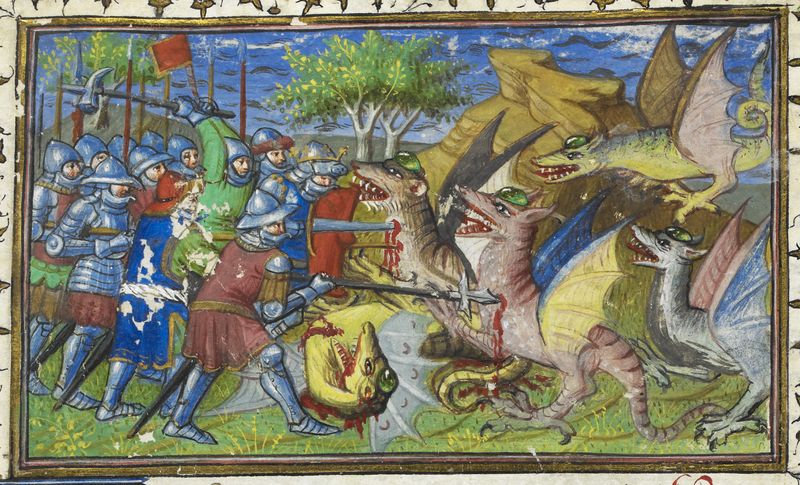
Alexander the Great battling winged dragons with emeralds in their foreheads. Le livre et la vraye hystoire du bon roy Alixandre. France (Paris), c. 1420-c. 1425. British Library, Royal MS 20 B XX, f. 73r. [blogs.bl.uk]
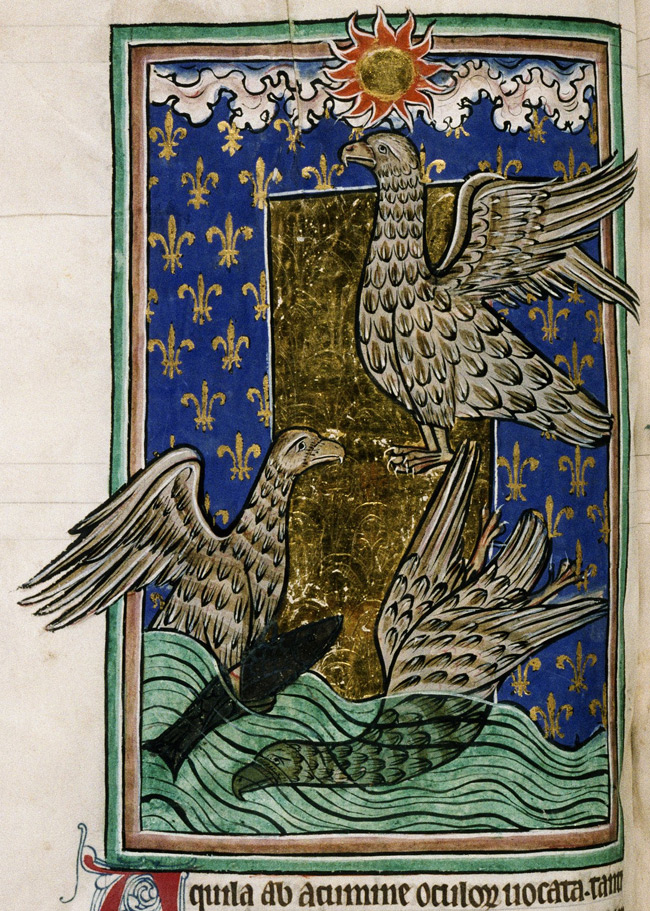
gūþ-fugel, m.n: war-bird (an epithet for the eagle). (GOOTH-FUH-yell / ˈguːθ-ˌfʌ-jɛl)
To find out more about medieval eagles, visit my blog Dēor-hord: a medieval and modern bestiary.
scolu, f.n: a school; a band or troop of people, a shoal, school (in school of fishes). (SHOLL-uh)
This week’s Wordhord Wednesday post concerns a sea-ready funeral ship. Listen and read on Patreon.
 Old English Wordhord