gang, m.n: going, movement (especially on foot); power of walking, ability to walk; manner of walking, gait, walk; coming/going from one place to another, journey; way, road, path; course, lapse, passage (of a period of time); circuit, tract, expanse; legal process, a legal proceeding; company of people/followers; privy. (GAHNG / ˈgaŋ)
Author Archives: Hana Videen
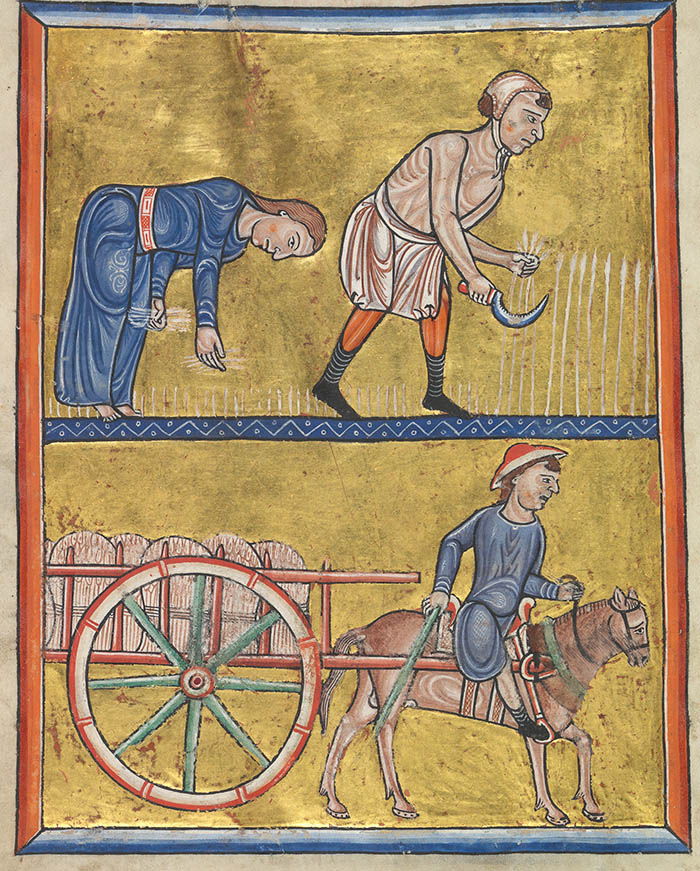
rīpan
wrixl
wrixl, f.n: change, alteration, vicissitude; alternation, exchange; interchange; what is given in return. (WRIX-ul)
lēac-tric
lēac-tric, m.n: a lettuce. (LAY-ock-tritch)
Patrons, you have one week to send me your requests for Goldgifa Week! Find out more on Patreon.
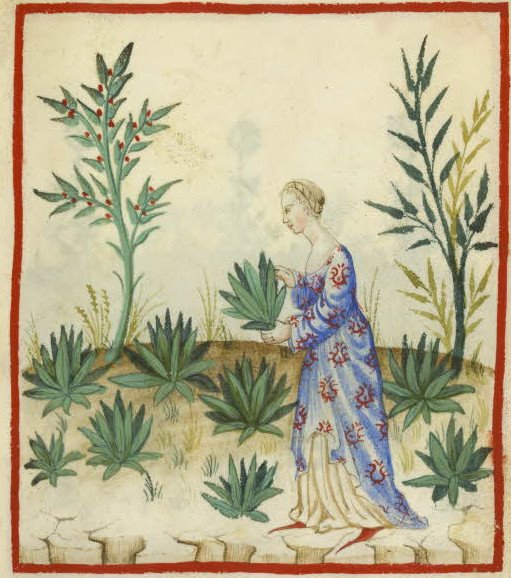
Tacuinum Sanitatis of Rouen, early 15th century. Rouen nouvelles bibliothèques. [bibliodyssey.blogspot.com]
clom
clom, m.n: a band, bond, clasp, bandage, chain, prison. (KLOM)
sund-būend
sund-būend, m.n: a sea-dweller, but the word, which occurs only in the plural, is used for men, mankind. (SUND-BOO-end)
hafoc
hafoc, m.n: a hawk. (HA-vock)
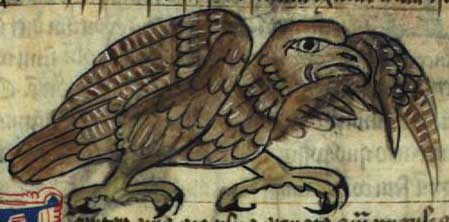
Bestiary of Ann Walsh. England, 15th century. Copenhagen, Kongelige Bibliotek, Gl. kgl. S. 1633 4º, f. 42r. [bestiary.ca]
niht-wacu
niht-wacu, f.n: a night-watch. (NIHT-wah-koo)
milisc
milisc, adj: honeyed, sweet, mellow, (of drink) mulled. (MILL-ish)
It’s the 100th week of Wordhord Wednesday! To celebrate I’m making post #100 free for everyone to read, whether or not you’re a subscriber. Read about Apollonius, harp-master extraordinaire, on Patreon.
hearpe-streng
hearpe-streng, m.n: a harp-string. (HAY-ar-peh-STRENG)
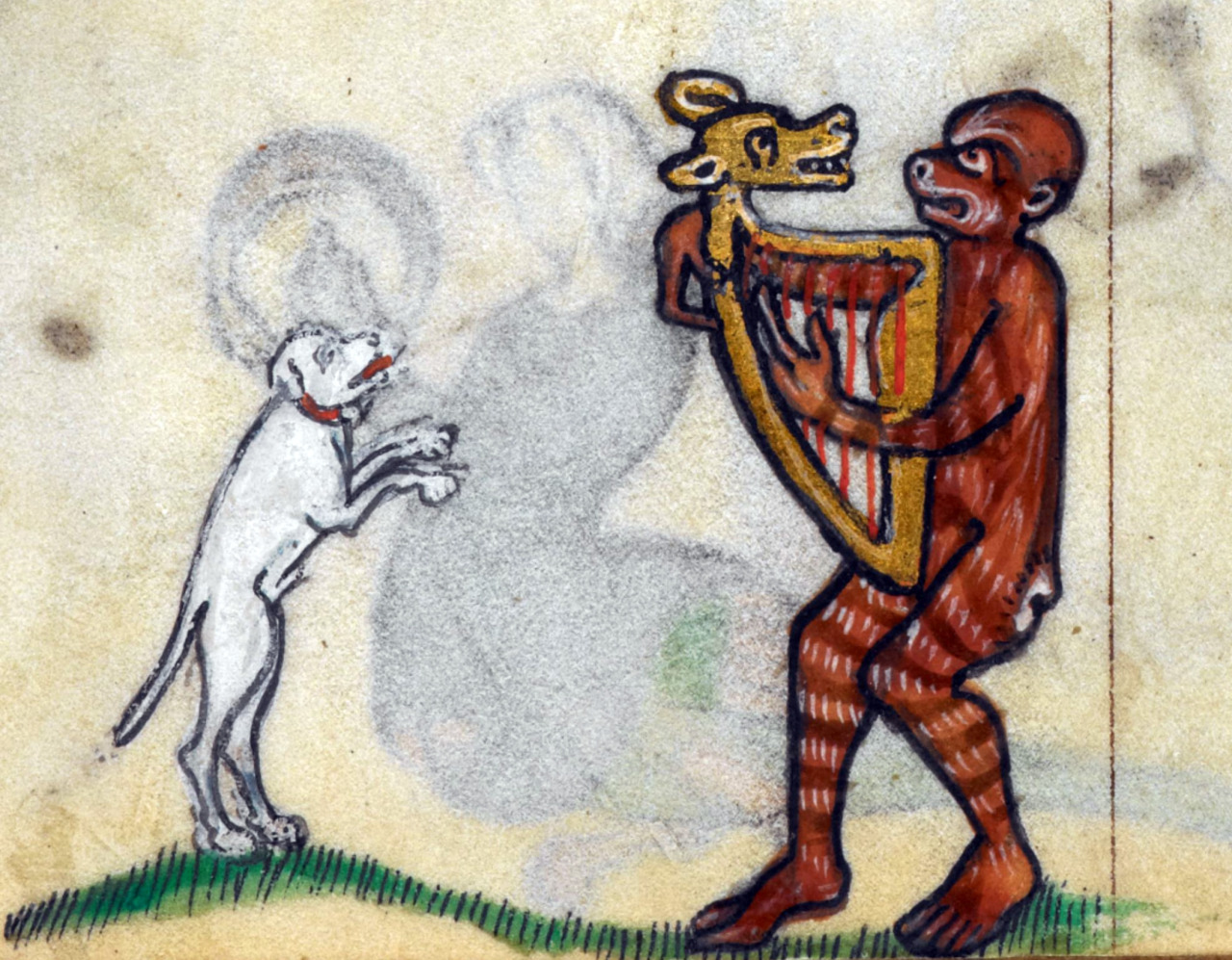
The Maastricht Hours. Netherlands (Liège), 1st quarter of the 14th century. British Library, Stowe MS 17, f. 245r. [bl.uk]

