a-cennan, wk.v: to bring forth, produce, beget, renew. (ah-CHEH-nahn / a-ˈtʃɛ-nan)
Crist wæs acennyd. Christ was born.
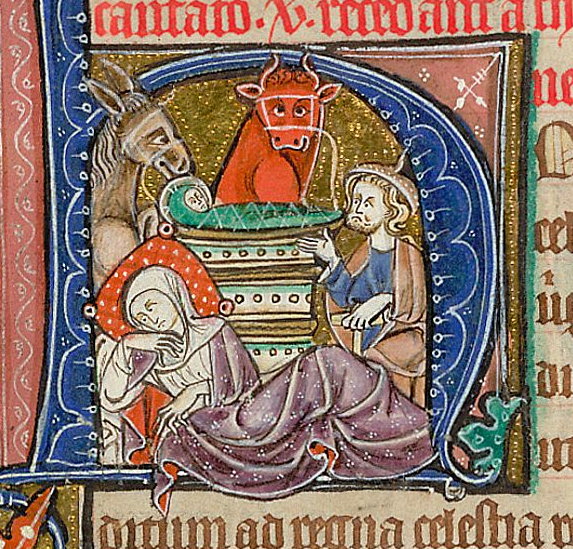
a-cennan, wk.v: to bring forth, produce, beget, renew. (ah-CHEH-nahn / a-ˈtʃɛ-nan)
Crist wæs acennyd. Christ was born.
ilfette, f.n: another word for swan. (ILL-veh-tuh / ˈɪl-vɛ-tə)
If you missed it, see the Exeter Book “swan” riddle on Dēor-hord, a medieval and modern bestiary.
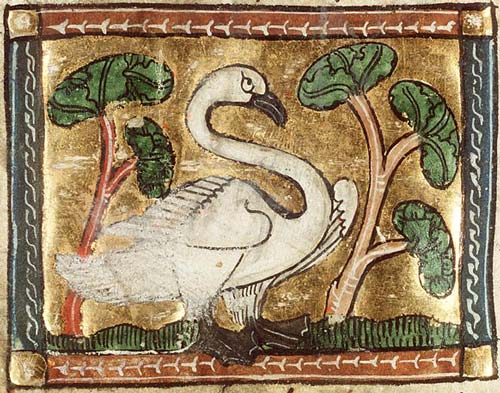
swan, m.n: swan. (SWAHN / ˈswan)
If you missed it, check out Exeter Book Riddle 7 on Dēor-hord: a medieval and modern bestiary.

wæd, n.n: ford, shallow water, water that may be traversed; (poetic) a body of water, sea. (WAED / ˈwæd)
þrīst-hygdig, adj: bold-minded, courageous. (THREEST-HUE-dih / ˈθriːst-ˌhy-dɪj)
This word is used to describe St Thomas the Apostle, whose feast day is today. You can find out more in today’s Wordhord Wednesday post on Patreon.
hors, n.n: horse. (HORS / ˈhɔrs)
byht, m.n: a bending, corner, dwelling, an abode, bay, bight. (BUE’HT / ˈbyxt)
gærs, n.n: grass, a blade of grass, herb, hay. (GAERZ / ˈgærz)

fērende, adj: moving, mobile. (FAY-ren-duh / ˈfeː-rɛn-də)
wæccer, adj: vigilant, watchful. (WAE-cher / ˈwæ-tʃɛr)

 Old English Wordhord