sniring, n: a sharp rock. [SNIR-ing]
nāwiht-fremmend
nāwiht-fremmend, m.n: one who does evil. [NAH-wiht-FREM-mend]
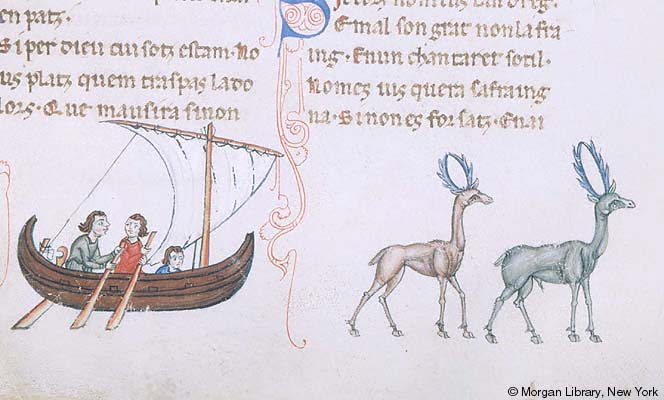
naca
naca, m.n: a boat, ship. (NAH-ka / ˈna-ka)
glōmung
glōmung, f.n: twilight, gloaming. [GLO-mung]
dracan blōd
dracan blōd, n.n: dragon’s blood, a pigment obtained from the dragon’s blood-tree. [DRA-kahn BLOD]
un-wemme
un-wemme, adj: spotless, without blemish or defect, uninjured; (moral sense) undefiled, pure, immaculate. [un-WEM-meh]
This week’s Wordhord Wednesday post is on ‘hoard-honouring’ in Beowulf. Read it (and hear it) on Patreon.
mold-wyrm
mold-wyrm, m.n: an earthworm, a worm in the grave. [MOLD-WURM]
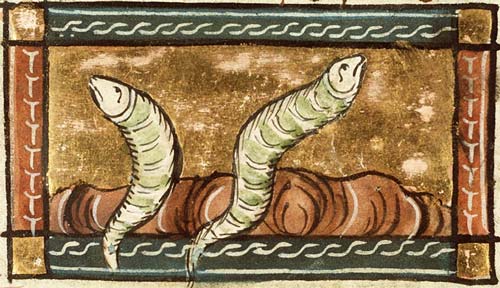
Two worms rising out of the soil in Jacob van Maerlant’s Der Naturen Bloeme. Flanders, c. 1350. Hague, Koninklijke Bibliotheek, KB, KA 16, f. 136r. [bestiary.ca]
Grēna-wīc
Grēna-wīc, n.n: a place name, Greenwich (near London); lit. ‘green dwelling-place’. [GRAY-na-weech]
hord-weorþung
hord-weorþung, f.n: honouring a person by bestowing treasure; treasure given to honour a person. [HORD-WAY-orth-ung]
fearh
fearh, m.n: a little pig, a farrow, litter. [FÆ-arh]
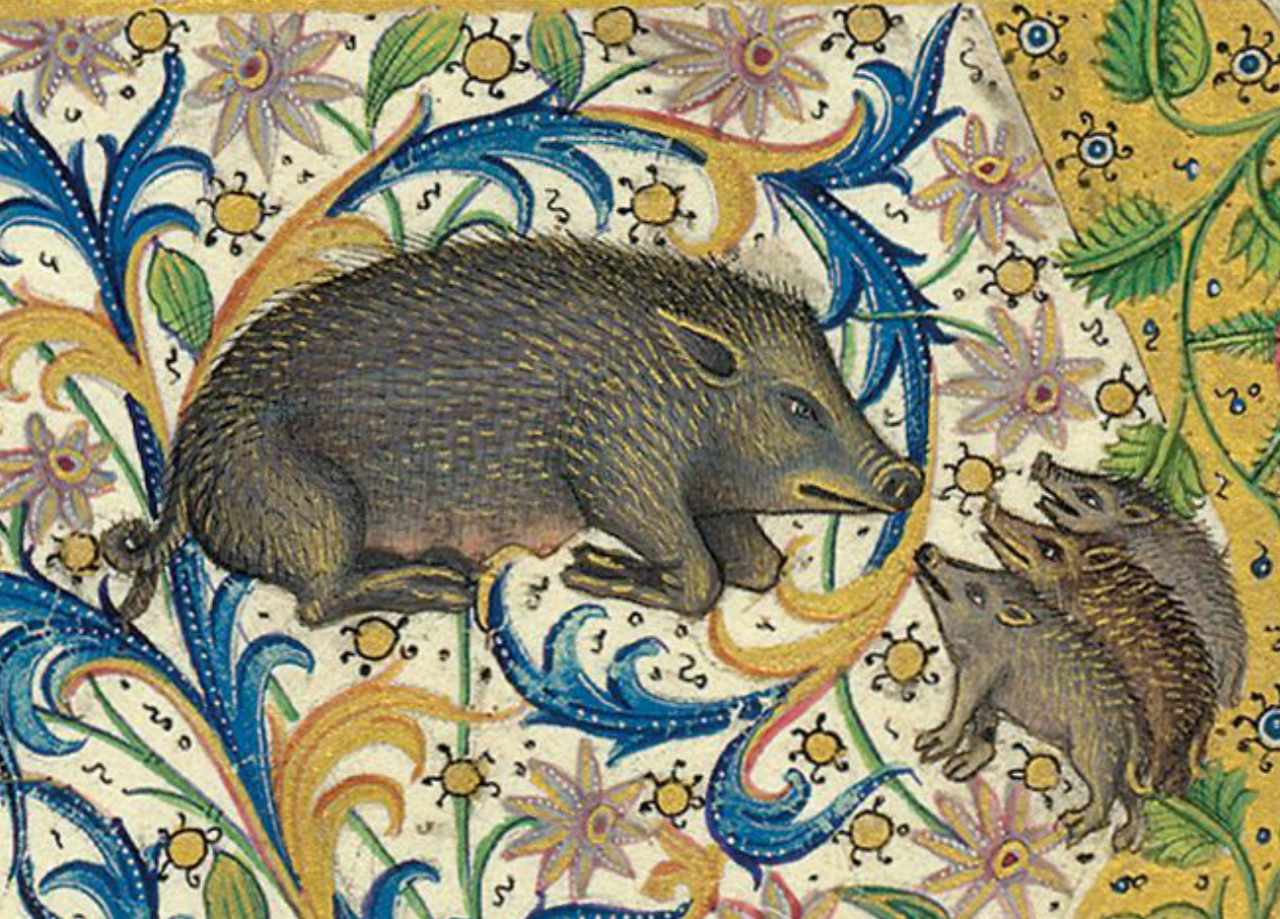
Livre de la chasse. France (Paris), c. 1406-1407. New York, Morgan Library, MS M.1044, f. 1v. [ica.themorgan.org] / via [discardingimages.tumblr.com]
 Old English Wordhord