wyrt-stenc, m.n: scent from a plant. (WUERT-STENCH / ˈwyrt-ˌstɛntʃ)
Cristes bōc
Cristes bōc, f.n: Christ’s book, the gospel (an account of Jesus’s life and teachings). [KRIST-ess BOAK]
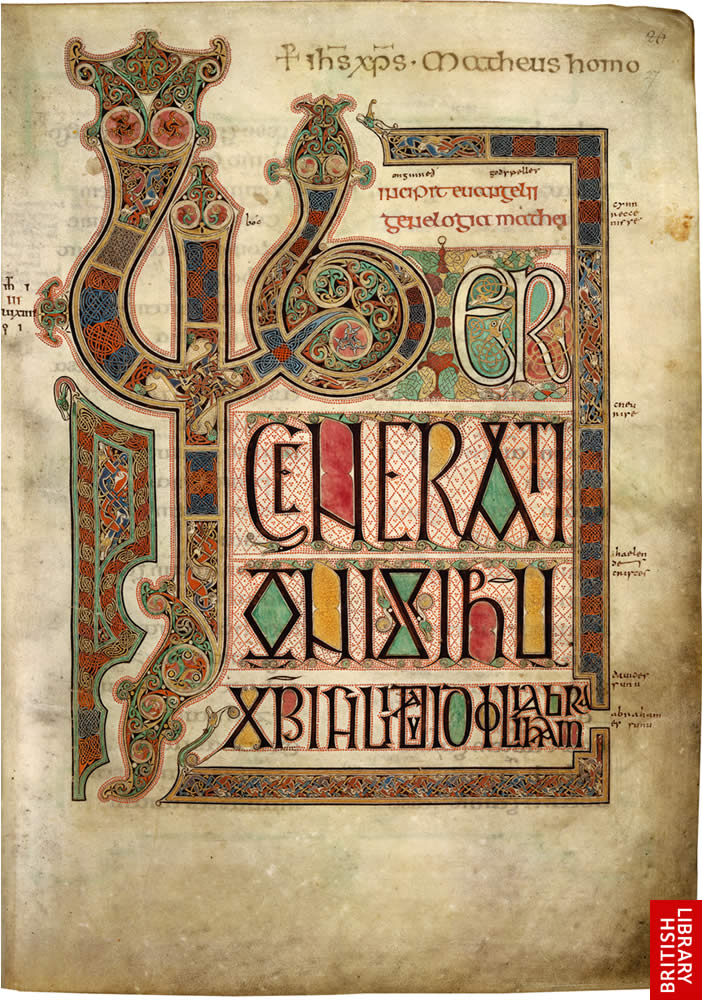
Lindisfarne Gospels, the beginning of St Matthew’s Gospel. England (Lindisfarne), late 7th or early 8th century. British Library, Cotton Nero D. IV, f. 27r. [bl.uk]
brēad
brēad, n.n: bread; food. (BRAY-ad / ˈbreːad)
mǣl
mǣl, f.n: a speech, talk, conversation. [MÆL]
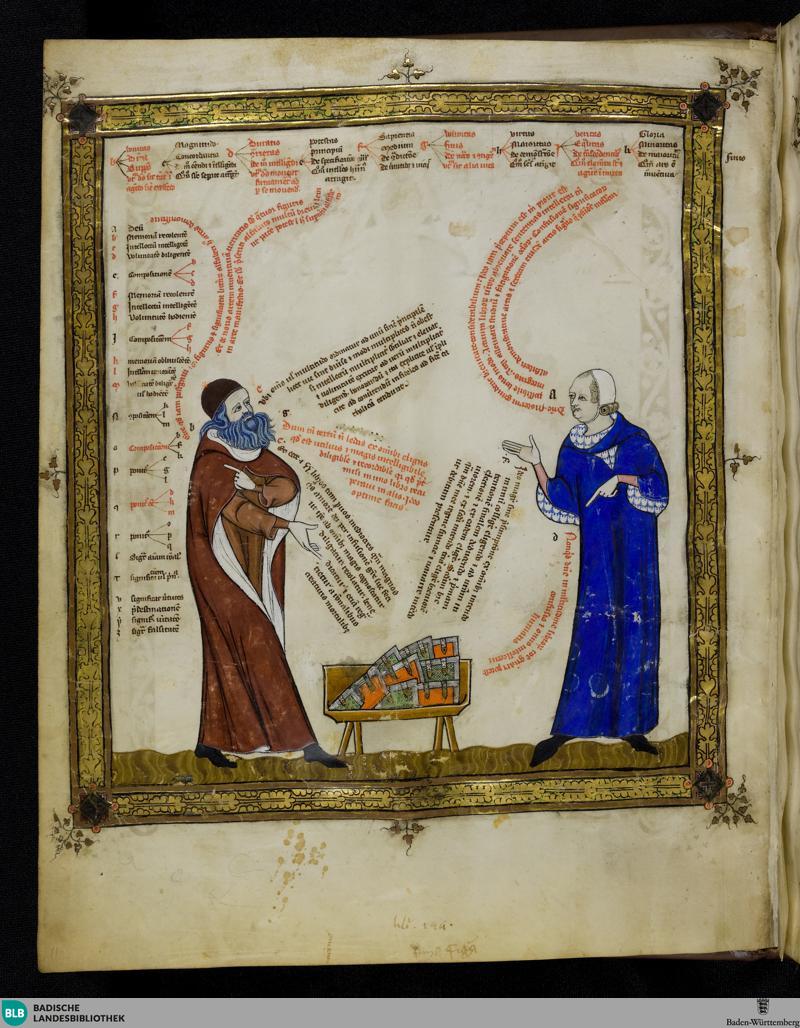
Miniature cycle on the life and teachings of Raimundus Lullus. Northern France(?), 14th century. Karlsruhe, Badische LandesBibliothek, St Peter Perg. 92, f. 11v. [digital.blb-karlsruhe.de]
hlēow-mǣg
hlēow-mǣg, m.n: a near relation, one who is bound to offer shelter or help. [HLAY-ow-mæγ]
cēne
cēne, adj: keen, fierce, bold, brave, warlike. [KAY-neh]
This week’s Wordhord Wednesday post is on St Cuthbert, false fire and other miracles. Read it on Patreon.
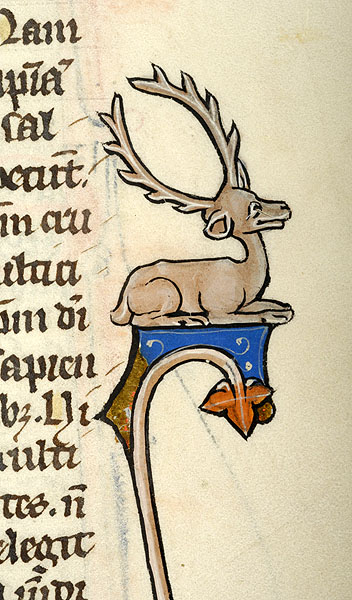
hēah-dēor
hēah-dēor, n.n: a stag, deer. (HAY-ah-DAY-or)
Patrons, you have one week to send me your requests for Goldgifa Week! Find out more on Patreon.
croc
croc, m.n: a crock, pitcher, water pot, flagon, small jug. [CROCK]
sunn-ganges
sunn-ganges, adv: in the direction of the sun’s movement, with the sun. [SUN-GONG-ess]
hweogul
hweogul, n.n: a wheel. [HWAY-oh-gull]
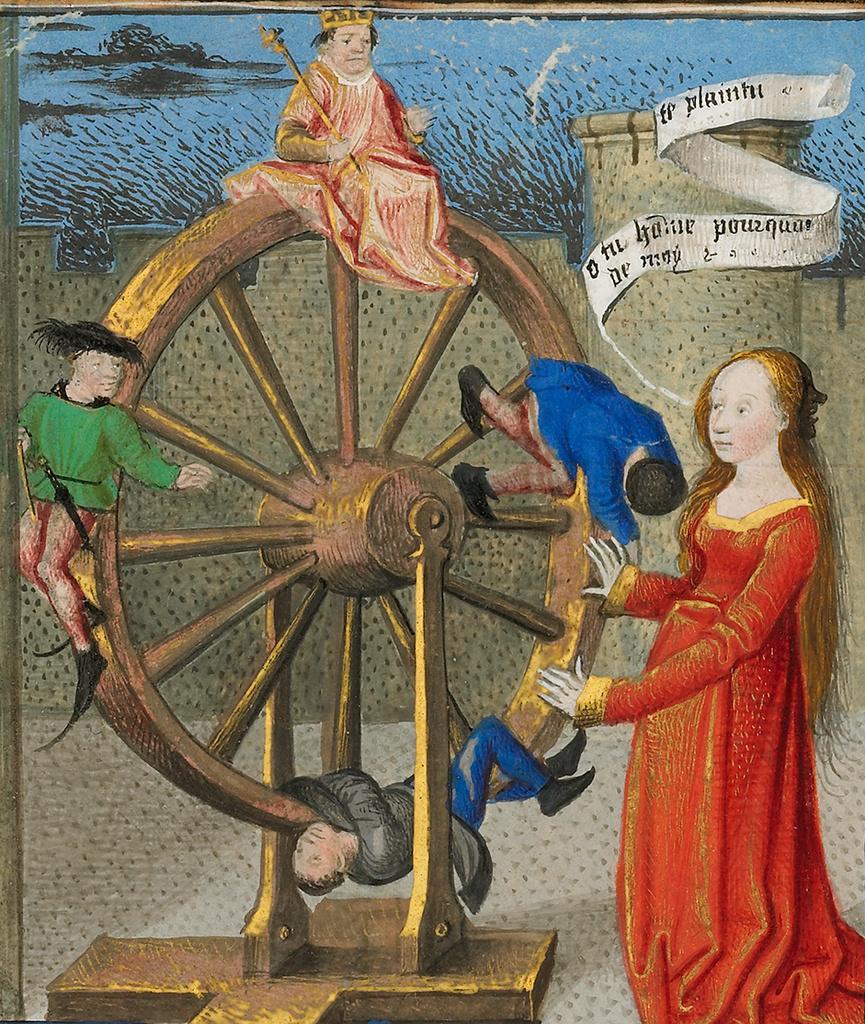
Fortune turns her wheel in Boethius’s Consolation de philosophie. Art by Coëtivy Master (Henri de Vulcop?). France (Paris), c. 1460-1470. Los Angeles, The J. Paul Getty Museum, MS. 42, fol. 1v. [getty.edu]

