Windles-ōra, m.n: Windsor. (WIND-less-OH-ra)
hearga
hearga, m.n: a place sacred to a god, with an idol and an altar; a temple, fane; an idol. (HAY-ar-ga)
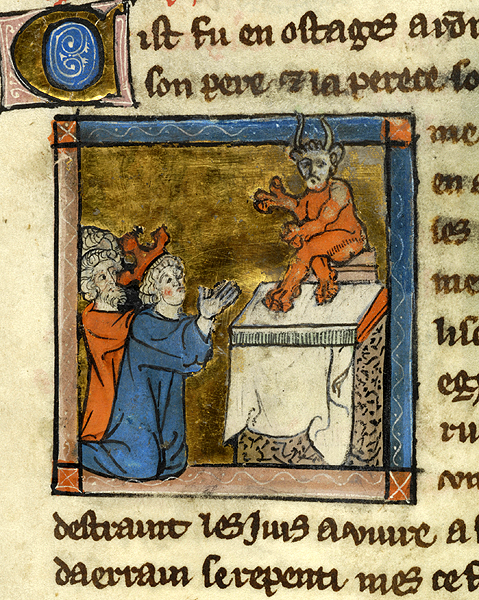
Antiochus IV, crowned, with joined hands raised, kneels with two men, partially visible, before draped altar on which sits horned idol. Abrégé des histoires divines. France (possibly Amiens), between 1300 and 1310. New York, Morgan Library, MS M.751, f. 29v. [ica.themorgan.org]
tungilsinwyrt
tungilsinwyrt, f.n: white hellebore. (TUN-yill-zin-WURT)
This week’s Wordhord Wednesday post is on people-joy. Read and listen on Patreon.
lēod-wynn
lēod-wynn, f.n: joy of being among one’s own people. (LAY-odd-WUEN / ˈleːɔd-ˌwyn)
hearma
hearma, m.n: a field-mouse or a dormouse. (HAY-ar-ma)
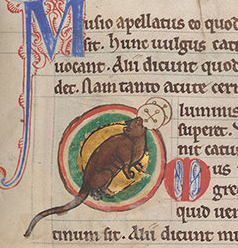
Worksop Bestiary. England, c. 1185. New York, Morgan Library, MS M.81, f. 47r. [ica.themorgan.org]
fæderen
fæderen, adj: paternal, belonging to a father. (FAE-deh-ren / ˈfæ-dɛ-ɹɛn)
Patrons, you have 1 week to send me your words for Goldgifa Week! Find out more on my Patreon page.
wæter-bucca
wæter-bucca, m.n: an aquatic insect, a water-spider. (WAT-er-BUCK-kah)
cnoll
cnoll, m.n: a knoll, hill-top, cop, summit. (K-NOLL)
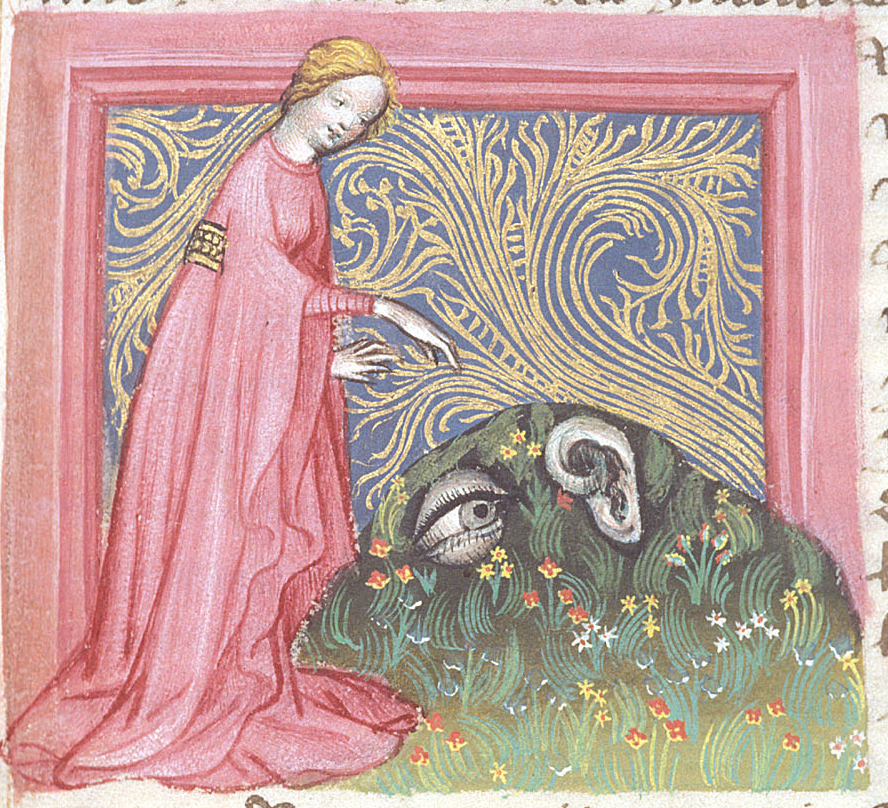
The Human Ear complaining to a personification of Nature that she has given him no such protection as the Eye was given with eyebrows. Spiegel der Weisheit, by Ulrich von Pottenstein. W. Austria (Salzburg), c. 1430. British Library, Egerton 1121, f. 38r. [bl.uk]
dōm-ern
dōm-ern, n.n: a judgment-place, a courthouse. (DOME-ern)
hræd
hræd, adj: quick, swift, speedy, sudden, alert, rapid, prompt, active. (HRAD)
This week’s Wordhord Wednesday post is on deadly jaws. Read it on Patreon.

