ȳþ-mearh, m.n: ship (wave-steed). (UETH-MEH-ar’h / ˈyːθ-ˌmɛarx)
This week’s Wordhord Wednesday post is on these “wave-horses”. See it on Patreon.
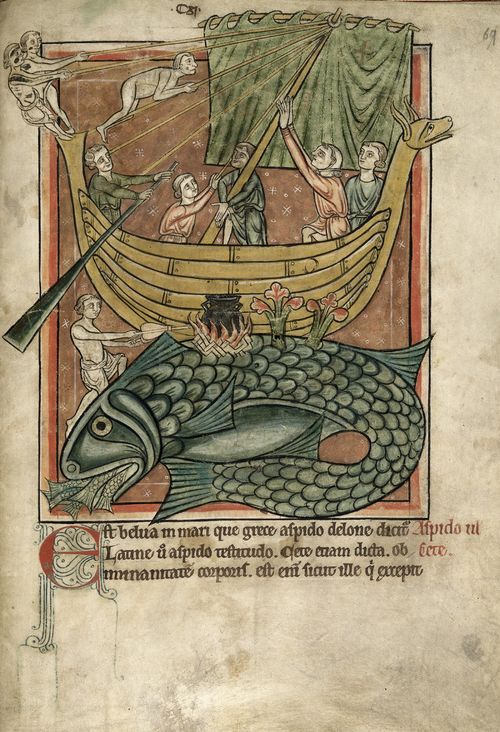
ȳþ-mearh, m.n: ship (wave-steed). (UETH-MEH-ar’h / ˈyːθ-ˌmɛarx)
This week’s Wordhord Wednesday post is on these “wave-horses”. See it on Patreon.
glitenung, f.n: a flash, gleam. [GLI-teh-nung]
tūn, m.n: an enclosed piece of ground, a yard, court; a habitation of humans; an estate, farm; a collection of dwellings, a village, town. [TOON]
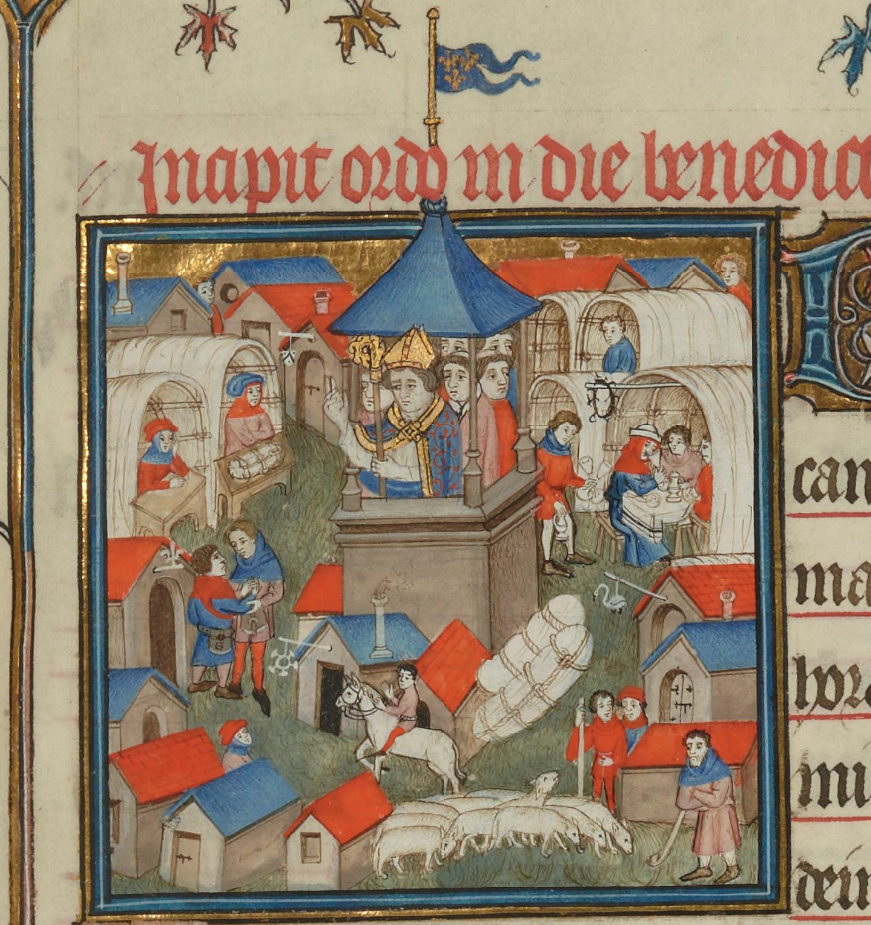
A bishop blesses the opening of an annual fleece fair. Pontificale Senonense (14th century). Bibliothèque nationale de France, Latin 962, fol. 264r. [gallica.bnf.fr]
ilf, f.n: an elf. [ILF]
Patrons, you have one week to send me your requests for Goldgifa Week! Find out more on Patreon.
wundrung, f.n: wondering, wonder, admiration, astonishment; a wonderful sight, a spectacle. [WUN-drung]

Image of St Patrick – but where’s it from? Please comment if you know. Happy St Patrick’s Day!
sunn-bearu, m.n: a sunny grove. [SUN-BEH-ah-roo]
efen-esne, m.n: a fellow servant. [EH-ven-EZ-neh]
spell-bōc, f.n: a book of homilies. [SPELL-BOK]
For this week’s Wordhord Wednesday post, take a closer look at this Old English manuscript. Read my post on Patreon.
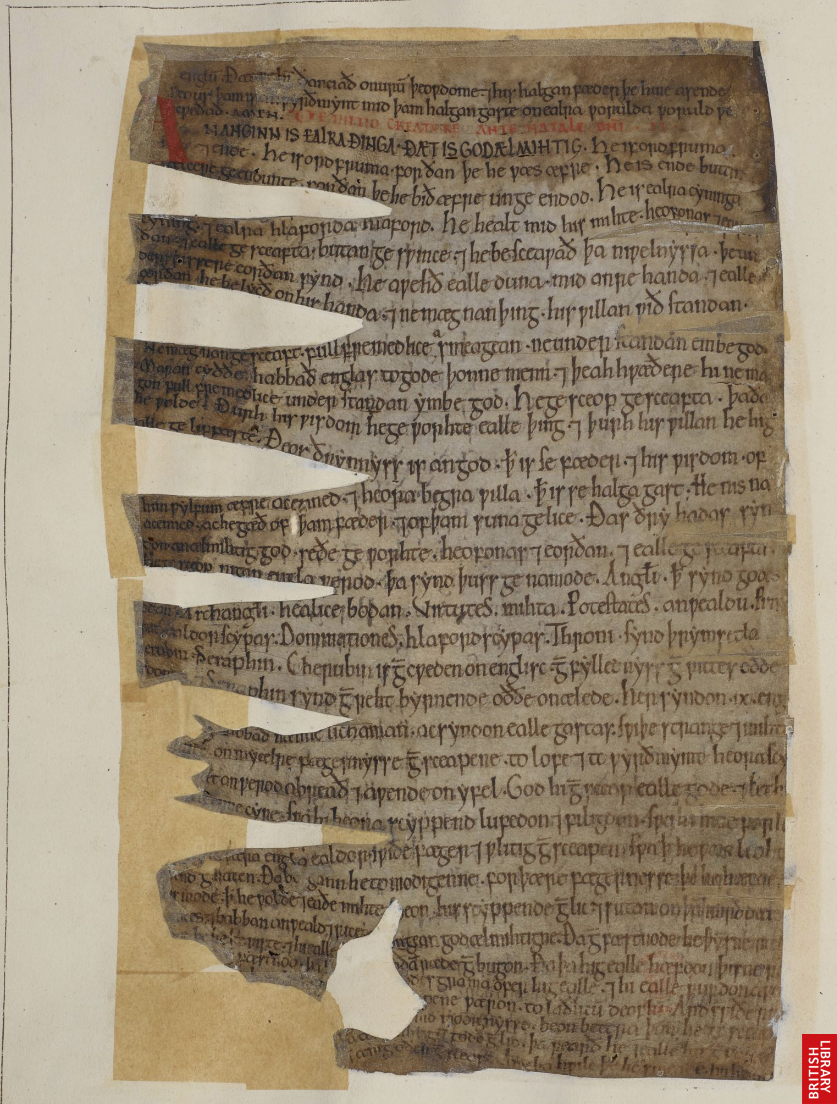
A much damaged folio from a book of Old English homilies, including the first series of Ælfric’s Catholic Homilies. England (south-east? south-west?), fourth quarter of the 10th century to first half of the 11th century. British Library, Cotton MS Vitellius C V, fol. 5v. [bl.uk]
cyrten, adj: beautiful, elegant; comely in person; fair. [KUR-ten]
tōr-begete, adj: hard to get. [TOR-BEH-yeh-teh]
 Old English Wordhord