gūþ-cræft, m.n: warlike power or skill. (GOOTH-kraft)
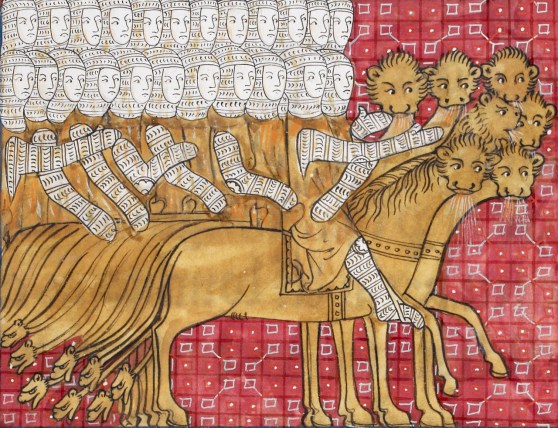
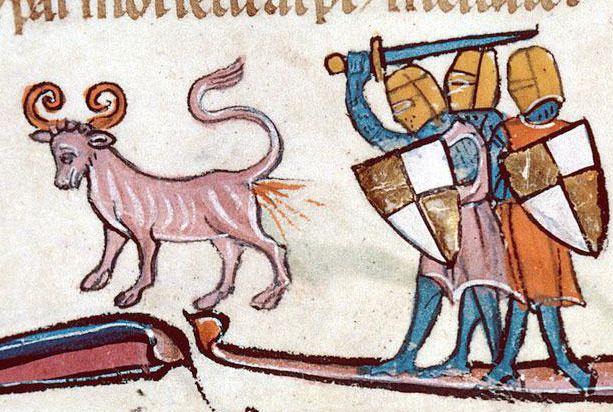
The Welles Apocalypse. England, c. 1310. British Library, Royal 15 D II, f. 143r. [bl.uk]
gūþ-cræft, m.n: warlike power or skill. (GOOTH-kraft)
The Welles Apocalypse. England, c. 1310. British Library, Royal 15 D II, f. 143r. [bl.uk]
ēðel-turf, f.n: native turf or soil, native country, country. (ETH-ell-turf)
This week’s Wordhord Wednesday post is on God’s high-chair. Read and listen on Patreon.
wyrt-mete, m.n: vegetable food, food consisting of herbs. (WURT-meh-teh)
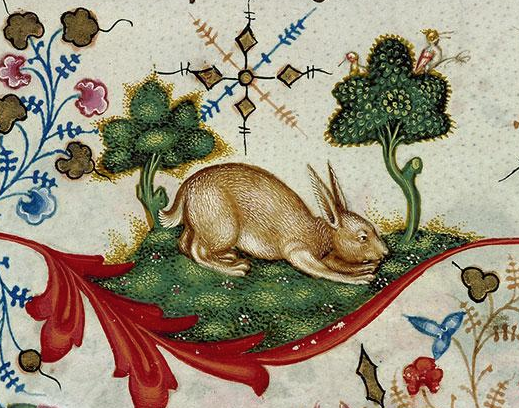
Franciscan Bréviaire. Northern Italy (Milan), c. 1430. Chambéry, Bibliothèque municipale, ms. 0004, f. 455r. [bvmm.irht.cnrs.fr]
gran-wisc, n: chaff (the husks of grains and grasses separated from the seed in threshing). (GRON-wish)
ifig, n.n: ivy. (IH-vee)
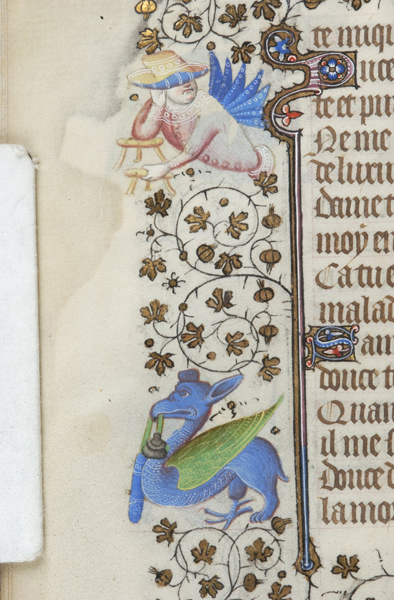
Marginal ivy in a Book of Hours. France (Paris), c. 1418. New York, Morgan Library, MS M.919, f. 187v. [ica.themorgan.org]
hǣmed-gemāna, m.n: matrimony, marriage. (HAM-ed-yeh-MAH-na)
hēah-seld, n.n: a throne. (HAY-ah-seld)
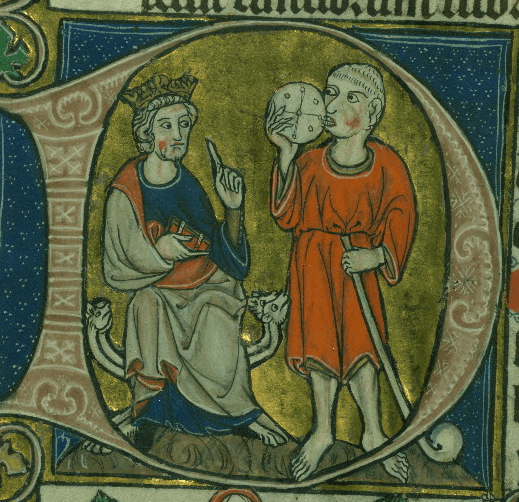
Look at how great King David’s throne is! Fieschi Psalter. Cambrai, c. 1290-1295. Baltimore, Walters Art Museum, W.45, f. 90v. [thedigitalwalters.org]
wyrt-forbor, n.n: restraint from an action by the operation of herbs. (WURT-for-bor)
cūe mesa, m.n: cow’s dung. (KOO-eh-MEH-za / ˈkuː-ɛ-ˌmɛ-za)
This week’s Wordhord Wednesday post is about Windsor and its first appearance in writing. Read it on Patreon.
ā-wiht, n.n/pronoun: aught, anything. (ah-WI’HT / aː-ˈwɪht)
 Old English Wordhord