gāst-genīþla, m.n: a persecutor or foe of souls, the devil. (GAHST-yeh-NEETH-la)
This week’s Wordhord Wednesday post is on Old English professions and surnames. Read it on Patreon.
gāst-genīþla, m.n: a persecutor or foe of souls, the devil. (GAHST-yeh-NEETH-la)
This week’s Wordhord Wednesday post is on Old English professions and surnames. Read it on Patreon.
ciric-þēnung, f.n: church-duty or service. (CHI-rich-THAY-nung)
This week’s Wordhord Wednesday post is on burning tears. Read it on Patreon.
hell-grund, m.n: the depth of hell. (HELL-grund)
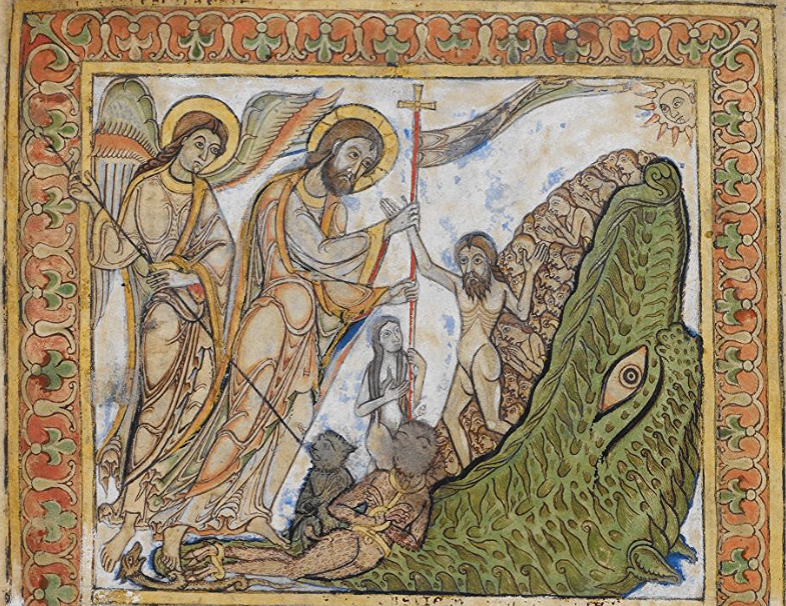
cyric, f.n: a church. (KUR-ich)
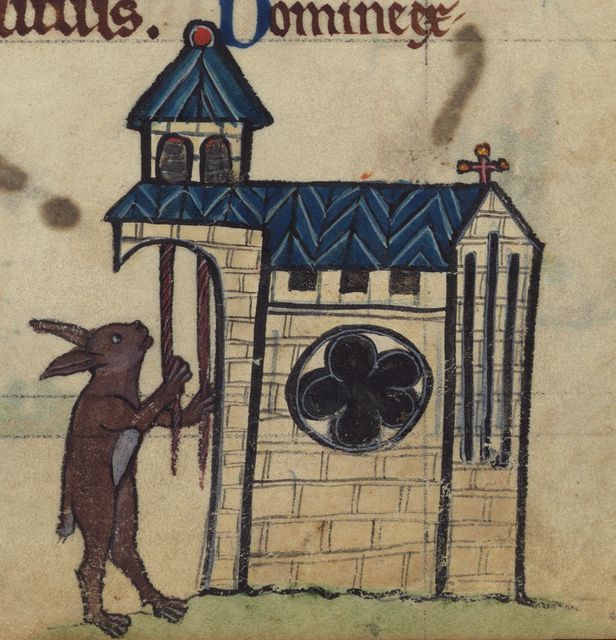
cyning, m.n: a king, monarch, male sovereign; God, Christ. (KUE-ning / ˈky-nɪŋ)
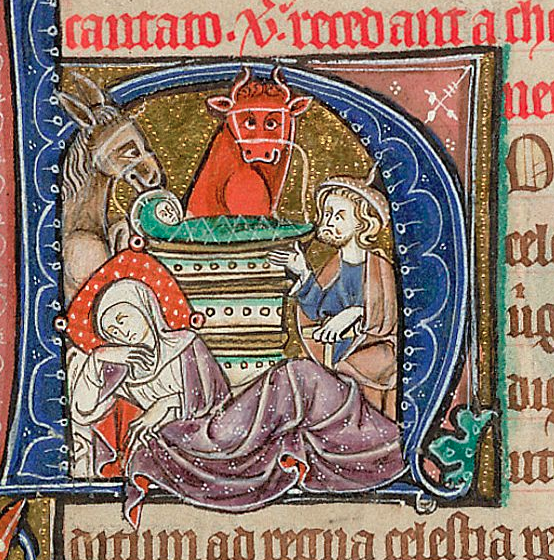
hūsel-gang, m.n: partaking of the sacrament; receiving of the Eucharist, Communion. (HOO-zel-GONG)
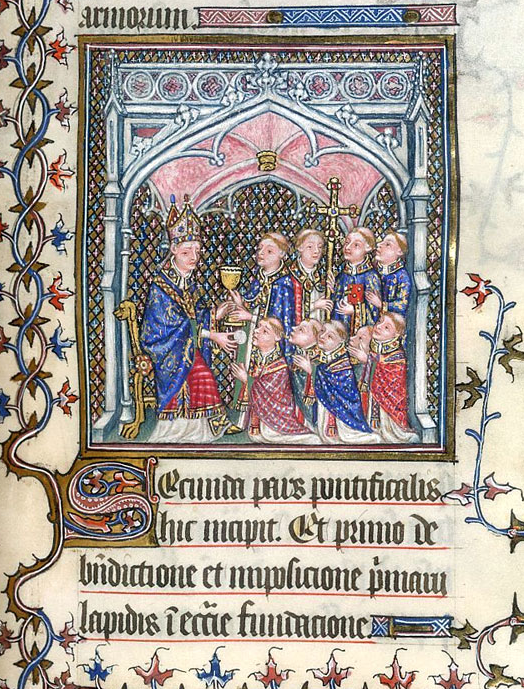
hālgung-bōc, f.n: a benedictional, a book containing a collection of benedictions or blessings. (HALL-gung-BOAK)
hell-waru, f.n: the body of the inhabitants of hell. (HELL-WA-ruh)
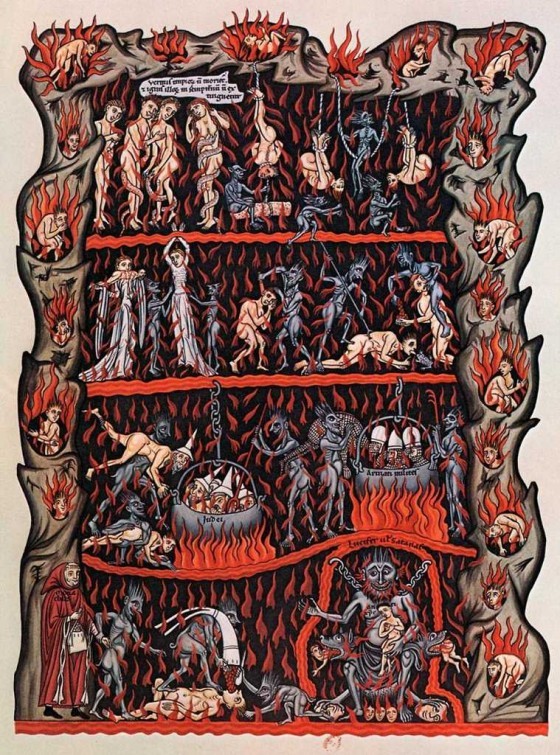
Hell. Hortus deliciarum (Garden of Delights), an illuminated manuscript by the nun Herrad of Landsberg. France (Alsace), c. 1130-1195. Public Domain. [wikipedia.org]
mynster-gang, m.n: going into a monastery, entering on a monastic life. (MUN-ster-GONG)
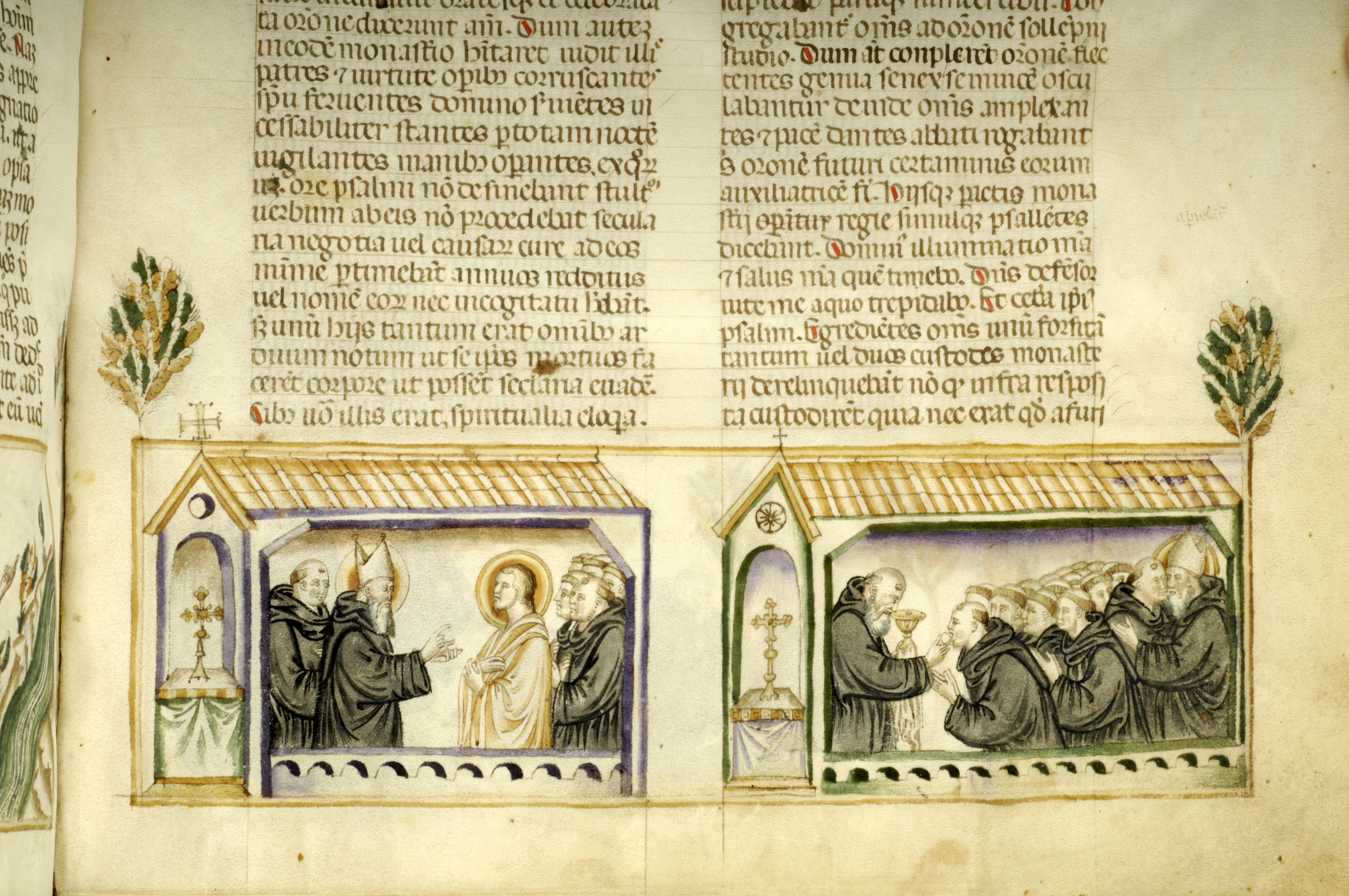
Vitae patrum. Italy (Naples), between 1350 and 1375. New York, The Morgan Library & Museum, MS M.626, f. 134r. [ica.themorgan.org]
swegel-wundor, n.n: a heavenly wonder, a wondrous sound. (SWAY-yell-WUN-dor)
This week’s Wordhord Wednesday post is on St Guthlac and his musical death. Read it on Patreon.
 Old English Wordhord