gār-lēac, n.n: garlic. (GAR-LAY-ock / ˈgaːr-ˌleːak)
Category Archives: food + drink
mete-awul
mete-awul, m.n: a meat-hook, flesh-hook (a culinary tool used to retrieve large chunks of meat from cooking pots). (MEH-teh-AH-wul)
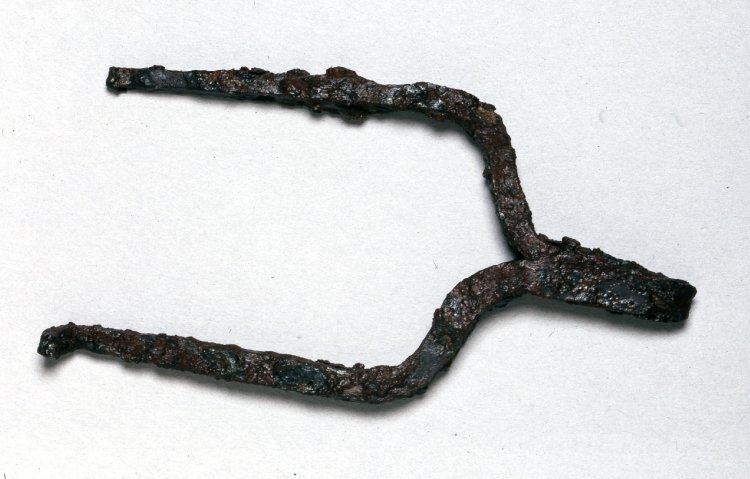
Anglo-Saxon iron flesh-hook. Northumbria (England), 9th-10th century. British Museum 1995,0901.20. [britishmuseum.org]
enne-lēac
enne-lēac, n.n: onion. (EN-nuh-LAY-ock / ˈɛn-nə-ˌleːak)
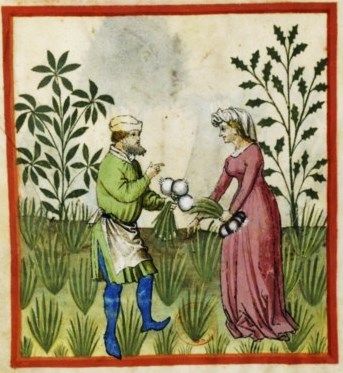
wyrt-mete
wyrt-mete, m.n: vegetable food, food consisting of herbs. (WURT-meh-teh)
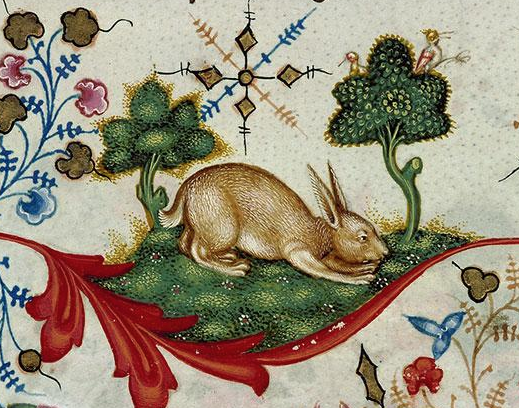
Franciscan Bréviaire. Northern Italy (Milan), c. 1430. Chambéry, Bibliothèque municipale, ms. 0004, f. 455r. [bvmm.irht.cnrs.fr]
ciris-æppel
ciris-æppel, m.n: a cherry. (CHIR-iz-APP-ell)
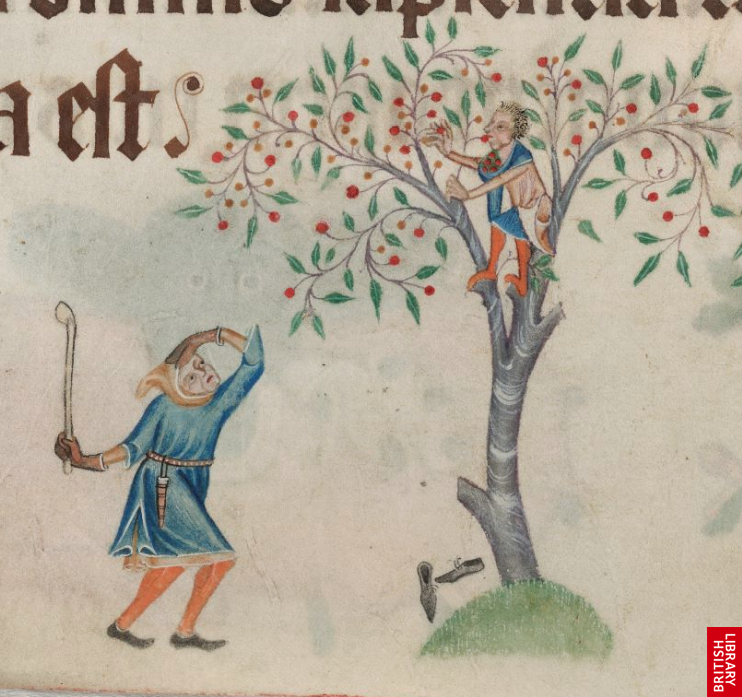
A boy stealing cherries from a tree. The Luttrell Psalter. Northern England (Lincolnshire), 1325-1340. British Library, Add MS 42130, f. 196v. [bl.uk]
ealo-wǣge
ealo-wǣge, n.n: ale-cup. (AY-ah-lo-WÆ-yeh)
This week’s Wordhord Wednesday post is about Judith, the clever, sword-wielding beauty who saved her people. Read it on Patreon.
brēad
brēad, n.n: bread; food. (BRAY-ad / ˈbreːad)
croc
croc, m.n: a crock, pitcher, water pot, flagon, small jug. [CROCK]
lēac
lēac, n.n: herb, plant. (LAY-ock / ˈleːak)

sælmerige
sælmerige, f.n: brine. [SÆL-MEH-ri-yeh]
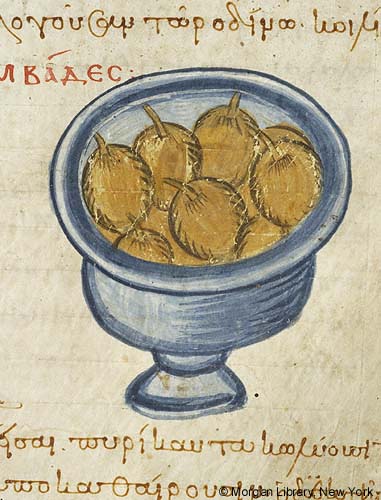
A container of olives in pickling brine. De materia medica. Turkey (Istanbul), mid-10th century. New York, Morgan Library & Museum, MS M.652, fol. 226r. [ica.themorgan.org]

