Old English Wordhord

Old English Word of the Day

Navigation

Skip to content
  • About
  • Linktree
  • Books
    • The Wordhord: Daily Life in Old English
    • The Deorhord: An Old English Bestiary
    • Book Illustrations
  • App
  • Events
  • Podcasts
  • Merch
  • More content on Patreon
  • Goldgifa Page
  • Pronunciation
  • Not “Anglo-Saxon”
  • Medieval Resources

Category Archives: deorhord book

Post navigation

← Older posts
Newer posts →

wīf

Posted on August 15, 2016 by Hana Videen

wīf, n.n: woman, female; married woman, wife. (WEEF / ˈwiːf)
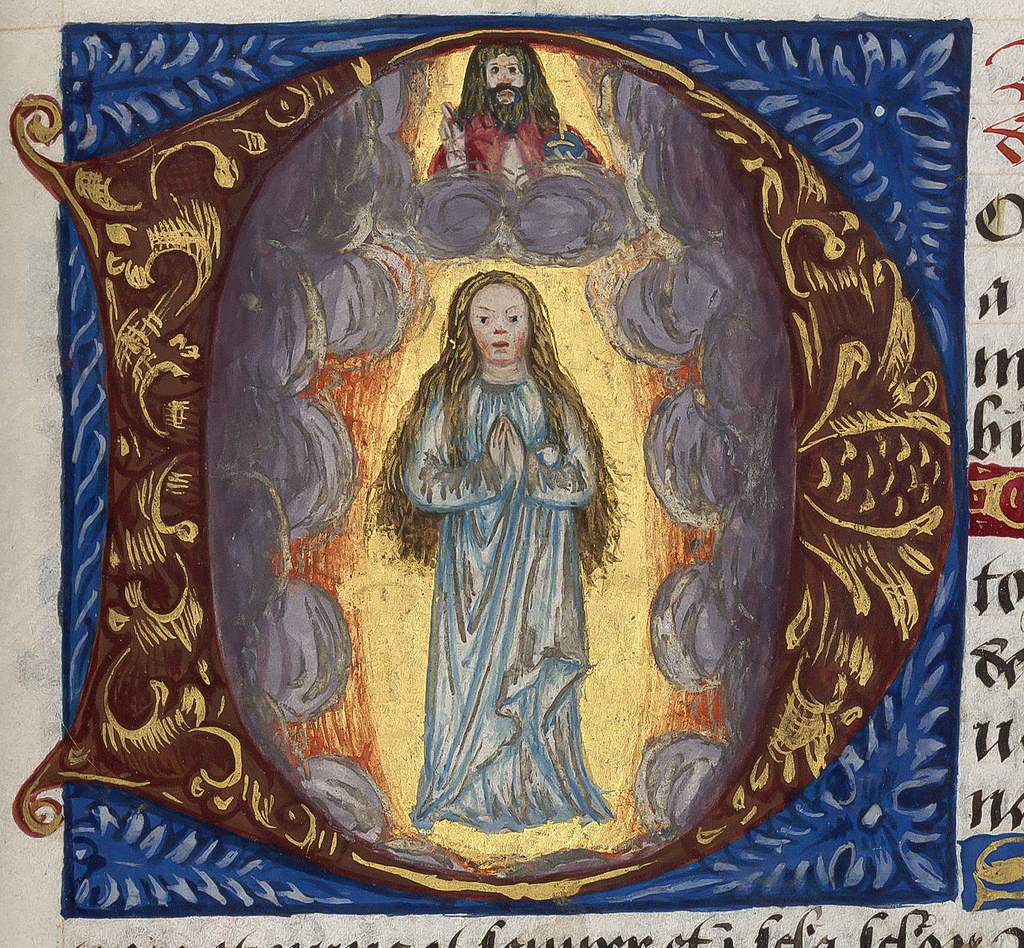
mary
The Assumption of the Virgin Mary, from a French Book of Hours. Bibliotheque Renaissance de Nancy, MS 1874. Creative Commons licensed via Flickr.
Posted in deorhord book, people, wordhord book 2 Comments

ān-stapa

Posted on July 25, 2016 by Hana Videen

ān-stapa, m.n: lone wanderer (one-stepper). (AHN-STAH-pa / ˈaːn-ˌsta-pa)

Posted in deorhord book, hord highlights, wordhord book Leave a comment

fyrn-geflita

Posted on July 16, 2016 by Hana Videen

 fyrn-geflita, m.n: ancient enemy, long-standing foe. (FUERN-yeh-VLIT-ah / ˈfyrn-jɛ-ˌvlɪ-ta)

Posted in deorhord book Leave a comment

panþer

Posted on July 13, 2016 by Hana Videen

panþer, m.n: panther. (PAHN-ther / ˈpan-θɛr)

Learn about how the panþer was imagined in the Middle Ages (and see a modern artist’s rendition of him) at Dēor-hord, a medieval and modern bestiary.

Posted in animals, deorhord book Leave a comment

fugel-timber

Posted on July 6, 2016 by Hana Videen

fugel-timber, n.n: bird material (which forms the fledgling), the young bird which develops. (FUH-yell-TIM-ber / ˈfʌ-jɛl-ˌtɪm-bɛr)
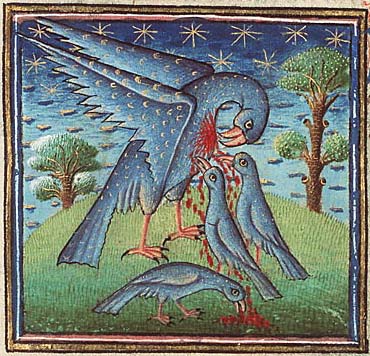
pelican
The pelican revives her young with blood from her own breast. Museum Meermanno, MMW, 10 B 25, fol. 32r. France, c. 1450. From The Medieval Bestiary.
Posted in animals, deorhord book, hord highlights Leave a comment

tunece

Posted on June 23, 2016 by Hana Videen

tunece, f.n: tunic, coat. (TUN-eh-chuh / ˈtʌ-nɛ-tʃə)
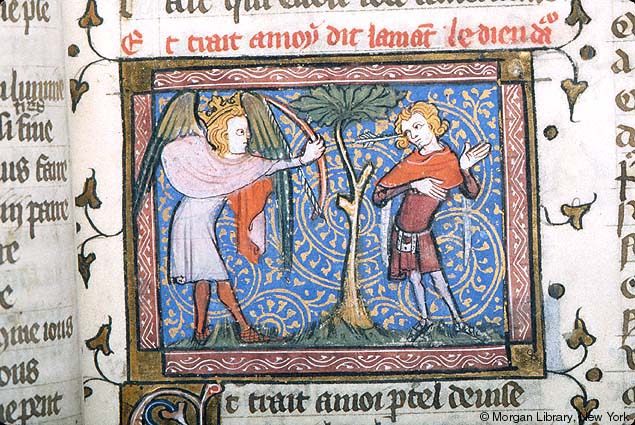
tunic
Eros, God of Love, shoots an arrow into the eye of the Lover, who wears a tunic with belted purse. Roman de la Rose. France (Paris), between 1340 and 1350. Morgan Library, MS M.48, fol. 14r.
Posted in deorhord book, things to wear 1 Comment

wrǣt-līc

Posted on June 19, 2016 by Hana Videen

wrǣt-līc, adj: wondrous, curious; of wondrous excellence, beautiful, noble. (WRAET-leech / ˈwɹæːt-liːtʃ)

Posted in deorhord book, hord highlights Leave a comment

sundor-gecynd

Posted on June 13, 2016 by Hana Videen

sundor-gecynd, n.n: peculiar or unique nature. (SUN-dor-yeh-KUEND / ˈsʌn-dɔr-jɛ-ˌkynd)
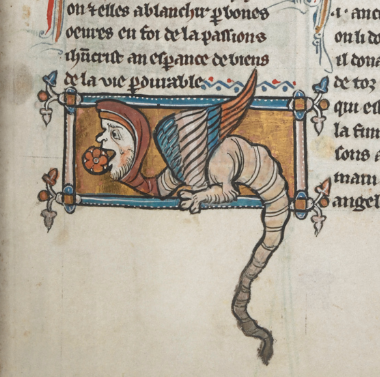
Detail from Apocalypse in Prose. Southeast France (Lorraine), 4th quarter of 13th century or 1st quarter of the 14th century. Harley MS 4972, f. 14r. Of a peculiar nature indeed.
Posted in deorhord book, hord highlights, wordhord book Leave a comment

draca

Posted on June 5, 2016 by Hana Videen

draca, m.n: a dragon; a serpent (can sometimes indicate the Devil). (DRAH-ka / ˈdra-ka)

Macclesfield-Psalter-43v-Detail-of-Dragon-and-Lion
Dragon and lion in the Macclesfield Psalter at The Fitzwilliam Museum. England (East Anglia), c. 1330.
Posted in animals, deorhord book, monsters, wordhord book Leave a comment

and-wrāþ

Posted on May 31, 2016 by Hana Videen

and-wrāþ, adj: hostile, antagonistic (towards something). (AND-WRAWTH / ˈand-ˌwraːθ)
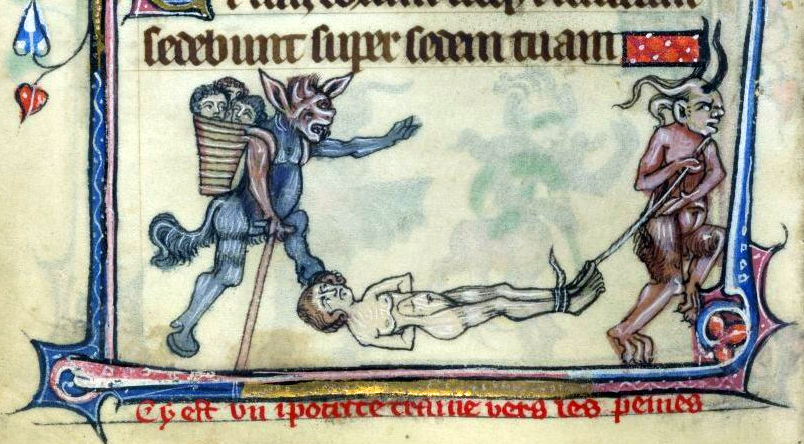
Taymouth Hours. England, c. 1325-1340. British Library, Yates Thompson MS. 13, fol. 140v.

Posted in deorhord book 3 Comments

Post navigation

← Older posts
Newer posts →

Find Posts

Support

Become a Goldgifa to support my work and read additional content.

  • Patreon

Follow

  • Bluesky
  • Instagram
  • Facebook
  • Mastodon
Download on the App Store

Website Powered by WordPress.com.
  • Subscribe Subscribed
    • Old English Wordhord
    • Join 689 other subscribers
    • Already have a WordPress.com account? Log in now.
    • Old English Wordhord
    • Subscribe Subscribed
    • Sign up
    • Log in
    • Report this content
    • View site in Reader
    • Manage subscriptions
    • Collapse this bar
 

Loading Comments...