land-here, m.n: land army (referring to a land force as opposed to a naval force, or referring to a native force as opposed to a foreign force). (LOND-HEH-reh)
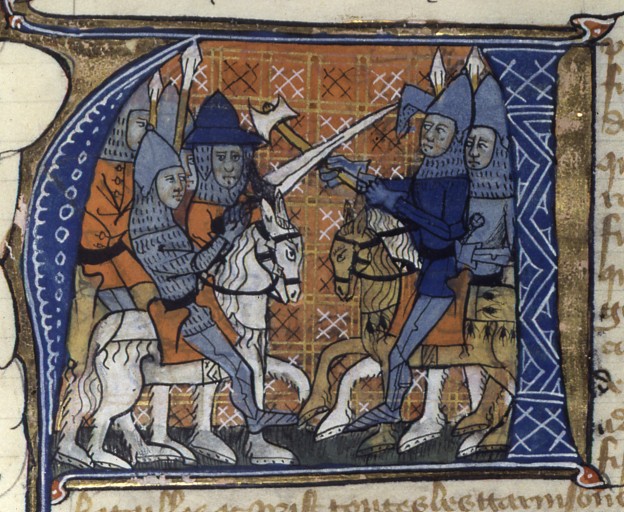
land-here, m.n: land army (referring to a land force as opposed to a naval force, or referring to a native force as opposed to a foreign force). (LOND-HEH-reh)
ge-scildnes, f.n: protection, defence, shielding. (yeh-SHILD-ness)
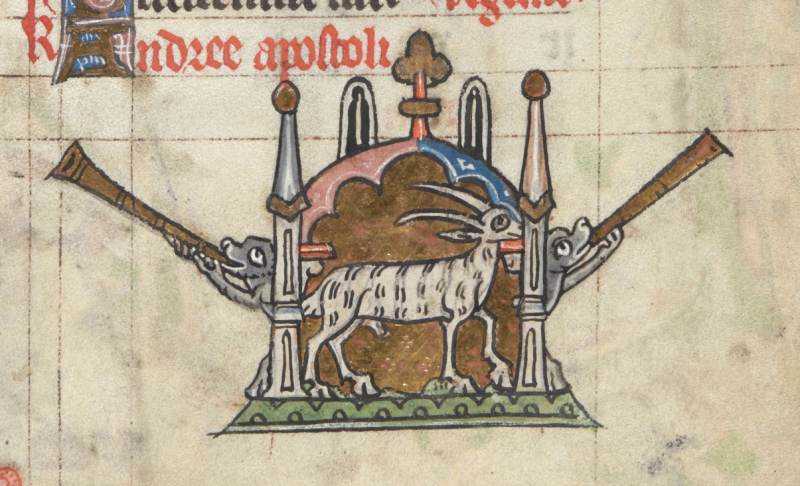
sigebēacen, n.n: a sign or monument of victory gained, a trophy; an ensign that is to lead to victory, a banner. (SIH-yeh-BAY-ah-ken)

gūþ-spell, n.n: war-tidings, news (of the outcome) of a battle. (GOOTH-spell)
here-draca, m/f.n: an arrow (lit. ‘army-dragon’). (HEH-reh-DRAH-kah)
feorh-genīþla, m.n: mortal enemy. (FAY-or’h-yeh-NEETH-la)
īsern-byrne, f.n: iron corslet, coat of mail. (EE-zern-BUR-neh)

here-fugol, m.n: a bird which attends an army, eagle, vulture, raven. (HEH-reh-FUH-goll)
gūþ-floga, m.n: one that flies to battle, a dragon. (GOOTH-FLO-ga)
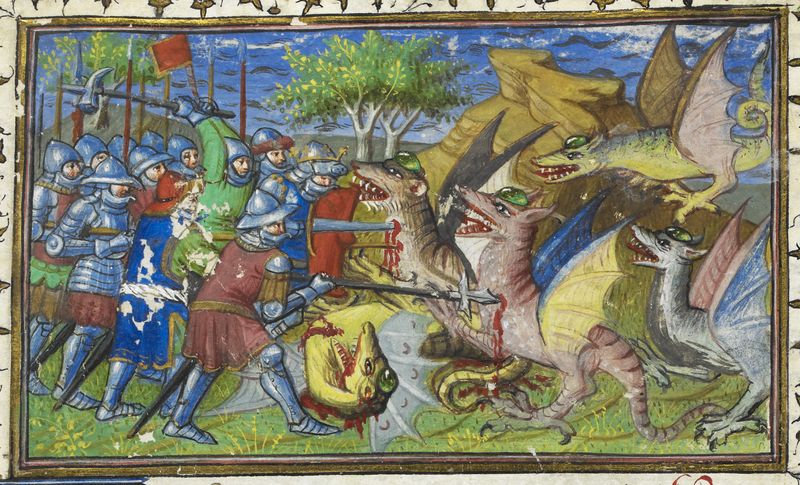
Alexander the Great battling winged dragons with emeralds in their foreheads. Le livre et la vraye hystoire du bon roy Alixandre. France (Paris), c. 1420-c. 1425. British Library, Royal MS 20 B XX, f. 73r. [blogs.bl.uk]


![[manuscriptminiatures.com]](http://manuscriptminiatures.com/media/manuscriptminiatures.com/original/562-9.jpg)