gūþ-fugel, m.n: war-bird (an epithet for the eagle). (GOOTH-FUH-yell / ˈguːθ-ˌfʌ-jɛl)
To find out more about medieval eagles, visit my blog Dēor-hord: a medieval and modern bestiary.
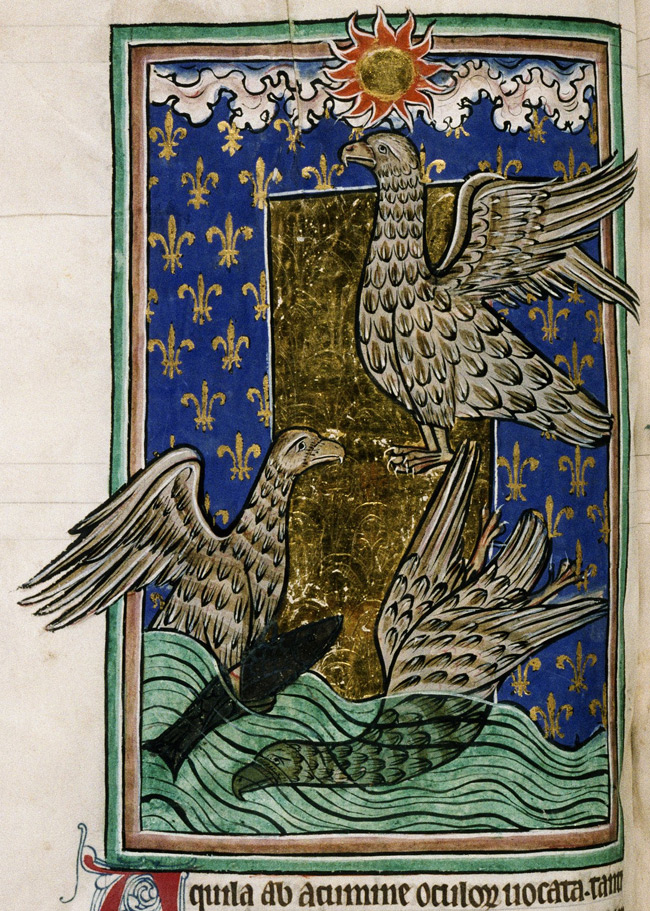
gūþ-fugel, m.n: war-bird (an epithet for the eagle). (GOOTH-FUH-yell / ˈguːθ-ˌfʌ-jɛl)
To find out more about medieval eagles, visit my blog Dēor-hord: a medieval and modern bestiary.
gūþ-frec, adj: bold in war. (GOOTH-freck)
fierd, f.n: an army, force, expedition. (FYERD)
esne-wyrhta, m.n: a hireling, mercenary. (EZ-neh-WURH-ta)
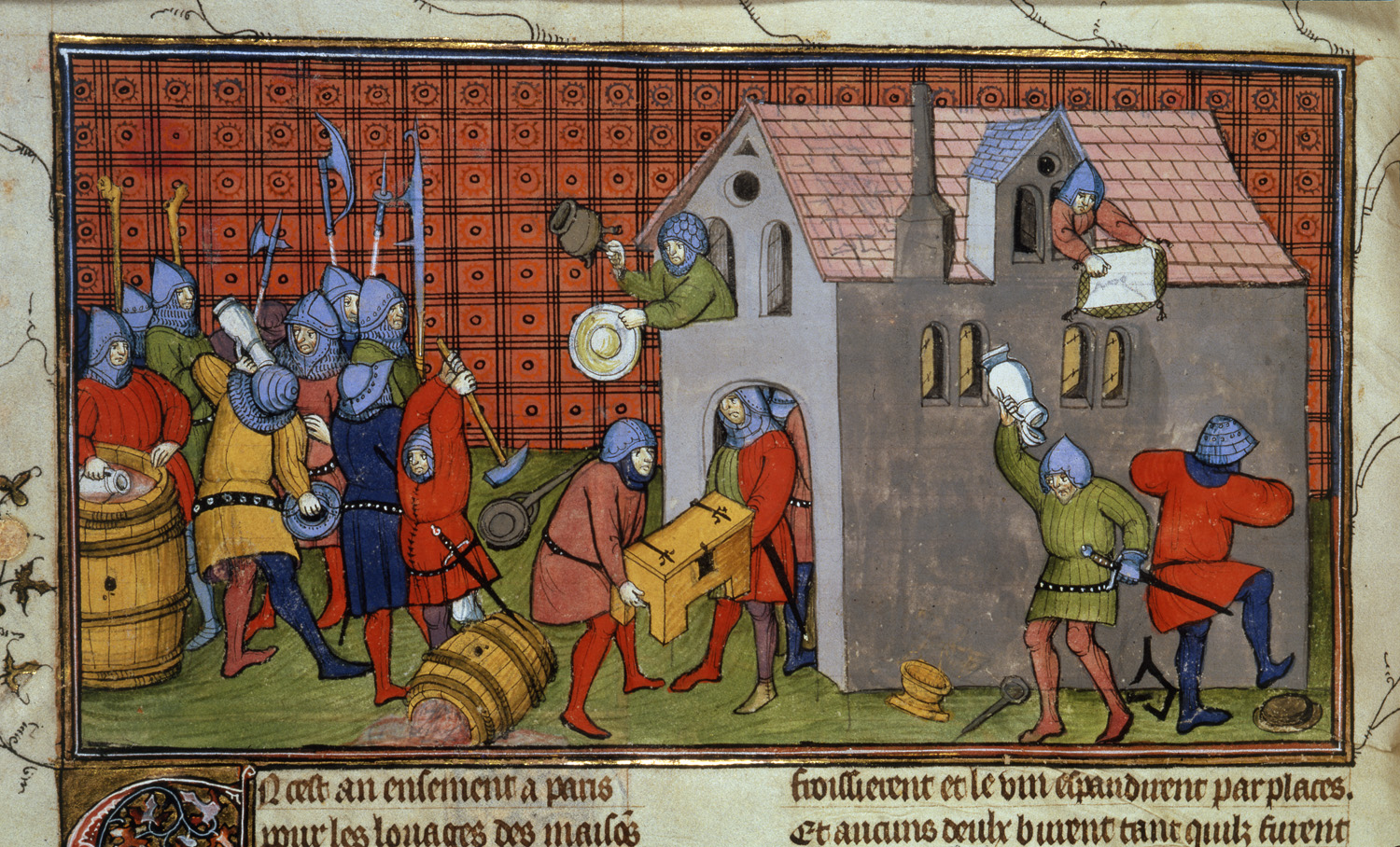
Chroniques de France ou de St Denis (from 1270 to 1380). France (Paris), late 14th century (after 1380). British Library, Royal 20 C VII, f. 41v. [bl.uk]
sige-cwēn, f.n: victory-queen, victorious queen. (SIH-yuh-KWAIN / ˈsɪ-jə-ˌkweːn)

wiþer-breca, m.n: an adversary. (WITH-er-BREH-ka / ˈwɪ-θɛɹ-ˌbɹɛ-ka)
This week’s Wordhord Wednesday post is on the gloomy word rēonig. Read it on Patreon.
gūþ-cræft, m.n: warlike power or skill. (GOOTH-kraft)
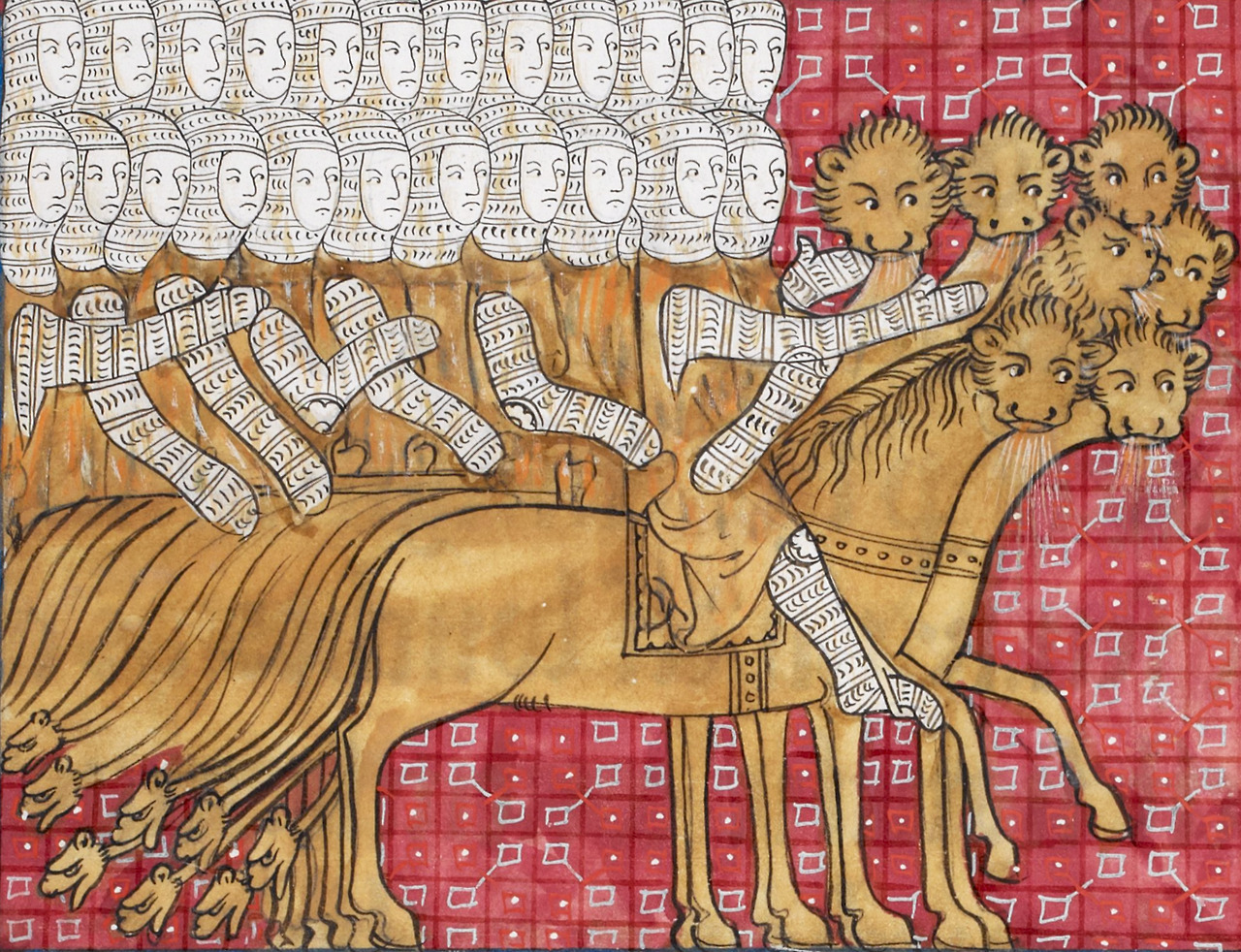
The Welles Apocalypse. England, c. 1310. British Library, Royal 15 D II, f. 143r. [bl.uk]
cēne, adj: keen, fierce, bold, brave, warlike. [KAY-neh]
This week’s Wordhord Wednesday post is on St Cuthbert, false fire and other miracles. Read it on Patreon.
wōl-gewinn, n.n: a conflict where there is a great mortality. [WOL-yeh-WIN]
māl-sweord, n.n: a sword with inlaid ornament. [MALL-SWEH-ord]
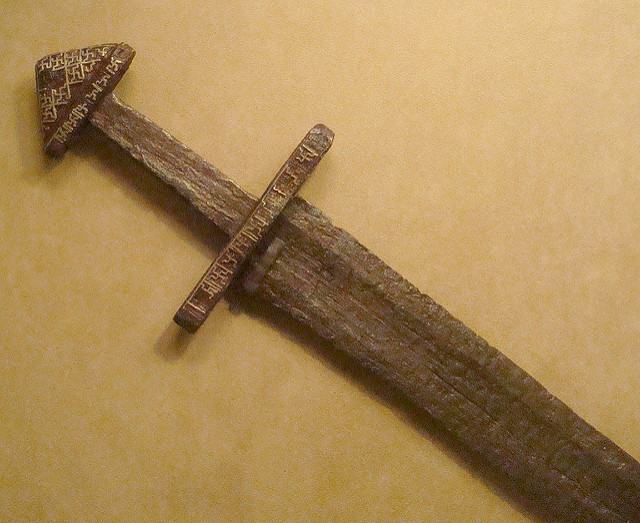
Viking sword, 800-900; pattern-welded iron inlaid with silver wire. Metropolitan Museum of Art. Photo by Neil R (@IslesPunkFan), 2010: CC BY-NC 2.0. [flickr.com]

