slit-cwealm, m.n: death by the tearing of animals. (SLIT-KWEH-alm / ˈslɪt-ˌkwɛalm)
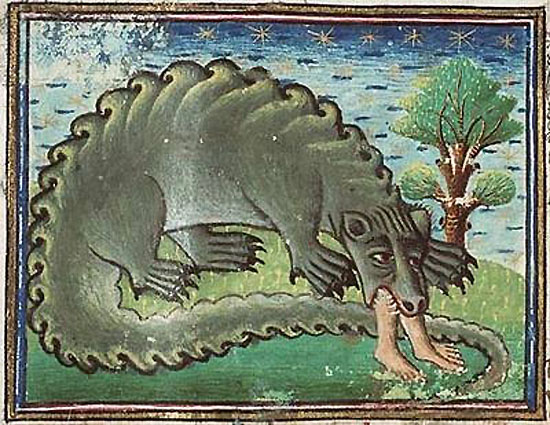
slit-cwealm, m.n: death by the tearing of animals. (SLIT-KWEH-alm / ˈslɪt-ˌkwɛalm)
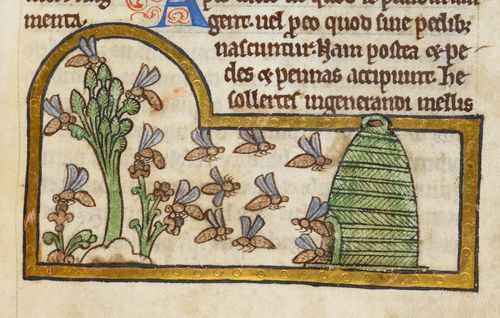
bēo-gang, m.n: a swarm of bees. (BAY-oh-GAHNG / ˈbeːɔ-ˌgaŋ)
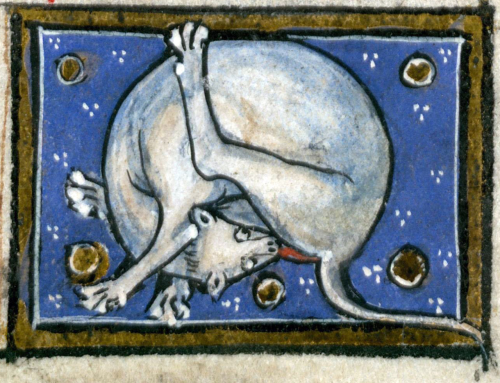
carl-cat, m.n: a male cat, tomcat. (KARL-KAHT / ˈkaɹl-ˌkat)
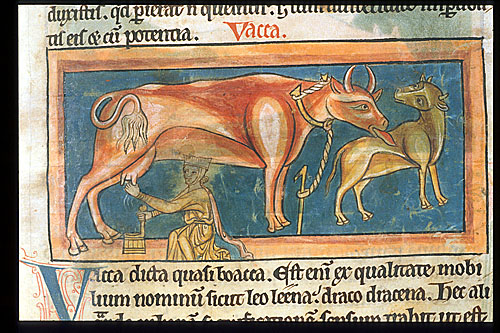
cū-wearm, adj: (of milk) warm from the cow (‘cow-warm’). (KOO-WEH-arm / ˈkuː-ˌwɛarm)
eofor-cumbol, n.n: boar-banner/boar-image, variously interpreted as boar-adorned standard or boar-image on a helmet. (EH-oh-vor-KUM-boll / ˈɛɔ-vɔɹ-ˌkʌm-bɔl)
stærling, m.n: a starling. (STAER-ling / ˈstæɹ-lɪŋ)
roð-hund, m.n: a large dog, a Molossus (a mastiff-like breed of dog from Ancient Greece). (ROTH-HUND / ˈɹɔθ-ˌhʌnd)
brim-fugel, m.n: a sea-fowl, seagull. (BRIM-FUH-yull / ˈbɹɪm-ˌfʌ-jəl)
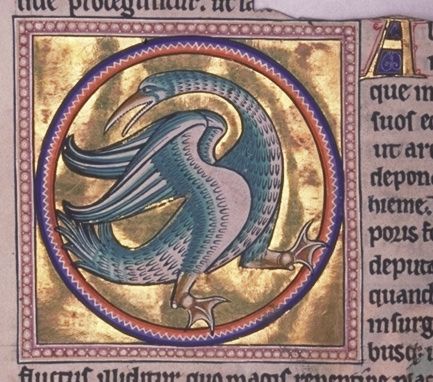
tord-wifel, m.n: a dung-beetle. (TORD-WIH-vull / ˈtɔɹd-ˌwɪ-vəl)
dūfe-doppa, m.n: a pelican. (DOO-vuh-DOP-pa / ˈduː-və-ˌdɔ-pa)
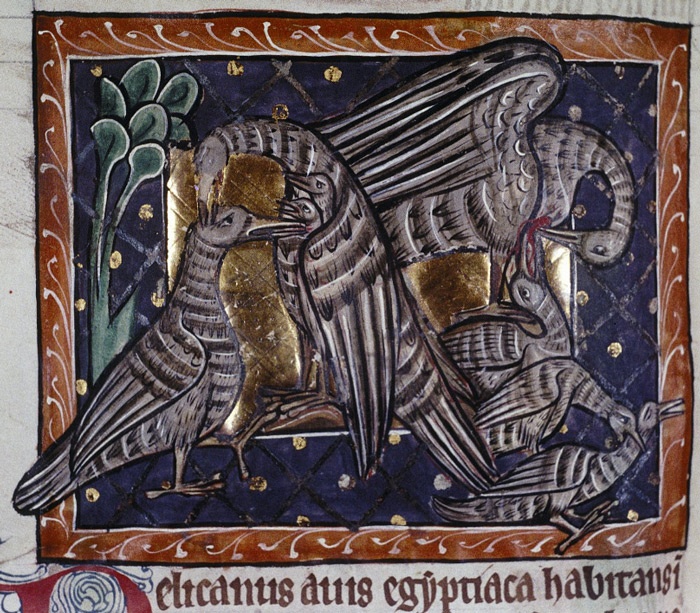
Happy Easter! What do pelicans have to do with Easter? The pelican represents Christ in medieval bestiaries. The Medieval Bestiary website explains: ‘As young pelicans grow, they begin to strike their parents in the face with their beaks. Though the pelican has great love for its young, it strikes back and kills them. After three days, the mother pierces her side or her breast and lets her blood fall on the dead birds, and thus revives them. Some say it is the male pelican that kills the young and revives them with his blood.’ The allegory? ‘The pelican is Christ, who humanity struck by committing sin; the pelican cutting open its own breast represents Christ’s death on the cross, and the shedding of his blood to revive us.’
 Old English Wordhord