higera, f.n: a magpie or a woodpecker. [HIH-yeh-ra]
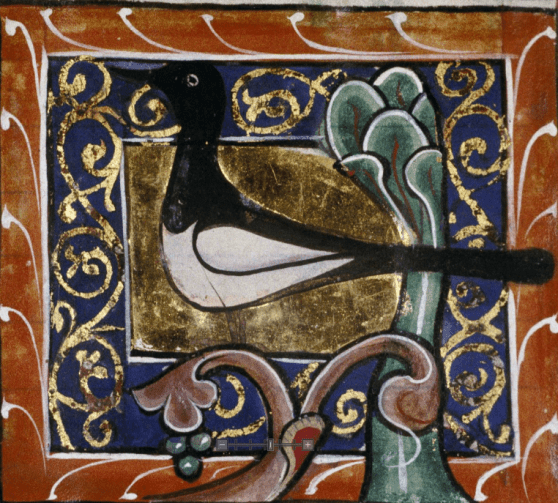
A magpie from a 13th-century English bestiary. Bodleian Library, MS. Bodley 764, f. 76r. [bodley30.bodley.ox.ac.uk]
higera, f.n: a magpie or a woodpecker. [HIH-yeh-ra]
A magpie from a 13th-century English bestiary. Bodleian Library, MS. Bodley 764, f. 76r. [bodley30.bodley.ox.ac.uk]
ened, m/f.n: a duck. [AY-ned]
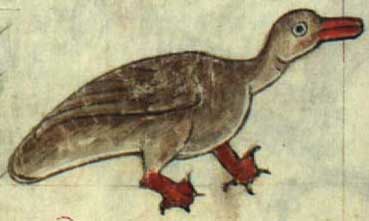
Duck from the Bestiary of Ann Walsh. England, 15th century. Copenhagen, Kongelige Bibliotek, Gl. kgl. S. 1633 4º, fol. 46v. [bestiary.ca]
rudduc, m.n: a robin red-breast. [RUD-duck]
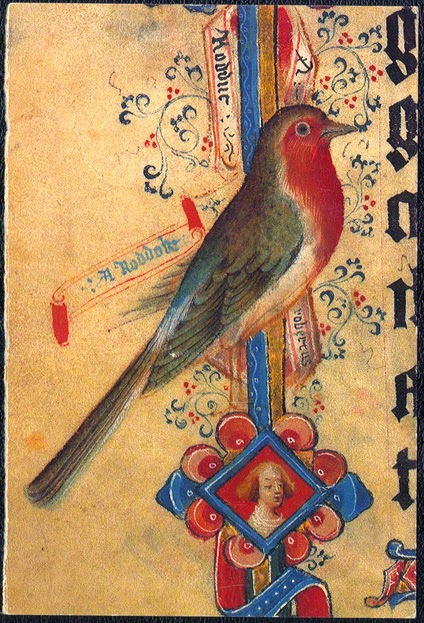
Marginal robin in the Sherbourne Missal. England (Sherbourne), c. 1400. British Library, Add. MS 59874, p. 382. [bl.uk] via [kateinneswriter.com]
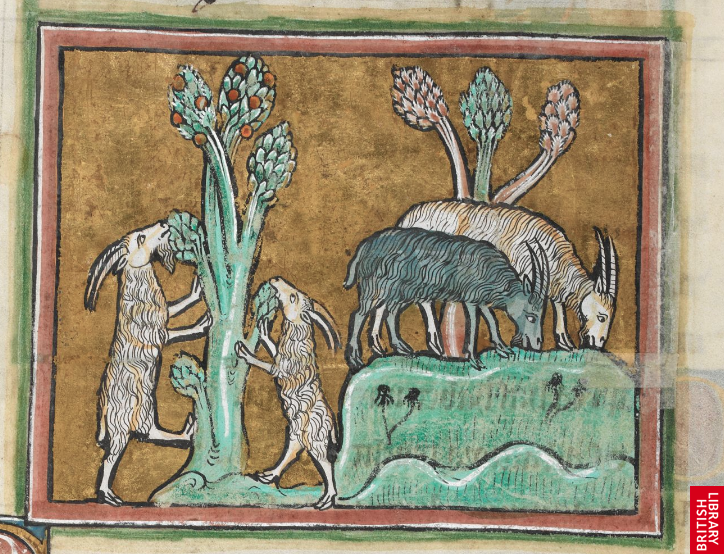
gāt, f.n: a she-goat. (GAHT / ˈgaːt)
wyrm-sele, m.n: a serpent-hall, a place where there are serpents (hell). [WURM-SELL-eh]
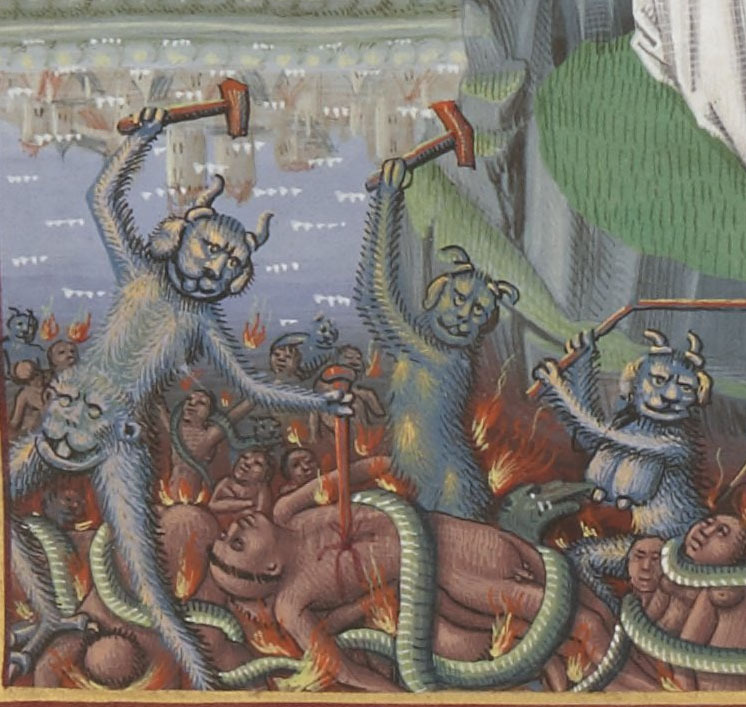
Le Livre des Meditacions monseigneur saint Bernard (1474). Bibliothèque nationale de France, Département des manuscrits, Français 916, f. 13r. [demonagerie.tumblr.com]
ultor, m.n: a vulture. [OOL-tor]
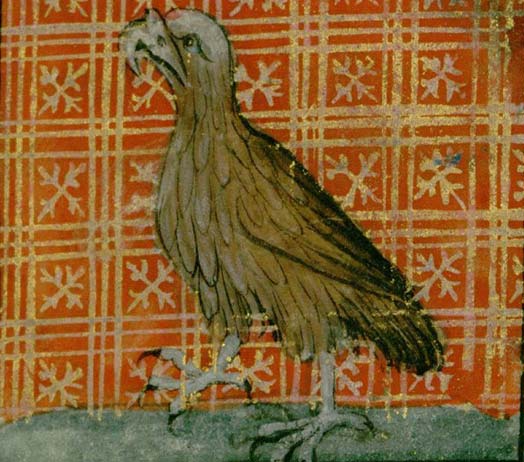
A vulture with an odd beak. Bartholomeus Anglicus, Livre des propriétés des choses. Paris, before 1416. Bibliothèque Municipale de Reims, MS 993, f. 160r. [bestiary.ca]
dracan blōd, n.n: dragon’s blood, a pigment obtained from the dragon’s blood-tree. [DRA-kahn BLOD]
mold-wyrm, m.n: an earthworm, a worm in the grave. [MOLD-WURM]
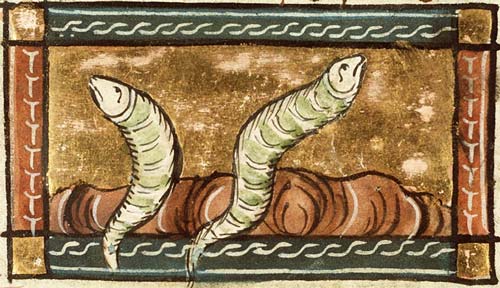
Two worms rising out of the soil in Jacob van Maerlant’s Der Naturen Bloeme. Flanders, c. 1350. Hague, Koninklijke Bibliotheek, KB, KA 16, f. 136r. [bestiary.ca]
fearh, m.n: a little pig, a farrow, litter. [FÆ-arh]
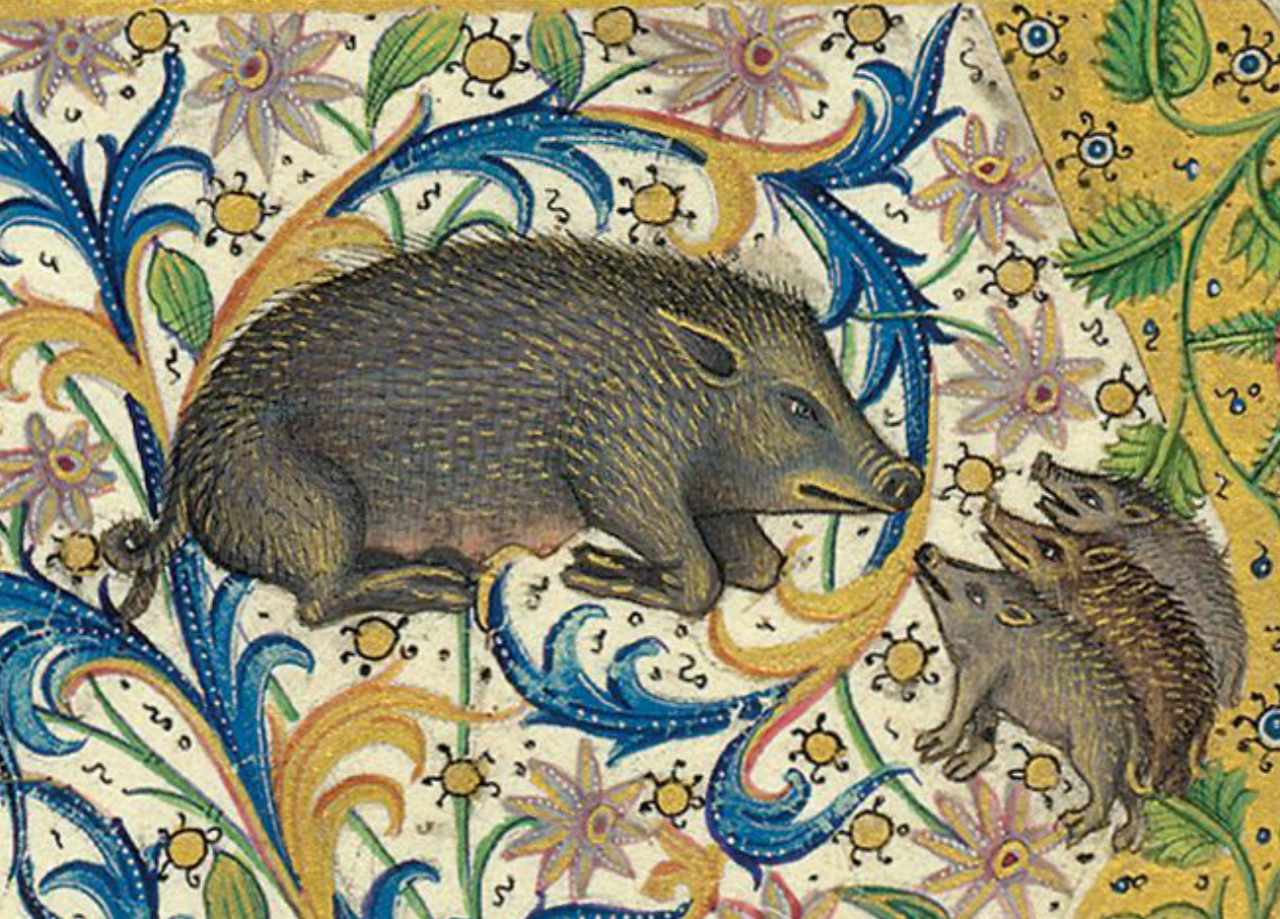
Livre de la chasse. France (Paris), c. 1406-1407. New York, Morgan Library, MS M.1044, f. 1v. [ica.themorgan.org] / via [discardingimages.tumblr.com]
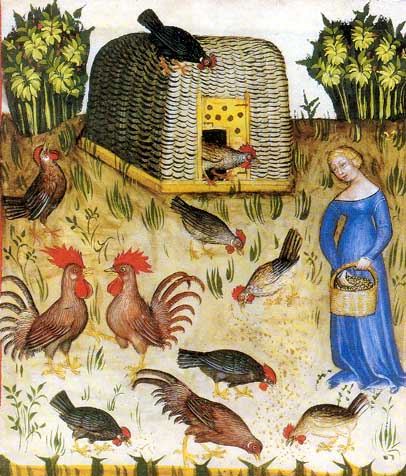
cicen, n.n: a chicken, chick. (CHIH-chen / ˈtʃɪ-tʃɛn)
 Old English Wordhord