ultor, m.n: a vulture. [OOL-tor]
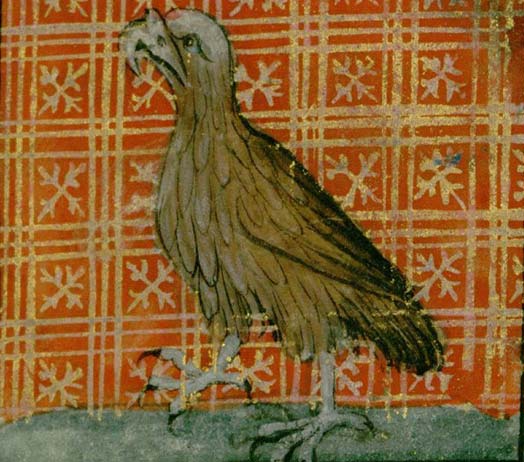
A vulture with an odd beak. Bartholomeus Anglicus, Livre des propriétés des choses. Paris, before 1416. Bibliothèque Municipale de Reims, MS 993, f. 160r. [bestiary.ca]
ultor, m.n: a vulture. [OOL-tor]
A vulture with an odd beak. Bartholomeus Anglicus, Livre des propriétés des choses. Paris, before 1416. Bibliothèque Municipale de Reims, MS 993, f. 160r. [bestiary.ca]
dracan blōd, n.n: dragon’s blood, a pigment obtained from the dragon’s blood-tree. [DRA-kahn BLOD]
mold-wyrm, m.n: an earthworm, a worm in the grave. [MOLD-WURM]
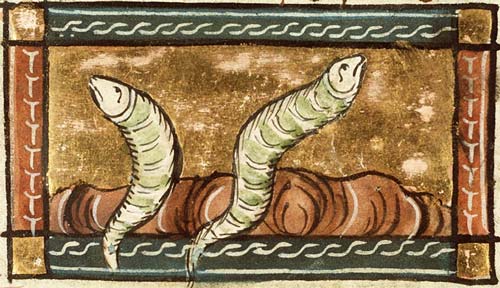
Two worms rising out of the soil in Jacob van Maerlant’s Der Naturen Bloeme. Flanders, c. 1350. Hague, Koninklijke Bibliotheek, KB, KA 16, f. 136r. [bestiary.ca]
fearh, m.n: a little pig, a farrow, litter. [FÆ-arh]
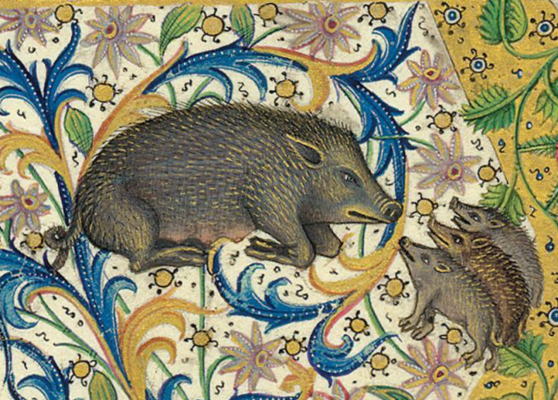
Livre de la chasse. France (Paris), c. 1406-1407. New York, Morgan Library, MS M.1044, f. 1v. [ica.themorgan.org] / via [discardingimages.tumblr.com]
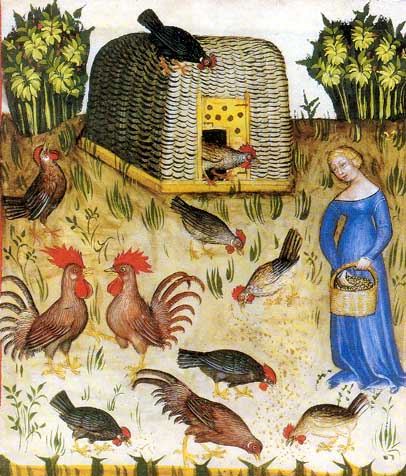
cicen, n.n: a chicken, chick. (CHIH-chen / ˈtʃɪ-tʃɛn)
cū-bȳre, m.n: a cow-byre, cow-shed. (KOO-BUE-ruh / ˈkuː-ˌbyː-rə)
heoru-swealwe, f.n: falcon, hawk. (HEH-or-uh-SWEH-all-wuh / ˈhɛɔ-rʌ-ˌswɛal-wə)

hwæl-weg, m.n: the path of the whale, the ocean. (H’WAEL-WAY / ˈhwæl-ˌwɛj)

For more on medieval whales, see my other blog, Dēor-hord, a medieval and modern bestiary!
scrīc, n: a kind of thrush, screech, fieldfare, strike. (SHREECH / ˈʃriːtʃ)
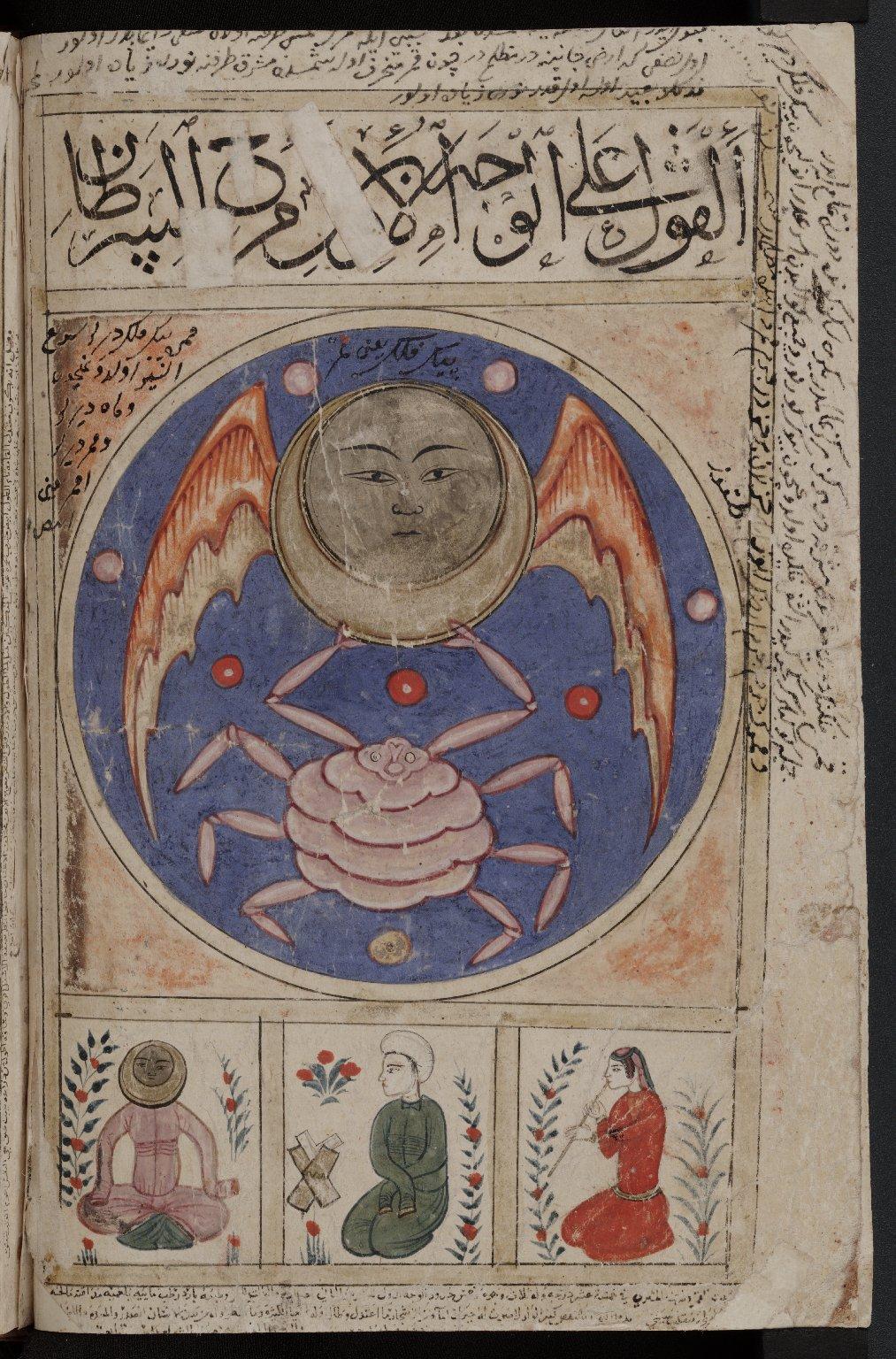
crabba, m.n: a crab, crayfish; a sign of the zodiac, cancer. (KRA-ba / ˈkra-ba)
 Old English Wordhord