wæter-bucca, m.n: an aquatic insect, a water-spider. (WAT-er-BUCK-kah)
Category Archives: animals
weoloc
weoloc, m.n: a kind of shell-fish, a whelk, cockle; also the dye obtained from such fish. (WEH-ol-ock / ˈwɛɔ-lɔk)
frox
frox, m.n: a frog. (FROKS)
This week’s Wordhord Wednesday post is on medieval frogs. Read it on Patreon.
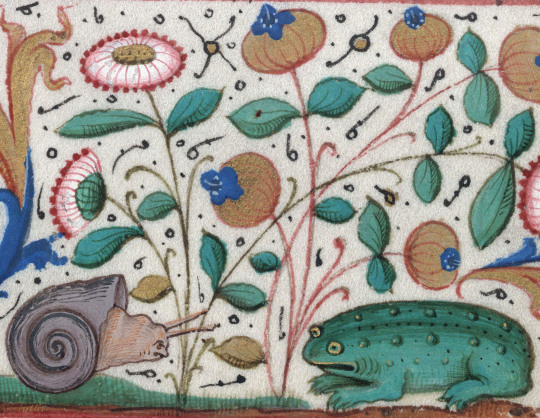
Institutes of Justinian. France, 15th century. Montpellier, Bibliothèque interuniversitaire, Section Médecine, H 418, f. 23v. [discardingimages.tumblr.com]
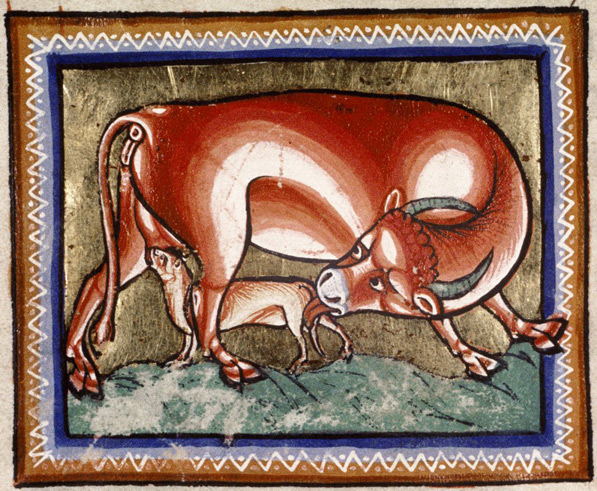
cū-cealf
cū-cealf, n.n: a cow’s calf. (KOO-CHEH-alf / ˈkuː-ˌtʃɛalf)
fīfalde
fīfalde, f.n: another word for butterfly. (FEE-vald-eh)
See also buter-flēge.
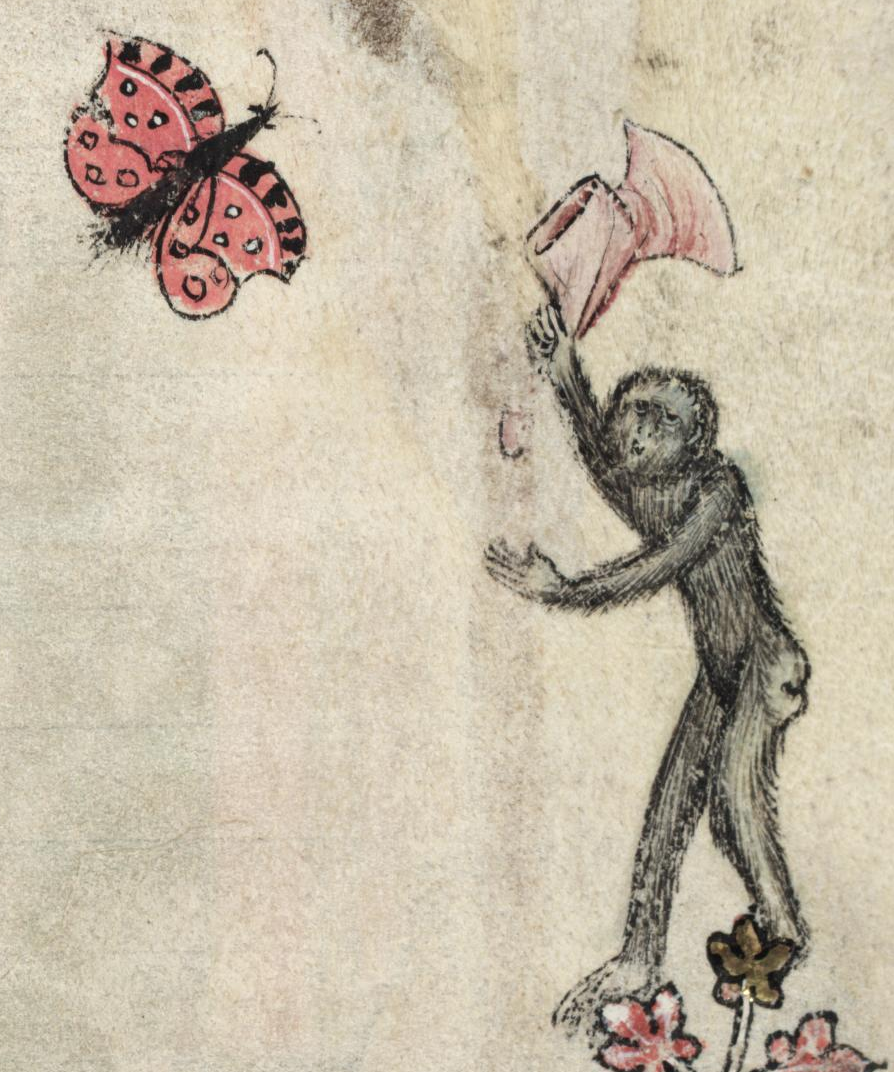
Romance of Alexander in French verse, from the workshop of Jehan de Grise. Flemish (Bruges?), 1338-1344. Oxford, Bodleian Library, MS Bodl. 264, f. 67r. [image.ox.ac.uk]
buter-flēge
buter-flēge, f.n: a butterfly. (BUH-ter-FLAY-yeh)
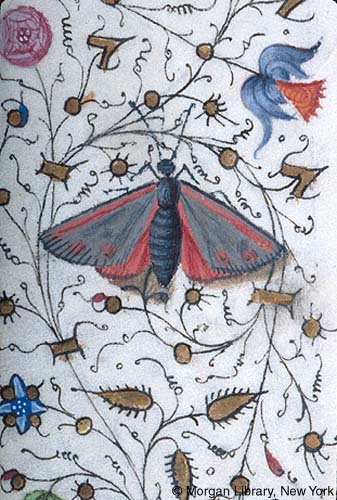
Butterfly in a Book of Hours. France (Provence), c. 1440-1450. New York, Morgan Library, MS M.358, f. 111r. [ica.themorgan.org]
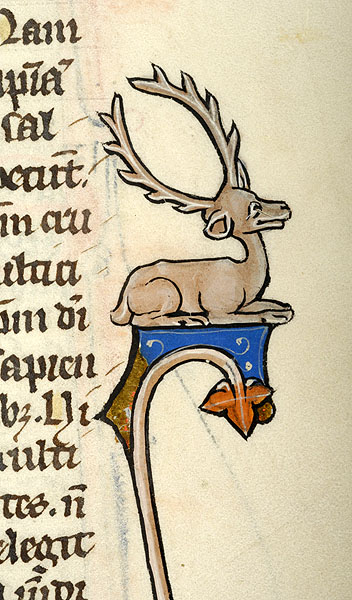
hēah-dēor
hēah-dēor, n.n: a stag, deer. (HAY-ah-DAY-or)
Patrons, you have one week to send me your requests for Goldgifa Week! Find out more on Patreon.
gærs-stapa
gærs-stapa, m.n: locust (grass-stepper). (GARZ-STAH-pa / ˈgærz-ˌsta-pa)

earn-gēat
earn-gēat, f.n: the goat-eagle, vulture. [EH-arn-YAY-aht]
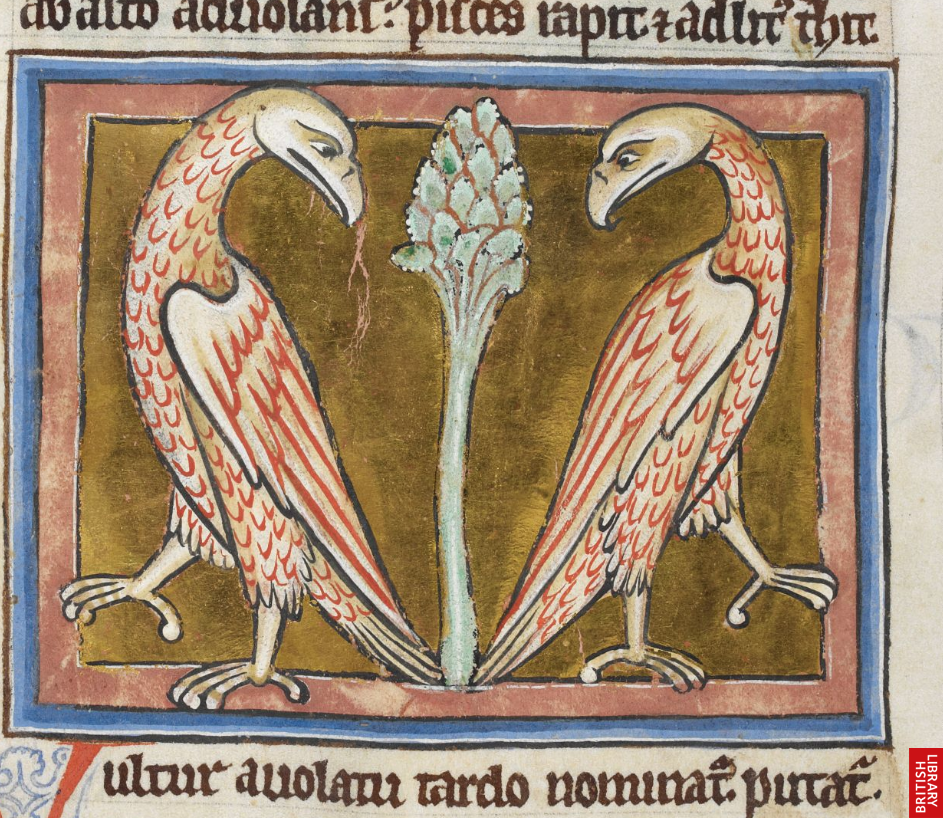
Vultures in a bestiary. Central or northern England, c. 1200-c. 1210. British Library, Royal MS 12 C XIX, fol. 38v. [bl.uk]
cū-hyrde
cū-hyrde, m.n: a cowherd, person who has the charge of cows. (KOO-HUER-duh / ˈkuː-ˌhyr-də)
(Bonus word for today due to a Twitter tweet order mix-up!)
 Old English Wordhord