Old English Wordhord

Old English Word of the Day

Navigation

Skip to content
  • About
  • Linktree
  • Books
    • The Wordhord: Daily Life in Old English
    • The Deorhord: An Old English Bestiary
    • Book Illustrations
  • App
  • Events
  • Podcasts
  • Merch
  • More content on Patreon
  • Goldgifa Page
  • Pronunciation
  • Not “Anglo-Saxon”
  • Medieval Resources

Author Archives: Hana Videen

Post navigation

← Older posts
Newer posts →

ufera

Posted on September 25, 2021 by Hana Videen

ufera, adj: upper, higher; upmost, highest; later, after. (UH-veh-ra / ˈʌ-vɛ-ra)

Posted in etc Leave a comment

spircing

Posted on September 24, 2021 by Hana Videen

spircing, f.n: a sprinkling, dropping. (SPIRCH-ing / ˈspɪr-tʃɪŋ)
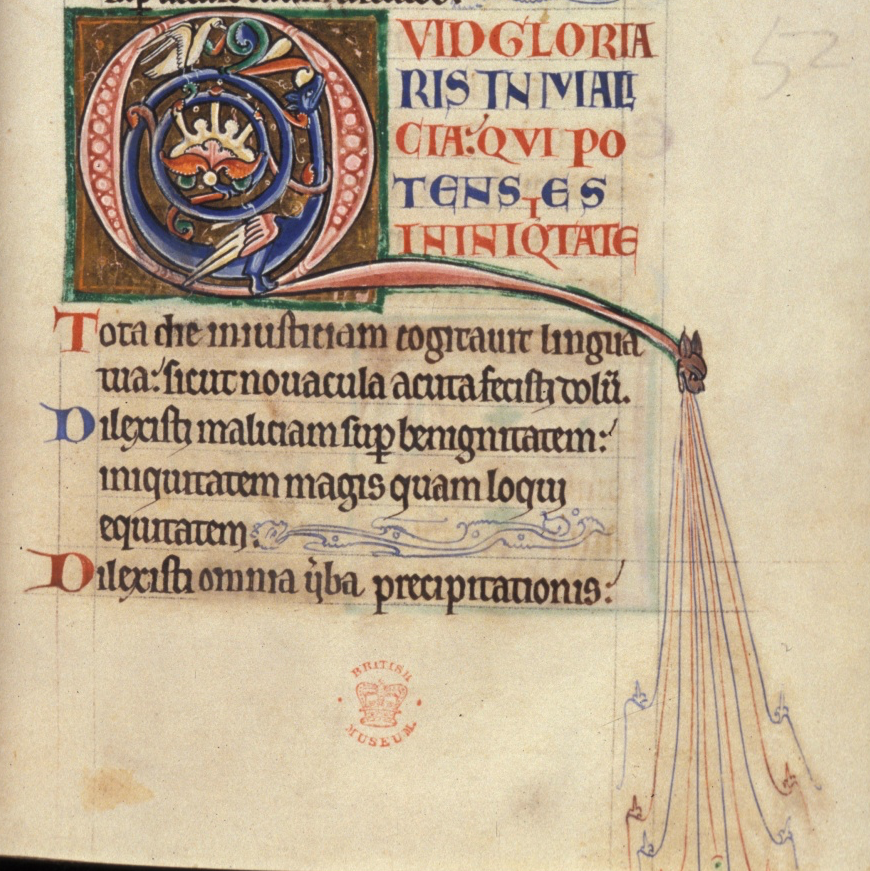
Latin writing in a medieval manuscript; the letter Q of ‘quid’ is inhabited by a dragon and a bird, and the tail of the Q turns into the head of another dragon, out of whose mouth drop lines of red and blue, which fall to the bottom of the page.
Westminster Psalter; S England (Westminster or St Albans), c. 1200; British Library, Royal 2 A XXII, f. 66r. [bl.uk]
Posted in etc Leave a comment

īor

Posted on September 23, 2021 by Hana Videen

īor, m.n: name of the IA/IO-rune ᛡ; possibly an eel or a fish. The īor rune is a vertical line that bisects an x. (EE-or / ˈiːɔr)
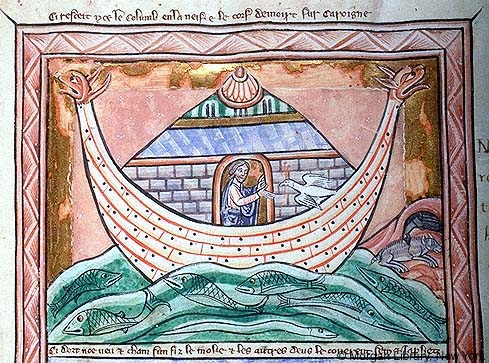
Medieval manuscript illustration of Noah extending his hands toward a dove flying toward him; he stands on a large boat with animal-headed prows, sailing on waters filled with fishes and eels, while on land a raven pecks at an animal carcass.
Psalter; England (Oxford), between 1212 and 1220; Morgan Library & Museum, MS M.43, f. 9r. [ica.themorgan.org]
Posted in animals, runes Leave a comment

hago-steald

Posted on September 22, 2021 by Hana Videen

hago-steald, adj: unmarried, young. (HA-go-STEH-ald / ˈha-gɔ-ˌstɛald)

This week’s Wordhord Wednesday post is ‘young men enclosed’. Read it on Patreon.

Posted in etc Leave a comment

wolcen-wyrcende

Posted on September 21, 2021 by Hana Videen

wolcen-wyrcende, adj: cloud-producing. (WOLL-ken-WUER-chen-duh / ˈwɔl-kɛn-ˌwyr-tʃɛn-də)

Medieval manuscript illustration showing a blue pillar of cloud springing up from a field of flowers, extending up and to the left out of the green frame.
Das Buch der natürlichen Weisheit (Book of Natural Wisdom); Austria (Salzburg), c. 1430; British Library, Egerton MS 1121, f. 58v. [bl.uk]
Posted in weather 1 Comment

weg-fērend

Posted on September 20, 2021 by Hana Videen

weg-fērend, m.n: wayfarer, traveller. (WEY-FAY-rend / ˈwɛj-ˌfeː-rɛnd)
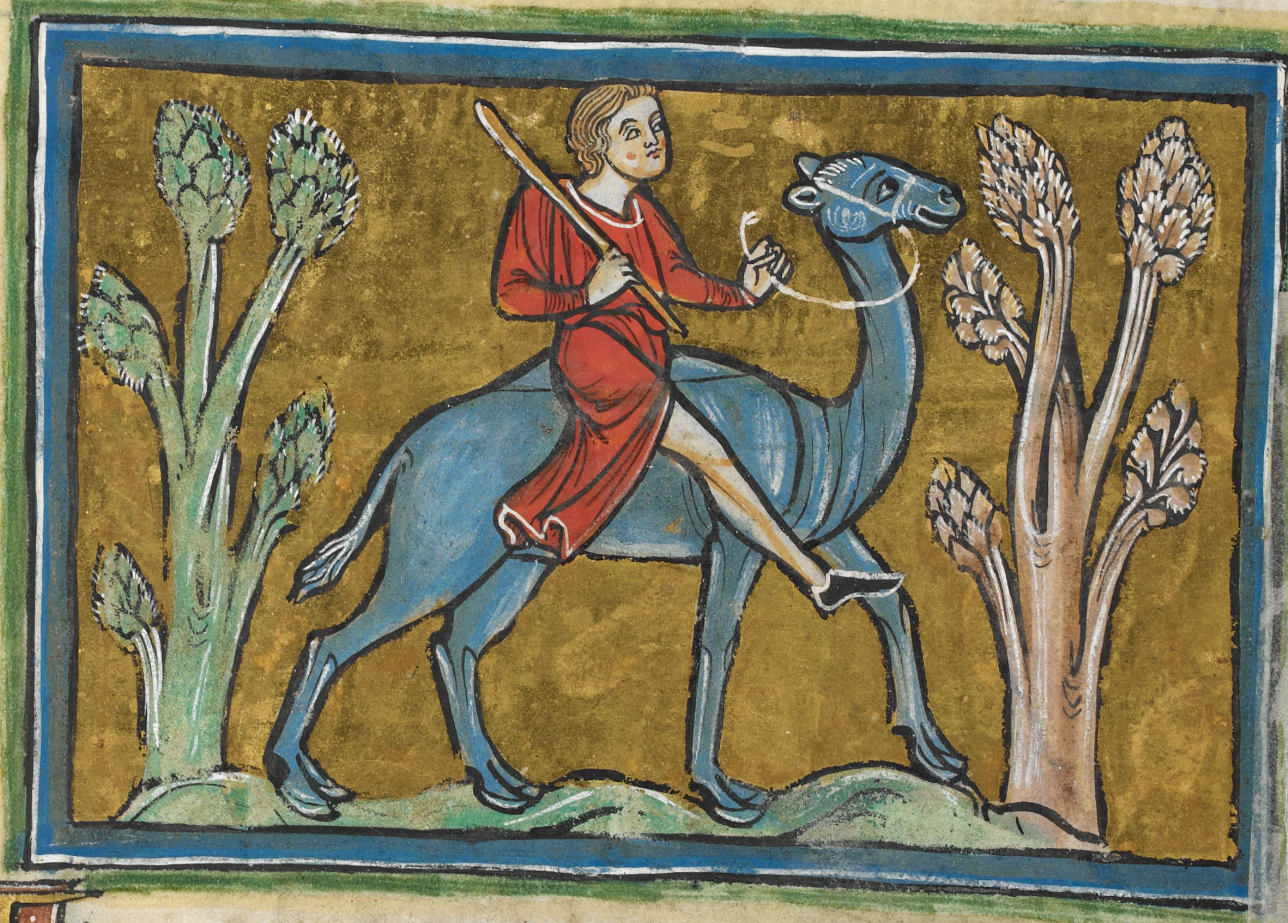
Medieval manuscript image of a rosy-cheeked man with a staff riding a cheerful-looking camel through some trees.
Rochester Bestiary; SE England (Rochester?), c. 1230-14th century; British Library, Royal MS 12 F XIII, f. 38v. [bl.uk]
Posted in people, travel + trade, wordhord book Leave a comment

ealdor-dōm

Posted on September 19, 2021 by Hana Videen

ealdor-dōm, m.n: authority, power; primacy, pre-eminence; rule, sovereignty, lordship. (EH-all-dor-DOAM / ˈɛal-dɔr-ˌdoːm)

Posted in etc Leave a comment

lām-smiþ

Posted on September 18, 2021 by Hana Videen

lām-smiþ, m.n: worker in clay, potter. (LAHM-SMITH / ˈlaːm-ˌsmɪθ)
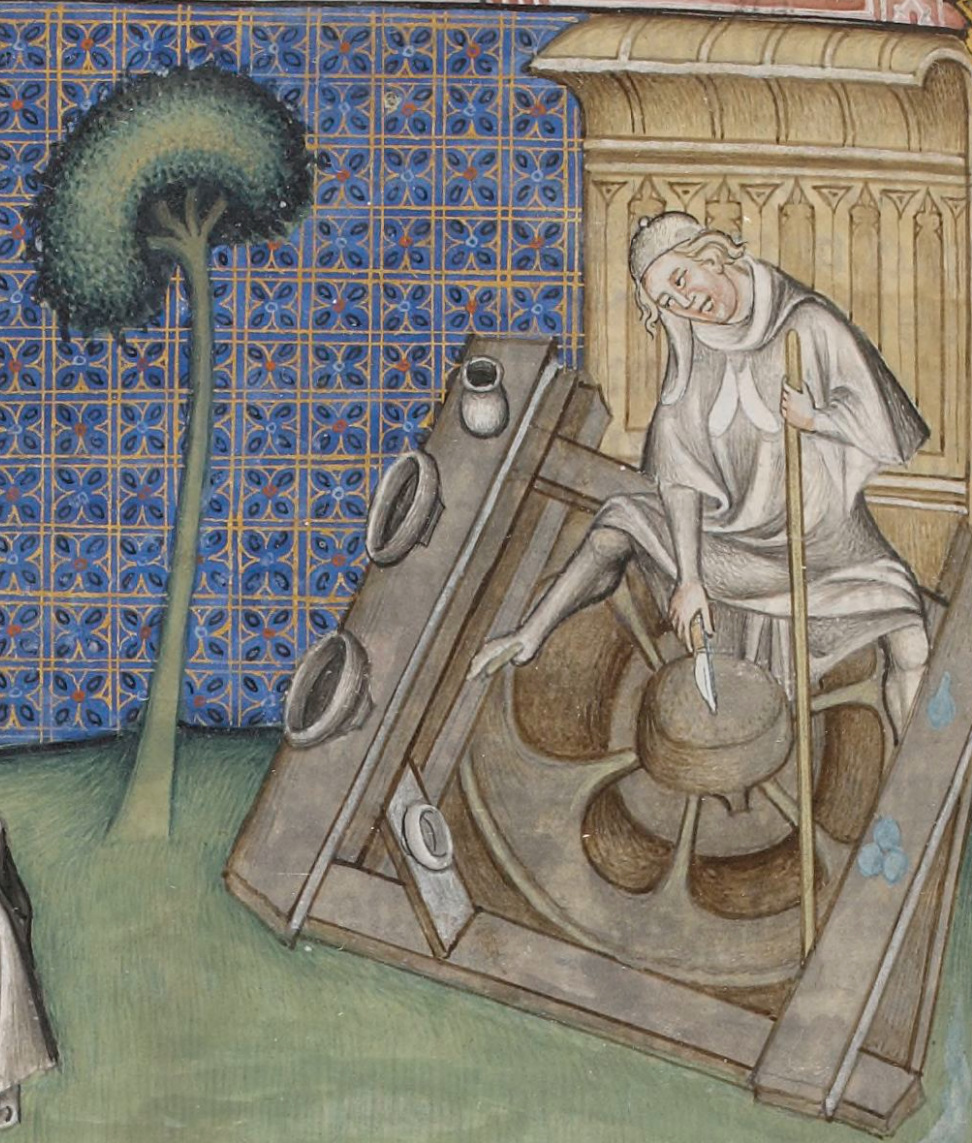
Medieval manuscript image of a man straddling a large potters wheel; in one hand he grips a long stick for spinning the wheel and in the other hand he uses a knife to sculpt a lump of clay.
St Augustine’s De Civitate Dei, trans by Raoul de Presles; France, 14th century; Bibliothèque nationale de France, Département des Manuscrits, Français 22912, f. 227v. [gallica.bnf.fr]

Posted in arts + crafts, people Leave a comment

orsorgness

Posted on September 17, 2021 by Hana Videen

orsorgness, f.n: freedom from care or anxiety, tranquillity; prosperity. (OR-SOR’GH-ness / ˈɔr-ˌsɔrx-nɛs)

Posted in emotions Leave a comment

puslian

Posted on September 16, 2021 by Hana Videen

puslian, wk.v: to pick out the best bits. (PUH-zli-ahn / ˈpʌz-lɪ-an)

On the Old English Wordhord app you can pick your favourites and create your own wordhord! Download the free app for iOS.
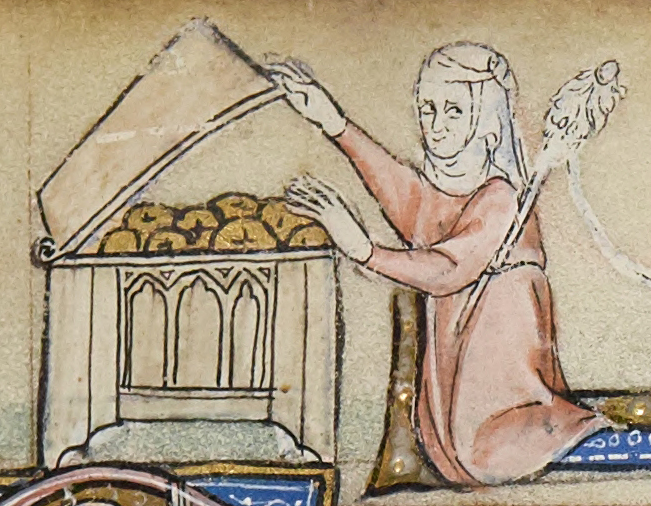
Medieval manuscript image of a woman opening a large chest full of golden donut-shaped objects while looking behind herself cautiously, a distaff or long stick with wool fibre tucked into her belt.
Book of Hours; Flemish, early 14th century; Cambridge, Trinity College Library, MS B.11.22, f. 213r. [mss-cat.trin.cam.ac.uk]
Posted in etc Leave a comment

Post navigation

← Older posts
Newer posts →

Find Posts

Support

Become a Goldgifa to support my work and read additional content.

  • Patreon

Follow

  • Bluesky
  • Instagram
  • Facebook
  • Mastodon
Download on the App Store

Website Powered by WordPress.com.
  • Subscribe Subscribed
    • Old English Wordhord
    • Join 675 other subscribers
    • Already have a WordPress.com account? Log in now.
    • Old English Wordhord
    • Subscribe Subscribed
    • Sign up
    • Log in
    • Report this content
    • View site in Reader
    • Manage subscriptions
    • Collapse this bar
 

Loading Comments...