strēaw, n.n: straw, hay. (STRAY-aw)
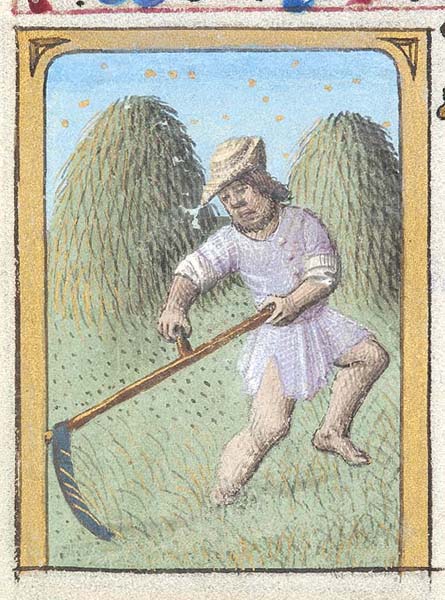
Book of Hours. France, c. 1475. New York, Pierpont Morgan Library, MS M.73, f. 3v. [ica.themorgan.org]
strēaw, n.n: straw, hay. (STRAY-aw)
Book of Hours. France, c. 1475. New York, Pierpont Morgan Library, MS M.73, f. 3v. [ica.themorgan.org]
ēad-hrēðig, adj: happy, blessed. (AY-odd-HRAY-thee)
mis-cweðan, str.v: to speak amiss or incorrectly. (mis-KWETH-on)
This week’s Wordhord Wednesday post is on ‘sowl’. Read it on Patreon.
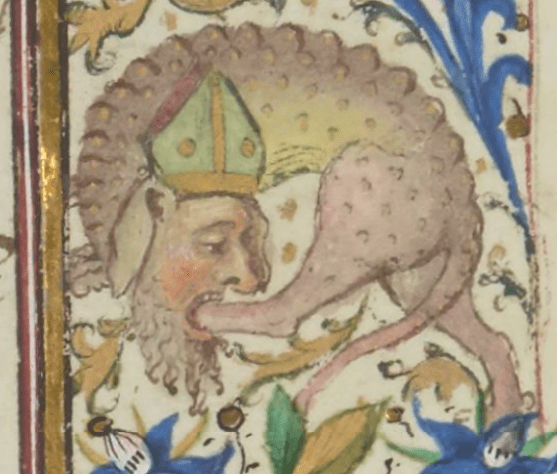
Les grandes Chroniques de France. France, 15th century. Paris, Bibliothèque nationale de France, Département des manuscrits, Français 2609, f. 137r. [gallica.bnf.fr]
a-cēosan, str.v: to choose, select. (ah-CHAY-oh-zahn)
sufel, n.n: anything (meat, fish, vegetables) eaten with bread. (SUH-vell)
In Pembrokeshire ‘sowl’ is anything used to flavour bread, such as butter or cheese.
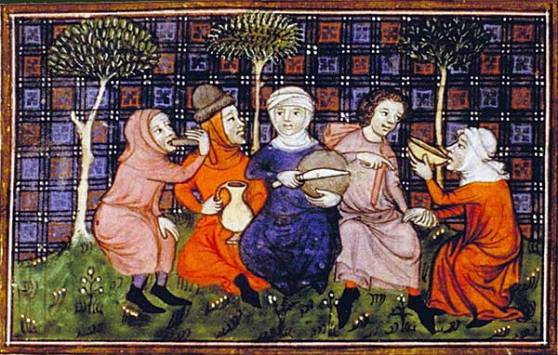
Livre du roi Modus et de la reine Ratio. France (Paris), 14th century. Paris, Bibliothèque nationale, Département des manuscrits, Français 22545, f. 72. [commons.wikimedia.org]
frōfor, m.n: comfort, solace, consolation, help, benefit, profit, refuge. (FRO-vor)
dūst-swearm, m.n: a cloud of dust (of the motes in the sunlight). (DOOST-SWAY-arm)
blōt, n.n: a sacrifice. (BLOAT)
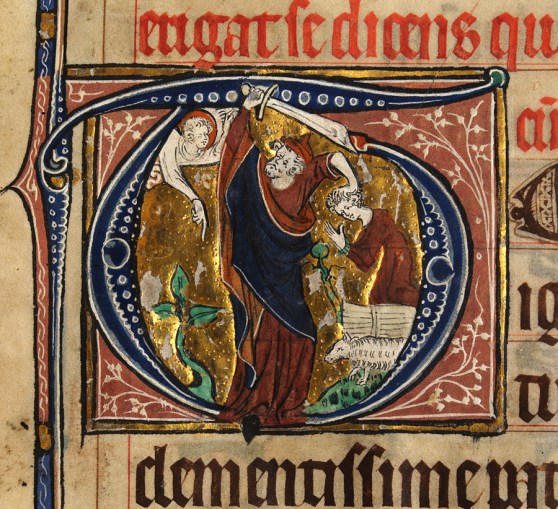
Abraham about to sacrifice Isaac. Sherbrooke Missal. England (East Anglia), 1310-1320. Aberystwyth, National Library of Wales, MS. 15536E, f. 230r. [viewer.library.wales]
gristbātian, wk.v: to gnash the teeth. (GRIST-BAH-tee-ahn)
nīþ-gæst, m.n: a malicious, malignant demon / stranger / guest / foe). [NEETH-gast]
This week’s Wordhord Wednesday post is about peace-candles. Read it on Patreon.
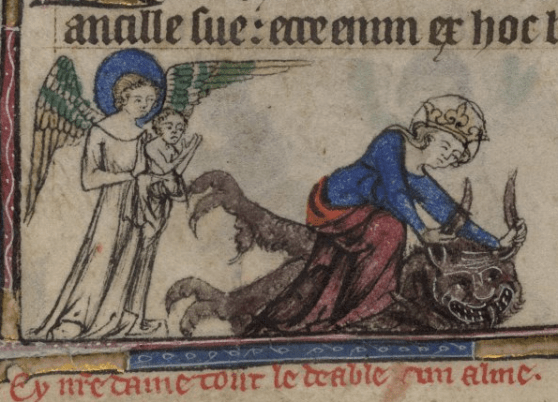
The Virgin Mary beats up a devil; an angel carrying a rescued soul observes. The Taymouth Hours. England (London?), 14th century. British Library, Yates Thompson 13, f. 155v. [bl.uk]

