þēowet, m.n: service; (in an unfavourable sense) servitude, bondage, slavery. (THAY-oh-wet / ˈθeːɔ-wɛt)
hord-ern
hord-ern, n.n: a storehouse, storeroom, treasury. (HORD-ern / ˈhɔrd-ɛrn)
This week’s Wordhord Wednesday post is about the poem The Ruin. Read it on Patreon.
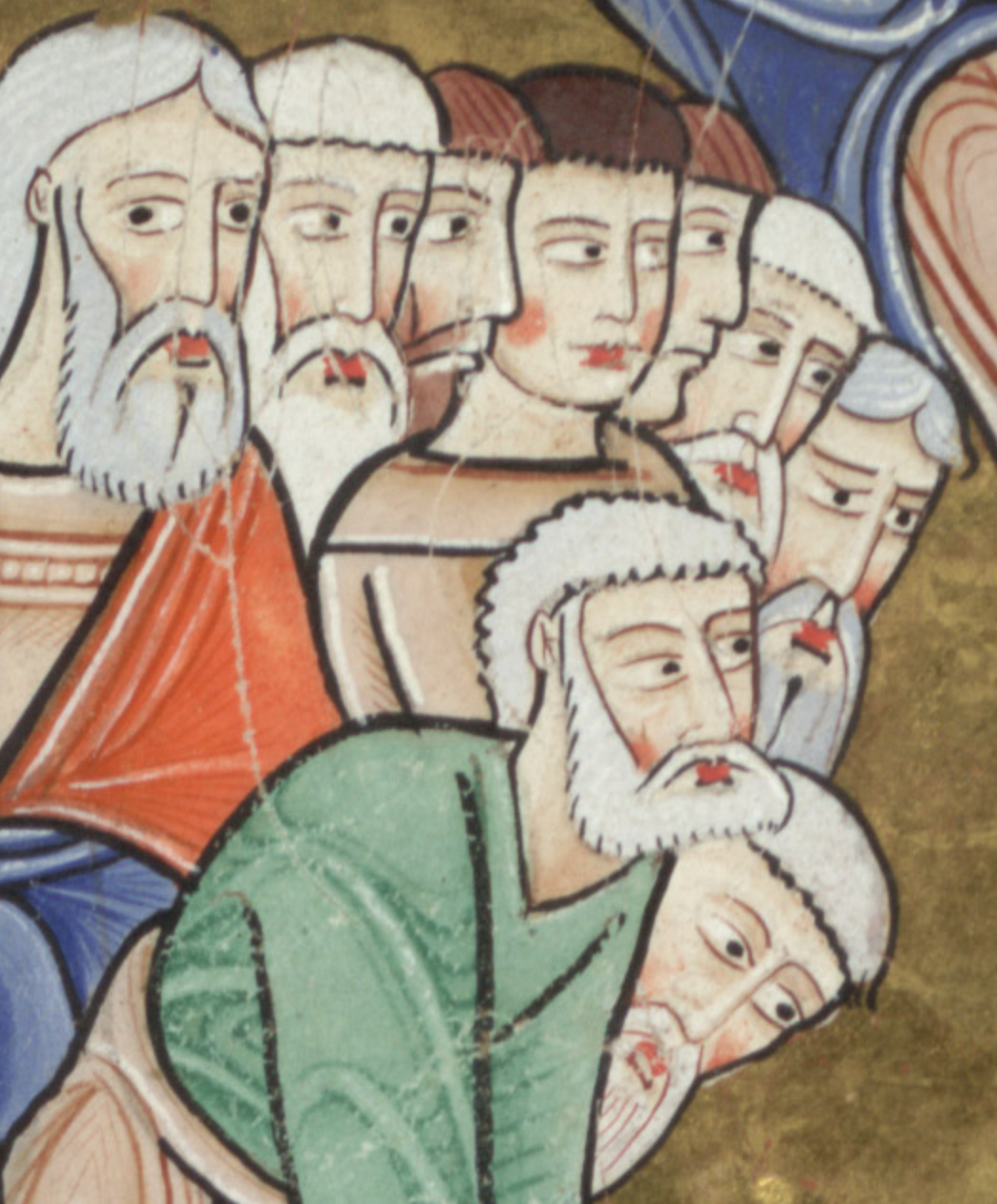
gamol-feax
gamol-feax, adj: with hoary locks, grey-haired. (GAH-moll-FEH-ahks / ˈga-mɔl-ˌfɛaks)
angsumnes
angsumnes, f.n: (physical) distress, torment, suffering, affliction; (mental/emotional) distress; anguish, anxiety. (AHNG-sum-ness / ˈaŋ-sʌm-nɛs)
heoloran
heoloran, wk.v: to weigh in a balance, to consider. (HEH-ol-or-ahn / ˈhɛɔ-lɔr-an)

bisceop-hām
bisceop-hām, m.n: episcopal demesne or property. (BISH-op-HAWM / ˈbɪ-ʃɛɔp-ˌhaːm)
ēage
ēage, n.n: eye. (AY-ah-yuh / ˈeːa-jə)

scūr-beorh
scūr-beorh, f.n: a shelter against storm. (SHOOR-BEH-or’h / ˈʃuːr-ˌbɛɔrx)
gōian
gōian, wk.v: to sigh, groan, lament. (GO-i-ahn / ˈgoː-ɪ-an)
This week’s Wordhord Wednesday post is on leather-working in early medieval England. Read it on Patreon.
met-gird
met-gird, f.n: a rod for measuring. (MET-YIRD / ˈmɛt-ˌjɪrd)

 Old English Wordhord