scyte-finger, m.n: index finger (shooting-finger or arrow-finger). (SHUE-tuh-FING-ger / ˈʃy-tə-ˌfɪŋ-gər)
Category Archives: wordhord book
wīd-wegas
wīd-wegas, m.n (plural): ‘wide-ways’, distant regions, regions far and wide. (WEED-WEH-gahs / ˈwiːd-ˌwɛ-gas)

lencten
lencten, m.n: spring, Lent. (LENK-ten / ˈlɛnk-tɛn)
February 7th is the first day of spring in early medieval England.

gafol-fisc
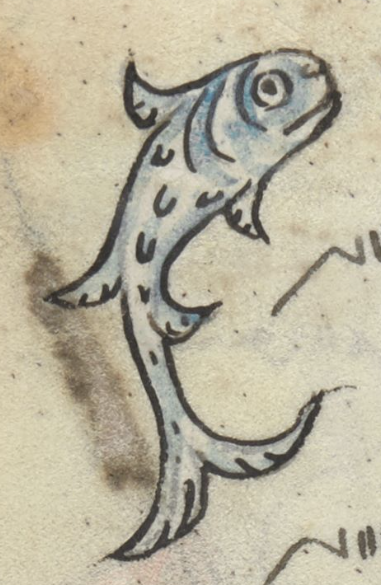
gafol-fisc, m.n: fish paid as toll or tribute. (GA-voll-FISH / ˈga-vɔl-ˌfɪʃ)
mǣting
mǣting, f.n: dream. (MAE-ting / ˈmæː-tɪŋ)
frēond-spēdig
frēond-spēdig, adj: rich in friends. (FRAY-ond-SPAY-dih / ˈfreːɔnd-ˌspeː-dɪj)
ān-floga
ān-floga, m.n: lone flier. (AHN-FLO-ga / ˈaːn-ˌflɔ-ga)
Read Fran Allfrey‘s post about the ān-floga on the Medieval Comics blog. And learn some wintry words in this week’s Wordhord Wednesday post on Patreon.
hors
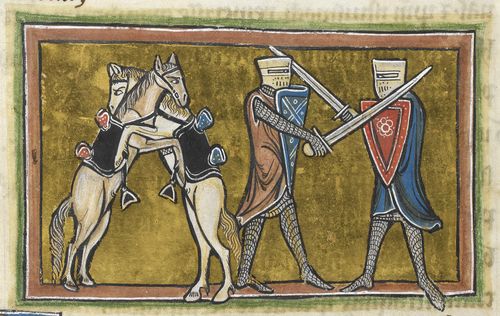
hors, n.n: horse. (HORS / ˈhɔrs)
lēaf-wyrm
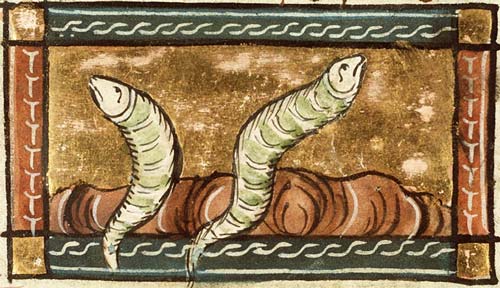
lēaf-wyrm, m.n: ‘leaf-worm’, blast or Bruchus (a kind of leaf beetle known for destroying crops). (LAY-ahv-WUERM / ˈleːav-ˌwyrm)
tūn
tūn, m.n: enclosure, yard, court; estate, farm; village, town. (TOON / ˈtuːn)

