sund-būend, m.n: a sea-dweller, but the word, which occurs only in the plural, is used for men, mankind. (SUND-BOO-end)
Category Archives: weather
styrman
styrman, wk.v: (of weather) to storm, rage; (of persons) to storm, make a great noise, cry aloud, shout. (STUR-mon)
sunn-hāt
sunn-hāt, adj: ‘sun-hot’, heated by the sun. (SUN-HAWT / ˈsʌn-ˌhaːt)
wind-rǣs
wind-rǣs, m.n: a storm of wind. [WIND-ræss]
hādor
hādor, n/adj: the clear, serene sky; clear (applied both to light and to sound), bright, serene. (HA-dor / ˈhaː-dɔɹ)

sunn-beorht
sunn-beorht, adj: ‘sun-bright’, bright with sunshine. (SUN-BEH-orh’t / ˈsʌn-ˌbɛɔrxt)
sunn-bearu
sunn-bearu, m.n: a sunny grove. [SUN-BEH-ah-roo]
ofer-ceald
ofer-ceald, adj: excessively cold. [OH-ver-CHAY-ald]
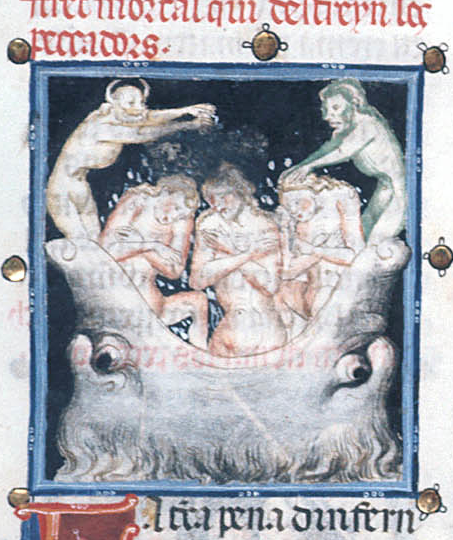
Three sinners standing in a hell-mouth, being tormented by devils throwing ice and snow. Breviari d’Amor, by Matfré Ermengau of Béziers. E. Spain (Catalonia, Girona?), last quarter of the 14th century. British Library, Yates Thompson 31, fol. 170v. [bl.uk]
gicel-gebland
gicel-gebland, n.n: a hailstorm. [YI-chell-yeh-BLOND]
hrīm-ceald
hrīm-ceald, adj: icy cold. [HREEM-CHAY-ald]
This week’s Wordhord Wednesday post is on the rime-cold sea. Read and hear it on Patreon.
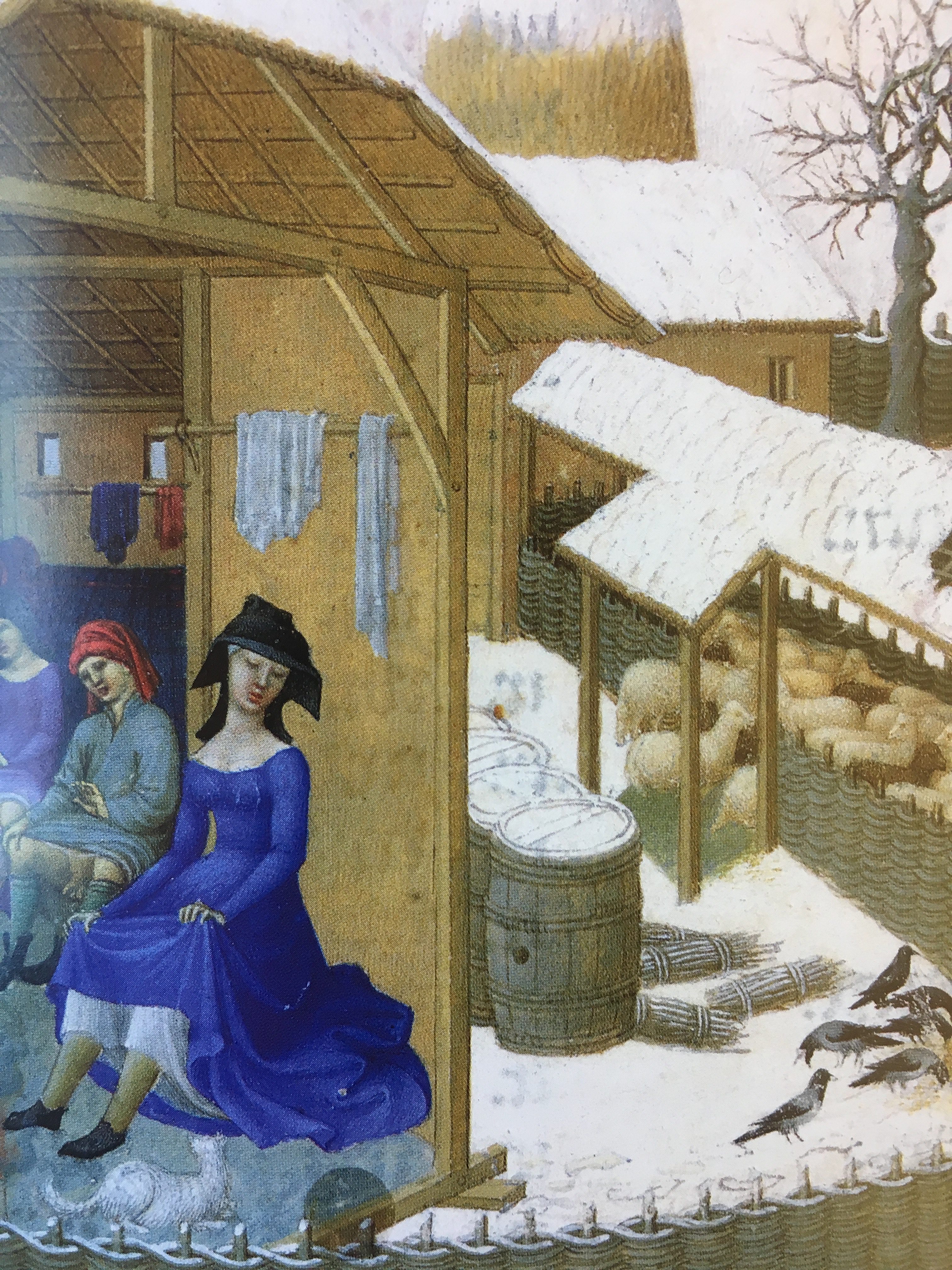
Calendar page for February, painted by the Limbourg brothers for Jean, Duc de Berry: “Medieval and Renaissance Interiors” by Eva Oledzka, found on Patricia Lovett’s blog. Does anyone have more specific manuscript info? [patricialovett.com]
 Old English Wordhord