wār, n.n: seaweed; sand, strand. (WAHR)
Category Archives: trees + plants
gār-lēac
gār-lēac, n.n: garlic. (GAR-LAY-ock / ˈgaːr-ˌleːak)
gorst-bēam
gorst-bēam, m.n: a bramble. (GORST-BAY-ahm)
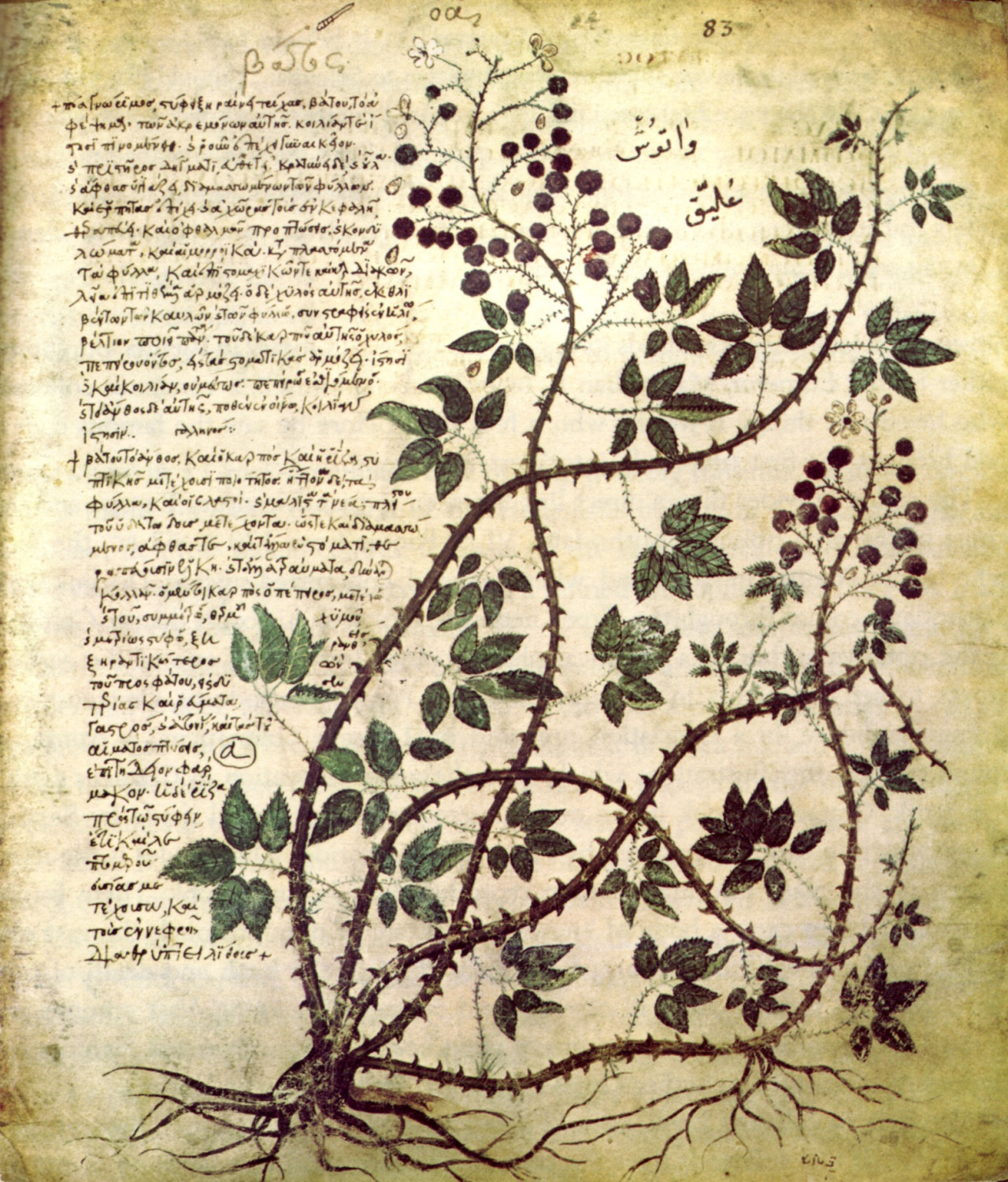
Bramble in the Vienna Dioscurides. Constantinople (Byzantine Empire), c. 515. Vienna, Österreichische Nationalbibliothek, Codex Vindobonensis med. gr. 1, f. 83r. [commons.wikimedia.org]
enne-lēac
enne-lēac, n.n: onion. (EN-nuh-LAY-ock / ˈɛn-nə-ˌleːak)
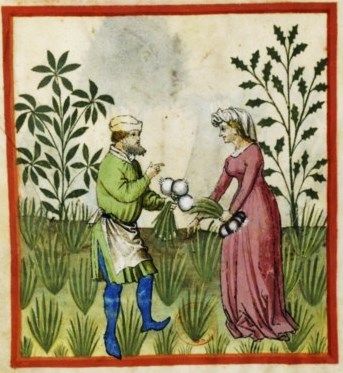
cristalla
cristalla, m.n: crystal; the herb crystallium, flea-bane, flea-wort. (KRIS-tall-lah)
ifig
ifig, n.n: ivy. (IH-vee)
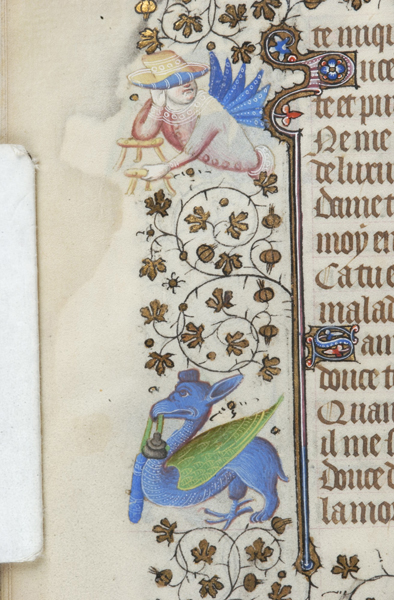
Marginal ivy in a Book of Hours. France (Paris), c. 1418. New York, Morgan Library, MS M.919, f. 187v. [ica.themorgan.org]
wyrt-forbor
wyrt-forbor, n.n: restraint from an action by the operation of herbs. (WURT-for-bor)
tungilsinwyrt
tungilsinwyrt, f.n: white hellebore. (TUN-yill-zin-WURT)
This week’s Wordhord Wednesday post is on people-joy. Read and listen on Patreon.
gærs-cīþ
gærs-cīþ, m.n: a blade of grass. (GARZ-cheeth)
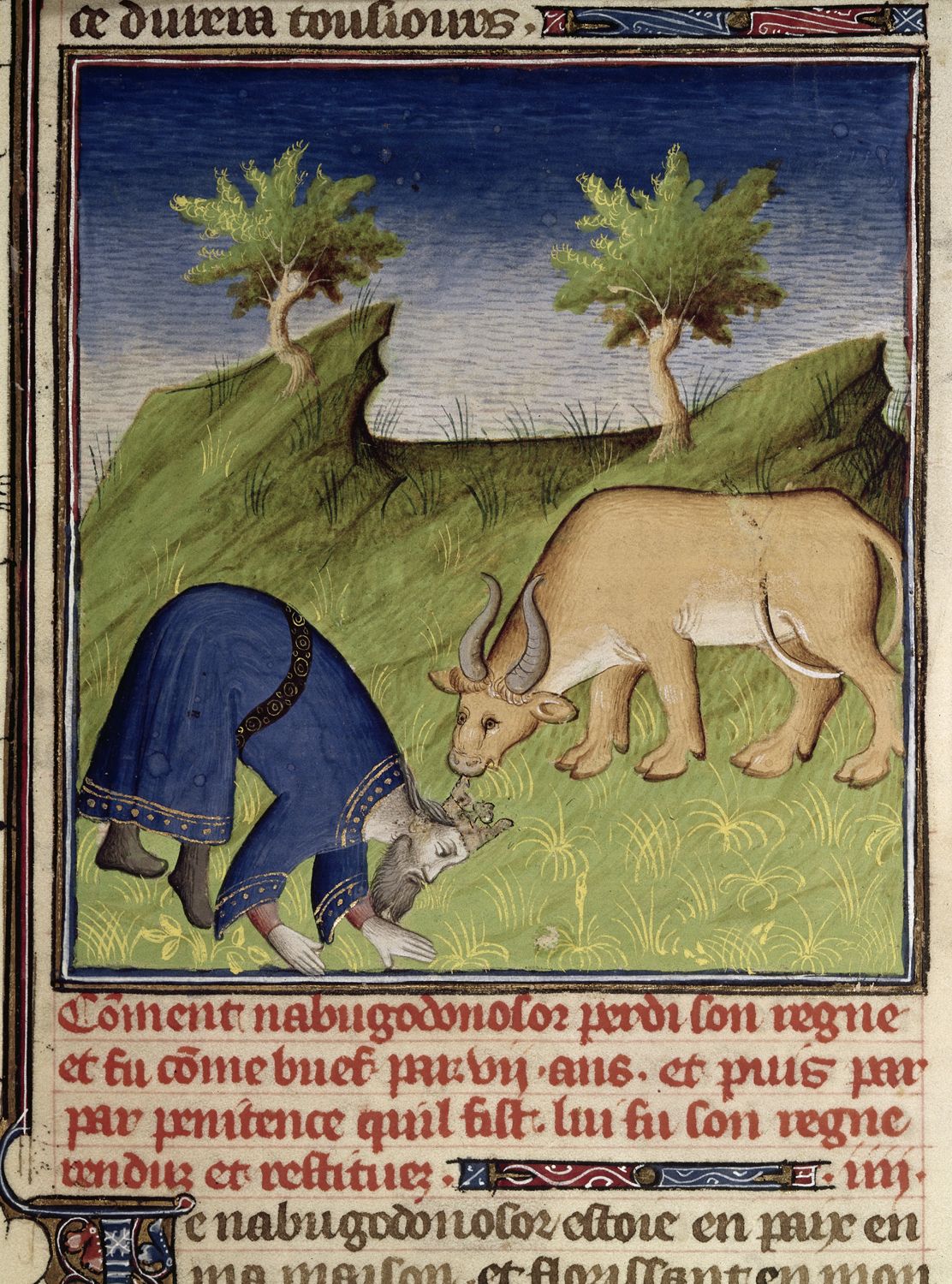
Nebuchadnezzar and an ox eating grass. Bible historiale, Guyart des Moulins. Central France (Paris and Clairefontaine), 1411. British Library, Royal 19 D III, f. 402r. [bl.uk]
ciris-æppel
ciris-æppel, m.n: a cherry. (CHIR-iz-APP-ell)
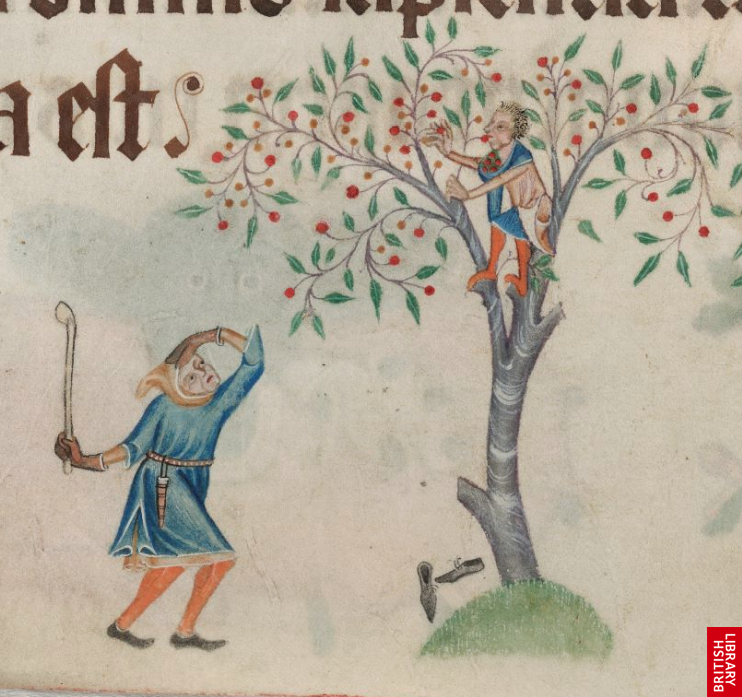
A boy stealing cherries from a tree. The Luttrell Psalter. Northern England (Lincolnshire), 1325-1340. British Library, Add MS 42130, f. 196v. [bl.uk]
 Old English Wordhord