ge-hæg, n.n: enclosed piece of land. (yeh-HAIE / jɛ-ˈhæj)
Category Archives: places
wyrm-hord
wyrm-hord, n.n: a treasure held by a serpent, dragon’s hoard. (WURM-hord)
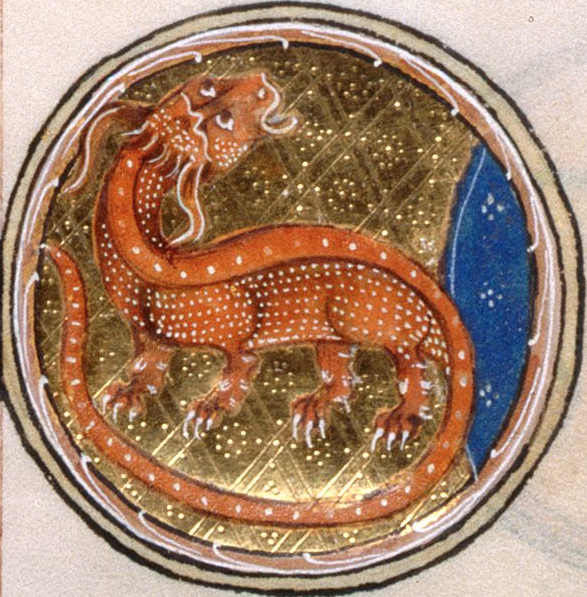
The Gorleston Psalter. England (Suffolk), 1310-1324. British Library, Add MS 49622, f. 5v. [bl.uk]
geard
geard, m.n: enclosure, yard, garden, court, dwelling, region; fence, hedge. (YEH-ard / ˈjɛard)
ēðel-turf
ēðel-turf, f.n: native turf or soil, native country, country. (ETH-ell-turf)
This week’s Wordhord Wednesday post is on God’s high-chair. Read and listen on Patreon.
cualme-stōw
cualme-stōw, f.n: a place of burial. (KWAL-meh-STOH)
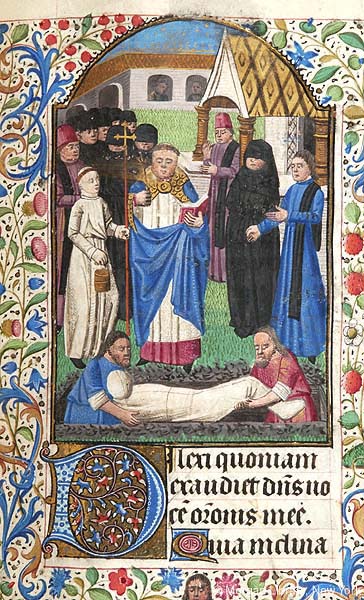
Book of Hours. France, c. 1480. New York, Morgan Library, MS M.136, f. 119r. [ica.themorgan.org]
Windles-ōra
Windles-ōra, m.n: Windsor. (WIND-less-OH-ra)
hearga
hearga, m.n: a place sacred to a god, with an idol and an altar; a temple, fane; an idol. (HAY-ar-ga)
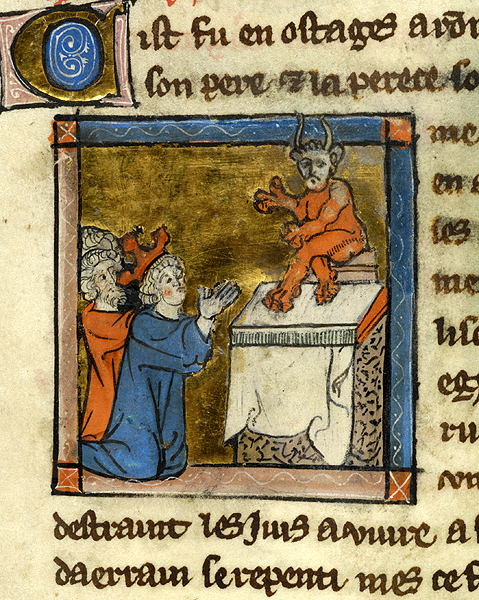
Antiochus IV, crowned, with joined hands raised, kneels with two men, partially visible, before draped altar on which sits horned idol. Abrégé des histoires divines. France (possibly Amiens), between 1300 and 1310. New York, Morgan Library, MS M.751, f. 29v. [ica.themorgan.org]
cnoll
cnoll, m.n: a knoll, hill-top, cop, summit. (K-NOLL)
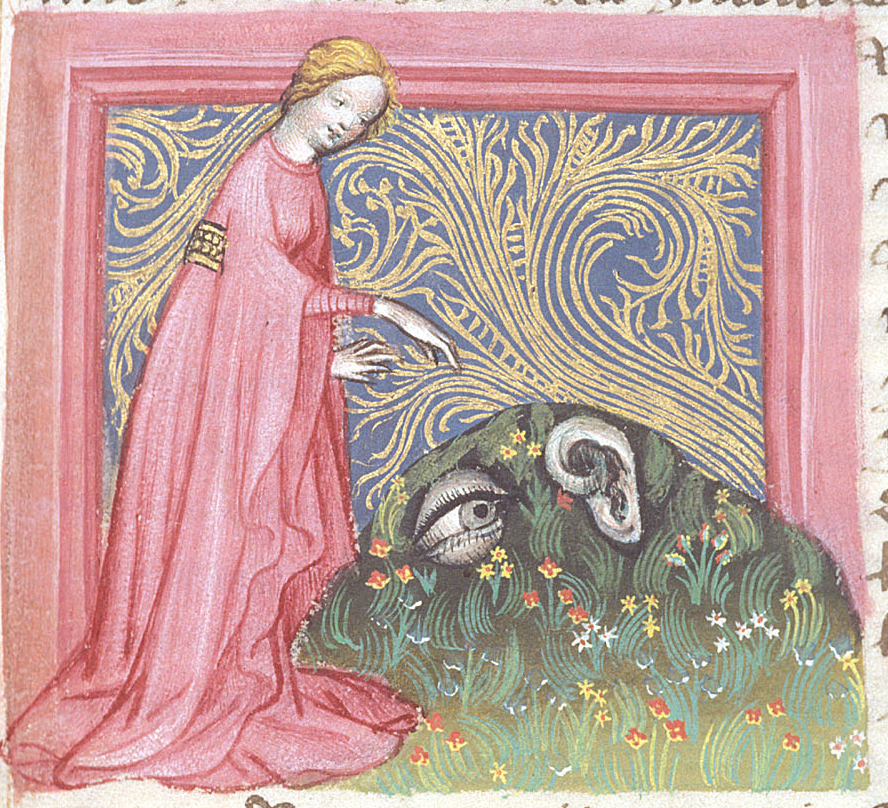
The Human Ear complaining to a personification of Nature that she has given him no such protection as the Eye was given with eyebrows. Spiegel der Weisheit, by Ulrich von Pottenstein. W. Austria (Salzburg), c. 1430. British Library, Egerton 1121, f. 38r. [bl.uk]
dōm-ern
dōm-ern, n.n: a judgment-place, a courthouse. (DOME-ern)
sǣ-burh
sǣ-burh, f.n: a maritime town. (SÆ-burh)
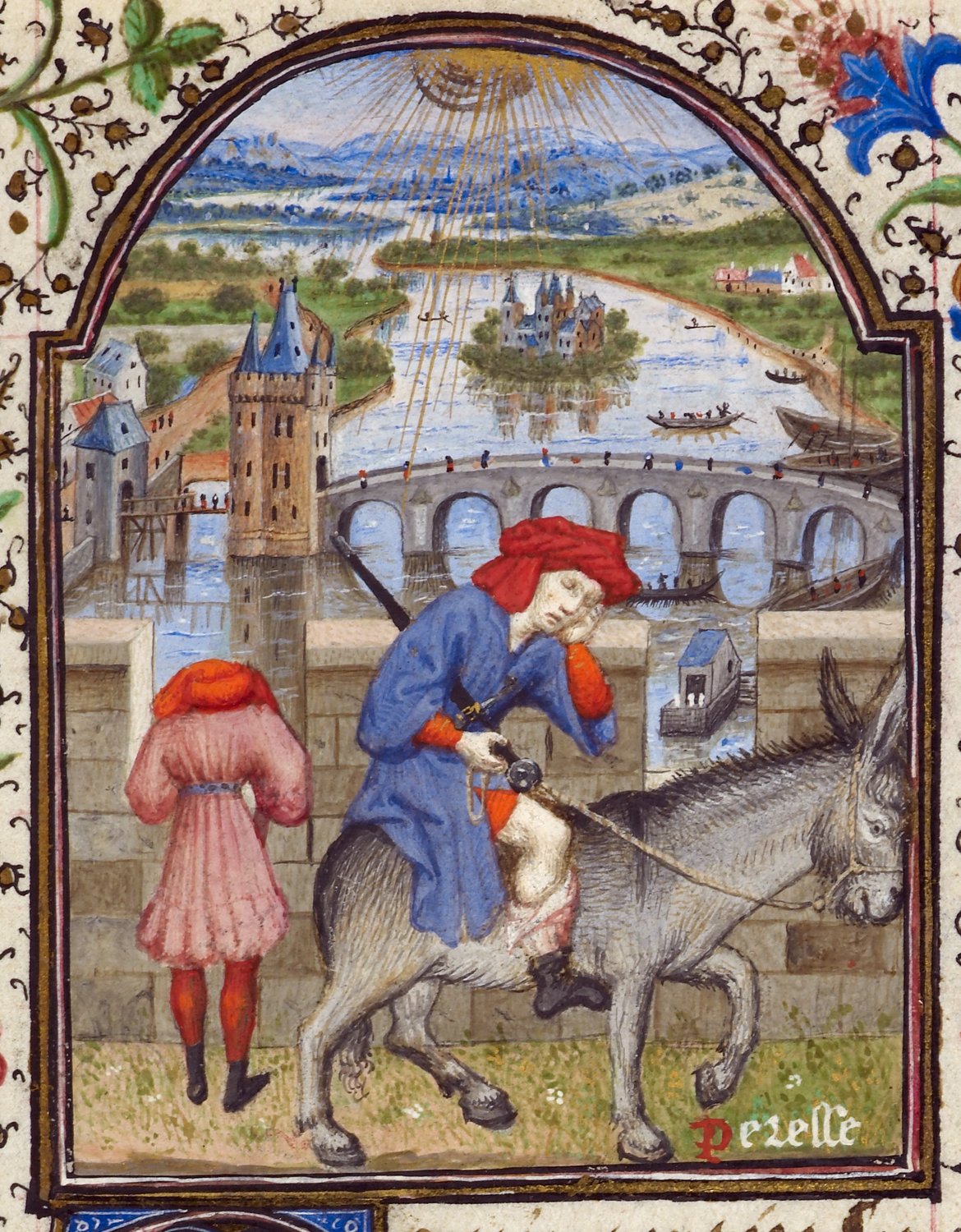
A man riding on a donkey, head in hand, across a bridge, as a personification of Idleness (Peresse). The Dunois Hours. Central France (Paris), c. 1440 – c. 1450 (after 1436). British Library, Yates Thompson 3, f. 162r. [bl.uk]
 Old English Wordhord