fǣmne, f.n: a virgin, damsel, maid, woman. (FAM-neh)
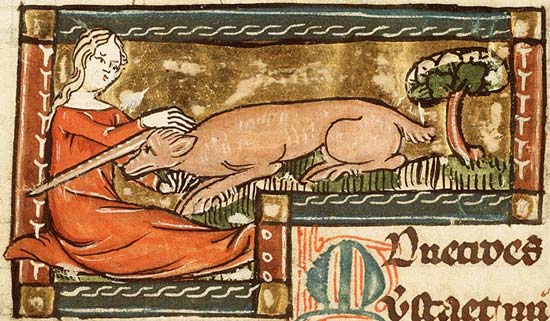
Jacob van Maerlant’s Der Naturen Bloeme. Flanders, c. 1350. Hague, Koninklijke Bibliotheek, KB, KA 16, f. 63r. [bestiary.ca]
fǣmne, f.n: a virgin, damsel, maid, woman. (FAM-neh)
Jacob van Maerlant’s Der Naturen Bloeme. Flanders, c. 1350. Hague, Koninklijke Bibliotheek, KB, KA 16, f. 63r. [bestiary.ca]
wīte-þēow, m.n: one condemned to slavery for crime, or from inability to pay the fines incurred from that crime; (figuratively) one in hell. (WEE-teh-THAY-oh)
esne-wyrhta, m.n: a hireling, mercenary. (EZ-neh-WURH-ta)
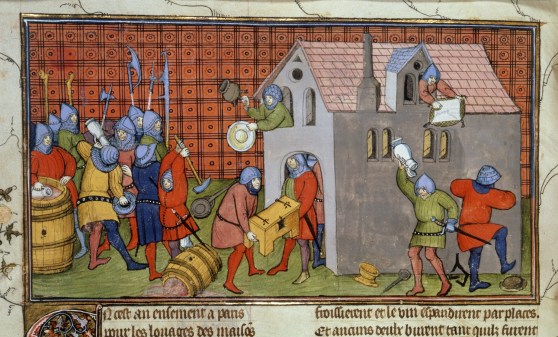
Chroniques de France ou de St Denis (from 1270 to 1380). France (Paris), late 14th century (after 1380). British Library, Royal 20 C VII, f. 41v. [bl.uk]
sige-cwēn, f.n: victory-queen, victorious queen. (SIH-yuh-KWAIN / ˈsɪ-jə-ˌkweːn)

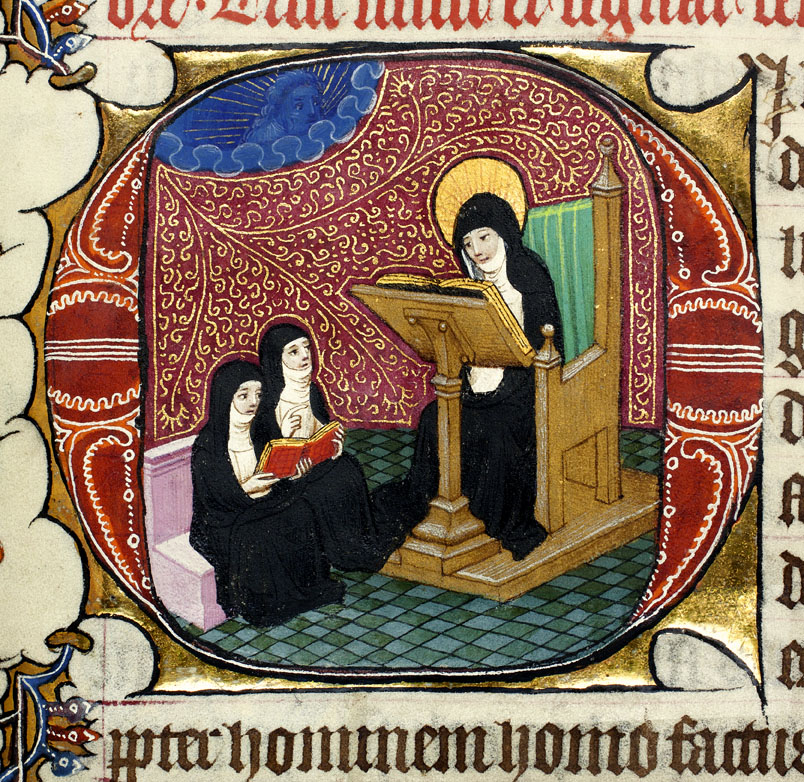
nunne, f.n: a nun. (NUN-nuh / ˈnʌn-nə)
This week’s Wordhord Wednesday post is on St Augustine’s arrival in England. Read it on Patreon.
hǣmed-ceorl, m.n: a married man. (HAM-ed-CHAY-orl)
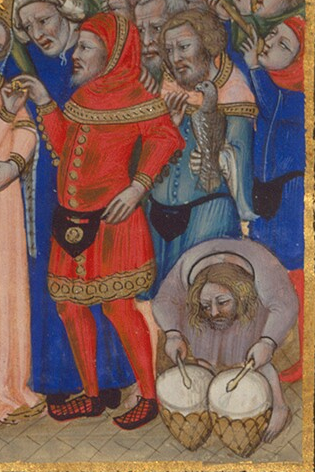
Detail of groom. Miniature on vellum by Niccolò di Giacomo da Bologna, 1350s. Washington, DC, Rosenwald Collection 1961.17.5. [nga.gov]
hǣmed-wīf, n.n: a married woman. (HAM-ed-WEEF)
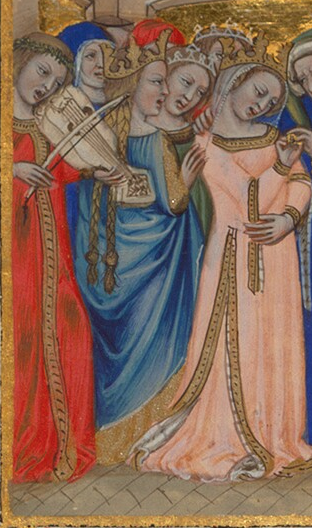
Detail of bride and musicians. Miniature on vellum by Niccolò di Giacomo da Bologna, 1350s. Washington, DC, National Gallery of Art, Rosenwald Collection 1961.17.5. [nga.gov]
gliew-mēden, n.n: a glee-maiden, female musician. (GLIH-ew-MAY-den)
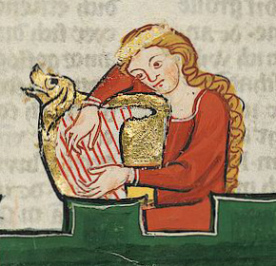
Woman playing a harp in the Codex Manesse. Zurich, c. 1300-c. 1340. Universitätsbibliothek Heidelberg, Cod. Pal. germ. 848, f. 412r. [digi.ub.uni-heidelberg.de]
frēo, adj: free, having liberty or immunity, noble, glad, joyful. Also, m.n: a lord, master. Also, f.n: a lady, woman. (FRAY-oh)
Read more about this word in this week’s Wordhord Wednesday post on Patreon.
hearpestre, f.n: a female harper. (HAY-arp-est-reh)
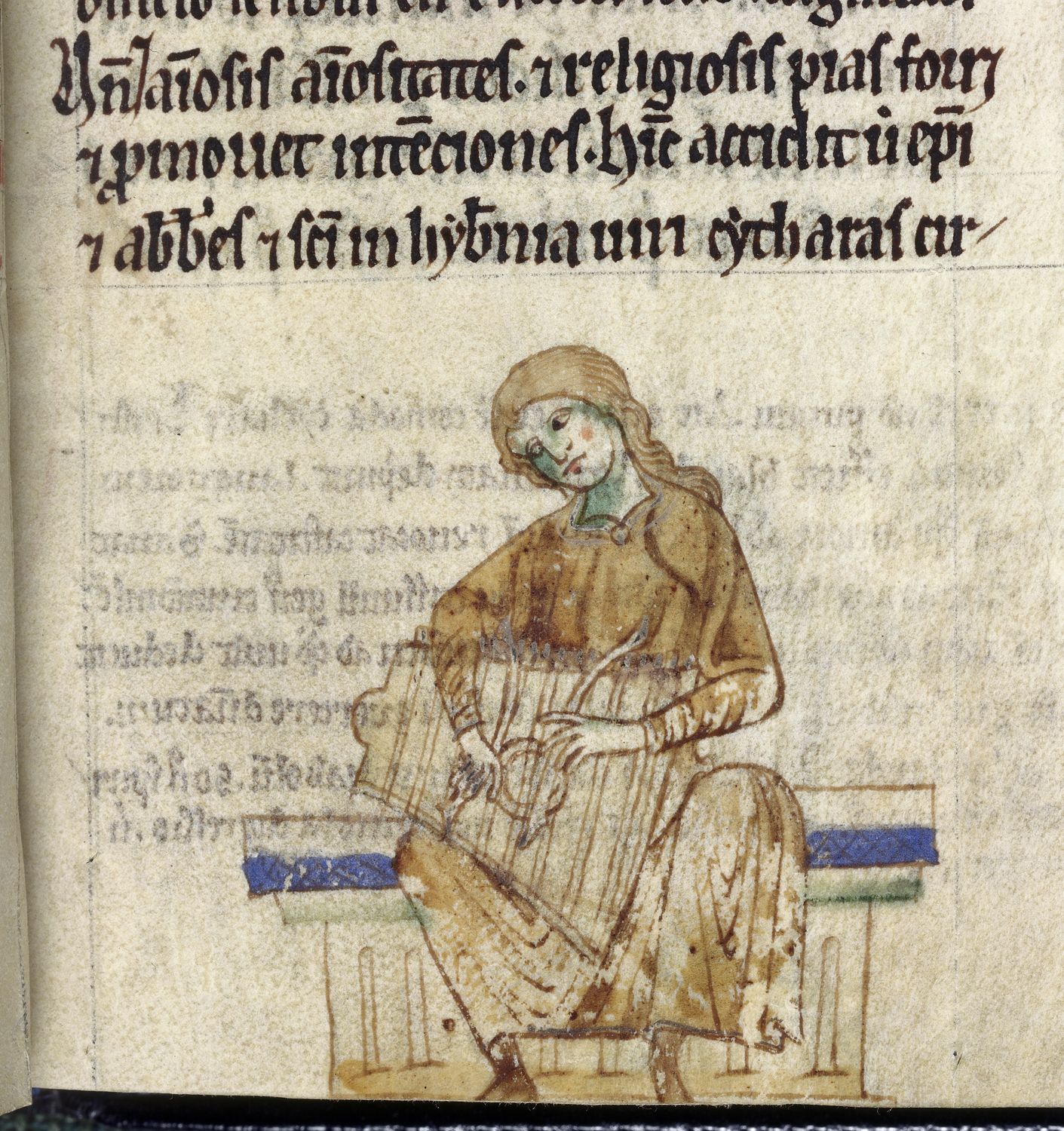
A woman playing a harp. Gerald of Wales’s Topographia Hiberniae. England, N. (Lincoln?), c. 1196-c. 1223. British Library, Royal 13 B VIII, f. 26r. [bl.uk]

