symbel-wynn, f.n: ‘feast-joy’, pleasure or delight in feasting. (SUEM-bell-WUEN / ˈsym-bɛl-ˌwyn)
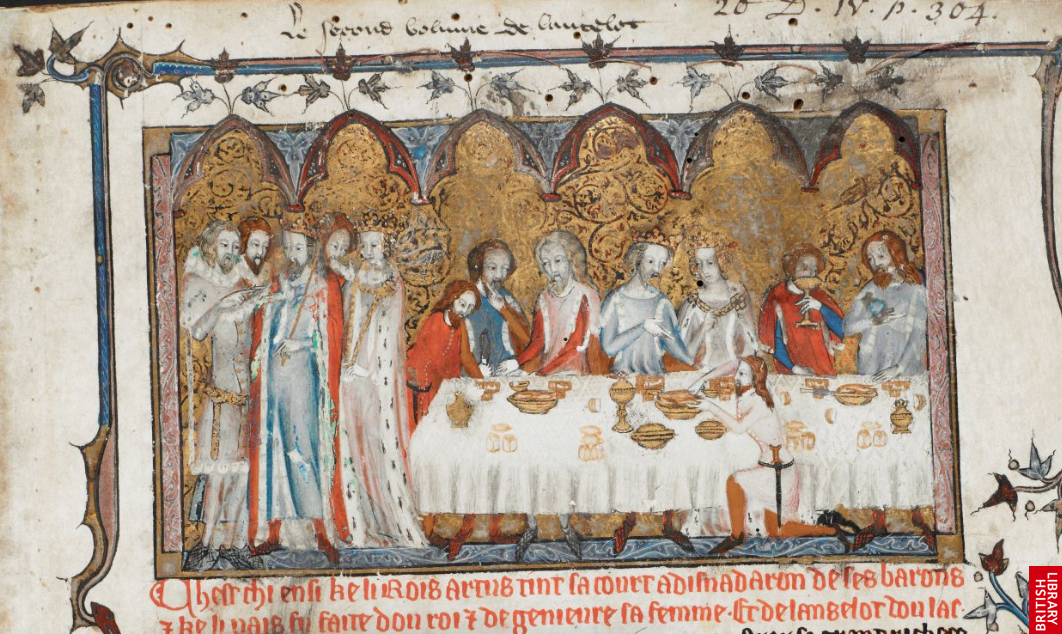
symbel-wynn, f.n: ‘feast-joy’, pleasure or delight in feasting. (SUEM-bell-WUEN / ˈsym-bɛl-ˌwyn)
bēor-sele, m.n: hall where (alcoholic) drink is served. (BAY-or-SEH-luh / ˈbeːɔr-ˌsɛ-lə)
cū-meoluc, f.n: cow’s milk. (KOO-MEH-o-luk / ˈkuː-ˌmɛɔ-lʌk)
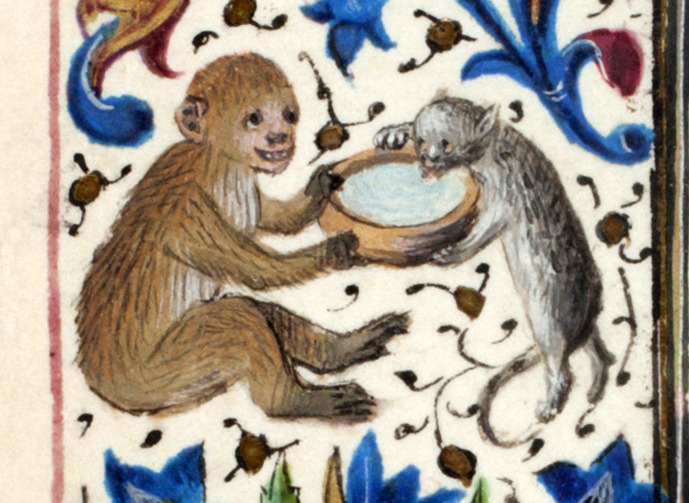
medu-drinc, m.n: mead-drinking. (MEH-duh-DRINCH / ˈmɛ-dʌ-ˌdɹɪntʃ)
Mead, an alcoholic drink fermented from honey and water, appears frequently in Old English literature.
efen-etan, str.v: to eat as much as anyone. [EH-ven-EH-tahn]

Les Grandes Heures du Duc de Berry. France (Paris), 1409. Bibliothèque nationale de France, ms. lat. 919. [bnf.fr] via [timkanebooks.com]
cucurbite, f.n: a gourd. [KUH-kur-bit-eh]
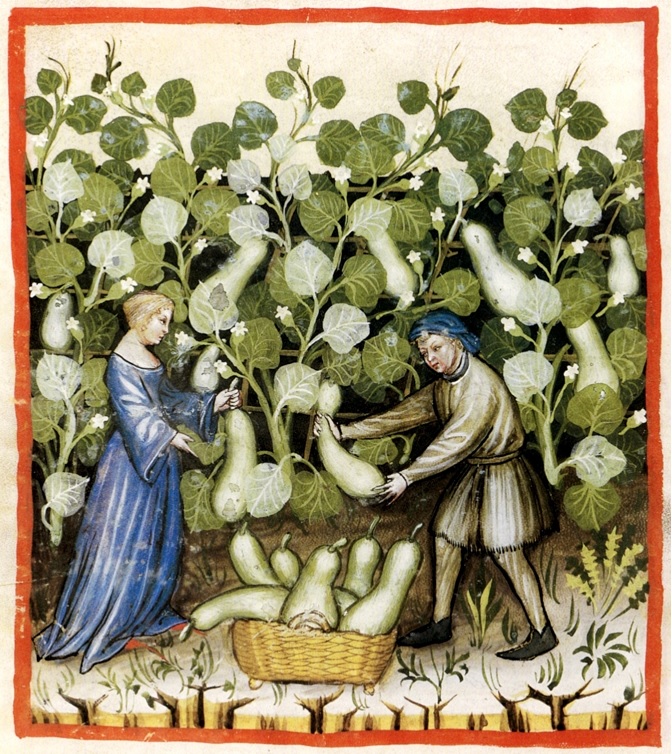
Tacuinum Sanitatis. Please comment if you have more info on this image. [oldfoodways.info]
winter-sufel, n.n: provisions (other than bread) for the winter. [WIN-ter-SUV-ell]
morgen-drenc, m.n: ‘morning-drink’, some sort of healing drink or potion. (MOR-gen-DRENCH / ˈmɔr-gɛn-ˌdrɛntʃ)
oflǣt-hlāf, m.n: a loaf of the bread used for the Eucharist. [OV-læt-HLOFF]
cū-butere, f.n: cow’s butter, butter made of cow’s milk. (KOO-BUH-teh-ruh / ˈkuː-ˌbʌ-tɛ-rə)
 Old English Wordhord