scēat, m.n: a corner, an angle; a corner, quarter; a projection, promontory; a nook, corner, region; a lap, bosom; a bay; a garment; a cloth, napkin. (SHAY-aht)
Author Archives: Hana Videen
wyrt-drenc
wyrt-drenc, m.n: herbal drink, potion made from herbs. (WUERT-DRENCH / ˈwyrt-ˌdrɛntʃ)
smeoru-mangestre
smeoru-mangestre, f.n: a butter-woman, woman who deals in butter and cheese. (SMAY-oh-ruh-MAHN-yez-treh)
Patrons, you have one week to send me your requests for Goldgifa Week! Find out more on Patreon.
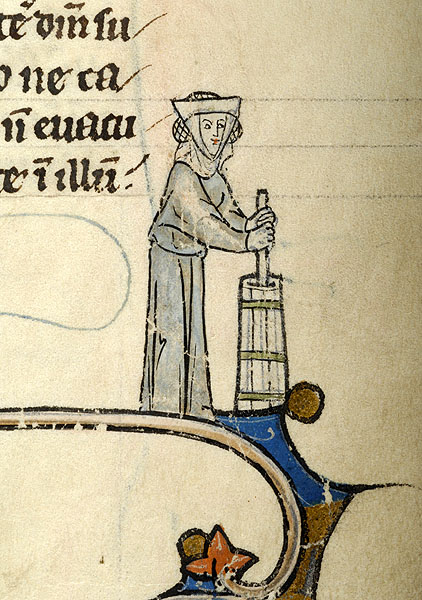
Marginalia in a bible. Northeast France, last quarter of the 13th century. New York, Morgan Library, MS M.969, f. 253r. [ica.themorgan.org]
þrāg-mǣlum
þrāg-mǣlum, adv: from time to time, at times, at intervals. (THRAG-MAL-um)
sib-gesihþ
sib-gesihþ, f.n: a vision of peace (the literal translation of hierosolyma), the city of Jerusalem. (SIB-yeh-SIH’th)
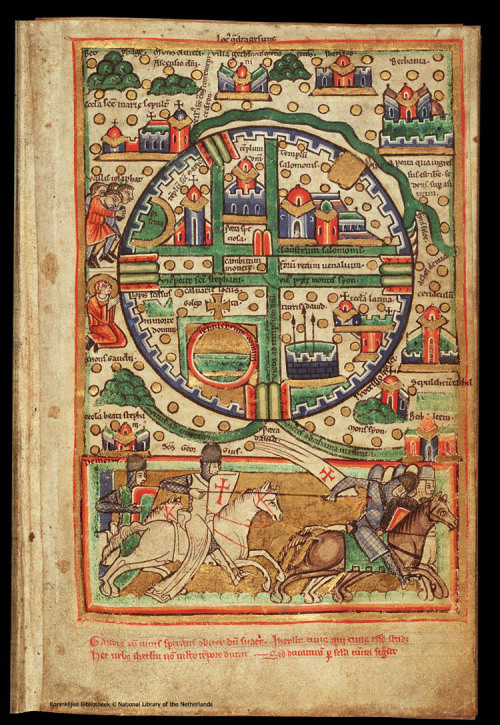
The Hague Map of Jerusalem in a picture bible. France (St. Omer), c. 1190-1200. The Hague, Koninklijke Bibliotheek, KB 76 F 5, f. 1r. [manuscripts.kb.nl]
on-hyrian
on-hyrian, wk.v: to imitate, emulate. (on-HUR-ee-ahn)
This week’s Wordhord Wednesday post is a reading from Beowulf: curve-prowed ships and foamy-necked floaters. Listen on Patreon.
wunden-stefna
wunden-stefna, m.n: a ship with curved prow. (WUN-den-STEV-nah / ˈwʌn-dɛn-ˌstɛv-na)
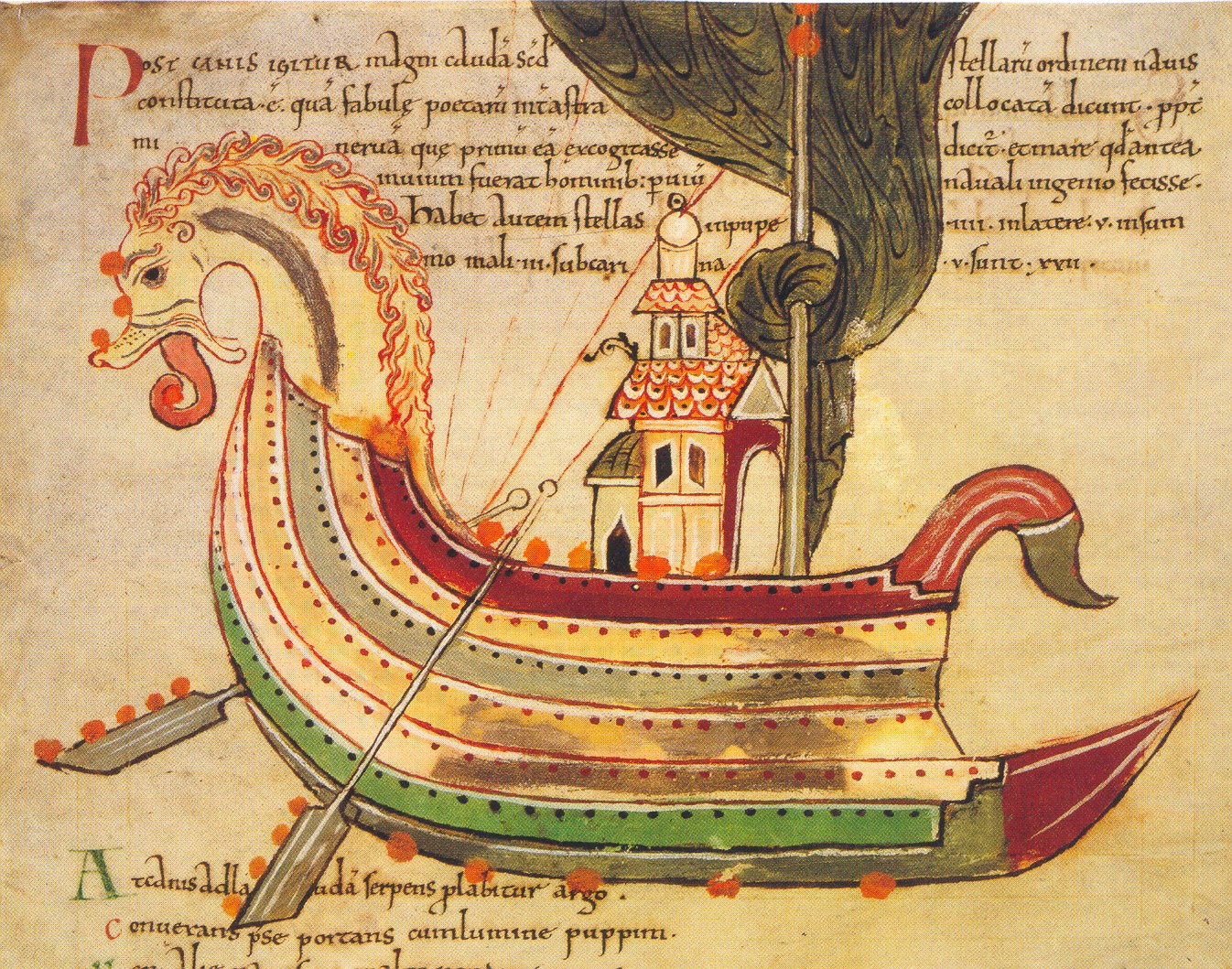
scippan
scippan, str.v: to shape, form, create; to assign as a person’s lot. (SHIP-pahn / ˈʃɪp-pan)
here-fugol
here-fugol, m.n: a bird which attends an army, eagle, vulture, raven. (HEH-reh-FUH-goll)
strēaw-berige
strēaw-berige, f.n: a strawberry (plant or fruit). (STRAY-aw-BAIR-ee-yeh)
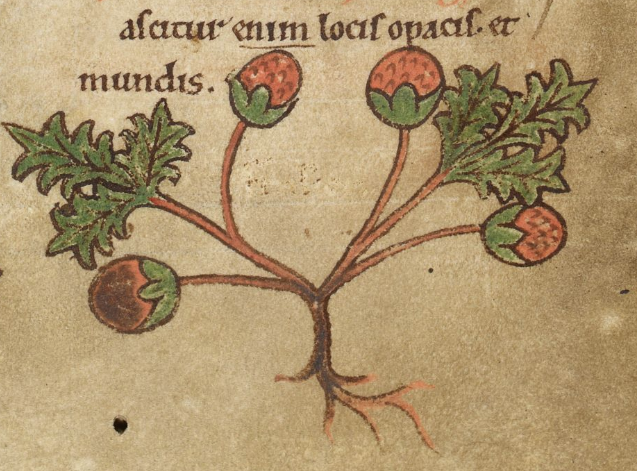
Herbarium of Pseudo-Apuleius Platonicus. Southern Netherlands (Meuse Valley), 3rd quarter of the 12th century. London, British Library, Harley MS 1585, f. 30r. [bl.uk]

