gærs-cīþ, m.n: a blade of grass. (GARZ-cheeth)
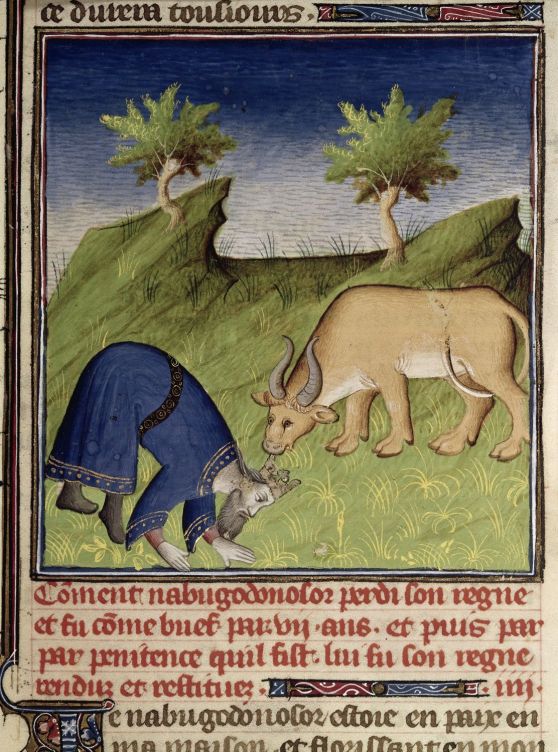
Nebuchadnezzar and an ox eating grass. Bible historiale, Guyart des Moulins. Central France (Paris and Clairefontaine), 1411. British Library, Royal 19 D III, f. 402r. [bl.uk]
gærs-cīþ, m.n: a blade of grass. (GARZ-cheeth)
Nebuchadnezzar and an ox eating grass. Bible historiale, Guyart des Moulins. Central France (Paris and Clairefontaine), 1411. British Library, Royal 19 D III, f. 402r. [bl.uk]
ciris-æppel, m.n: a cherry. (CHIR-iz-APP-ell)
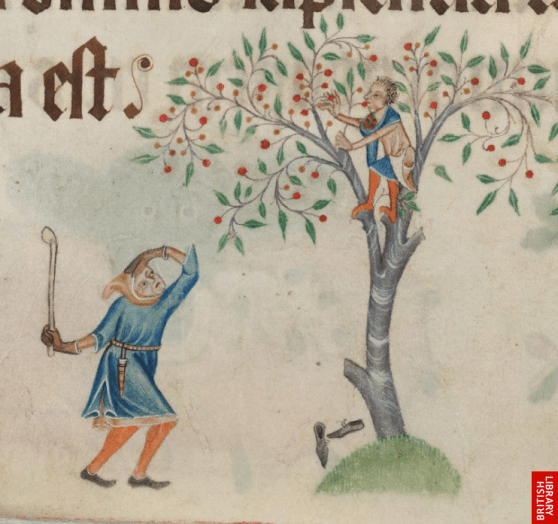
A boy stealing cherries from a tree. The Luttrell Psalter. Northern England (Lincolnshire), 1325-1340. British Library, Add MS 42130, f. 196v. [bl.uk]
wyrt-geard, m.n: kitchen garden. (WUERT-YEH-ard / ˈwyrt-ˌjɛard)
lēaf-helmig, adj: having a leafy top. [LAY-ahv-HEL-miγ]
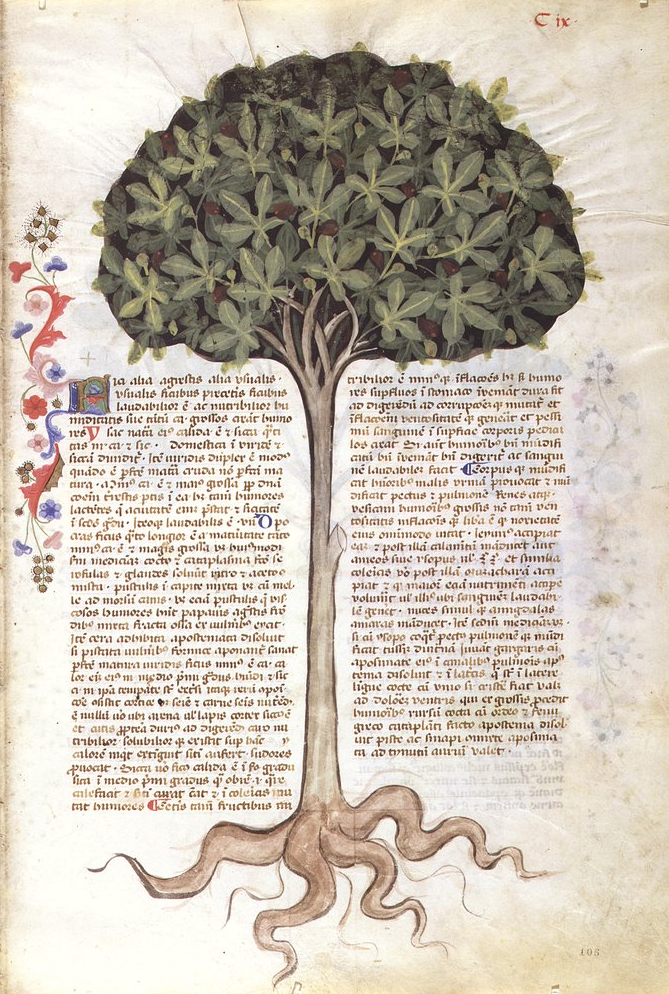
Historia plantarum. Italy (Milan), c. 1395-1400. Rome, Biblioteca Casanatense, MS 459, p. 212, via World Digital Library. [wdl.org]
wyrt-stenc, m.n: scent from a plant. (WUERT-STENCH / ˈwyrt-ˌstɛntʃ)
lēac, n.n: herb, plant. (LAY-ock / ˈleːak)

wyrt-tūn, m.n: garden. (WUERT-TOON / ˈwyrt-ˌtuːn)
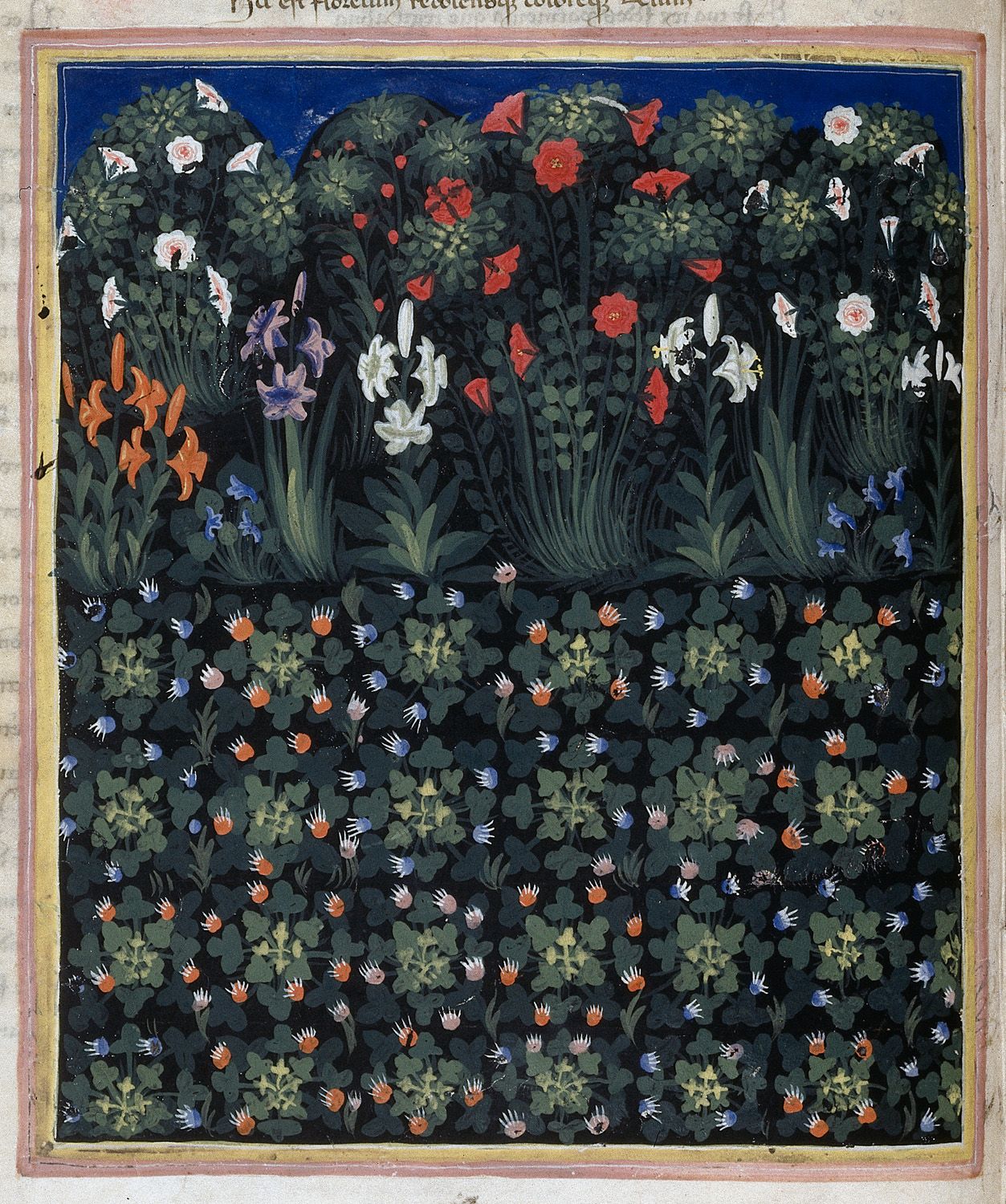
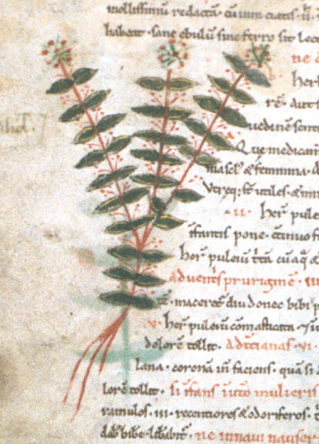
dweorge-dwosle, f.n: the herb pennyroyal (of the mint family). (DWEH-or-yuh-DWOSS-luh / ˈdwɛɔr-jə-ˌdwɔs-lə)
sunn-bearu, m.n: a sunny grove. [SUN-BEH-ah-roo]
wermōd, m.n: wormwood. [WAYRM-ohd]
 Old English Wordhord