mid-singend, m.n: one who sings with another. (mid-SING-end)

mid-singend, m.n: one who sings with another. (mid-SING-end)
sige-bīme, f.n: a trumpet which is sounded after victory. (SI-yeh-BEE-meh)

scēawend-wīse, f.n: a jesting song, song of a jester. (SHAY-ah-wend-WEE-zeh)
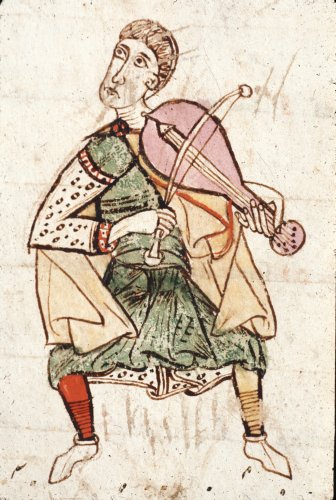
Gradual of Saint-Etienne of Toulouse. N. France (Toulouse), late 11th or early 12th century. British Library, Harley MS 4951 (Part 2), f. 297v. [bl.uk]
wrenc, m.n: a trick, artifice, wile, stratagem; a modulation of the voice. (WRENCH / ˈwɹɛntʃ)
cnocian, wk.v: to knock. (K’-NOCK-ee-ahn)
This week’s Wordhord Wednesday post is on silent k. Read it on Patreon.
swegel-wundor, n.n: a heavenly wonder, a wondrous sound. (SWAY-yell-WUN-dor)
This week’s Wordhord Wednesday post is on St Guthlac and his musical death. Read it on Patreon.
hearpe-streng, m.n: a harp-string. (HAY-ar-peh-STRENG)
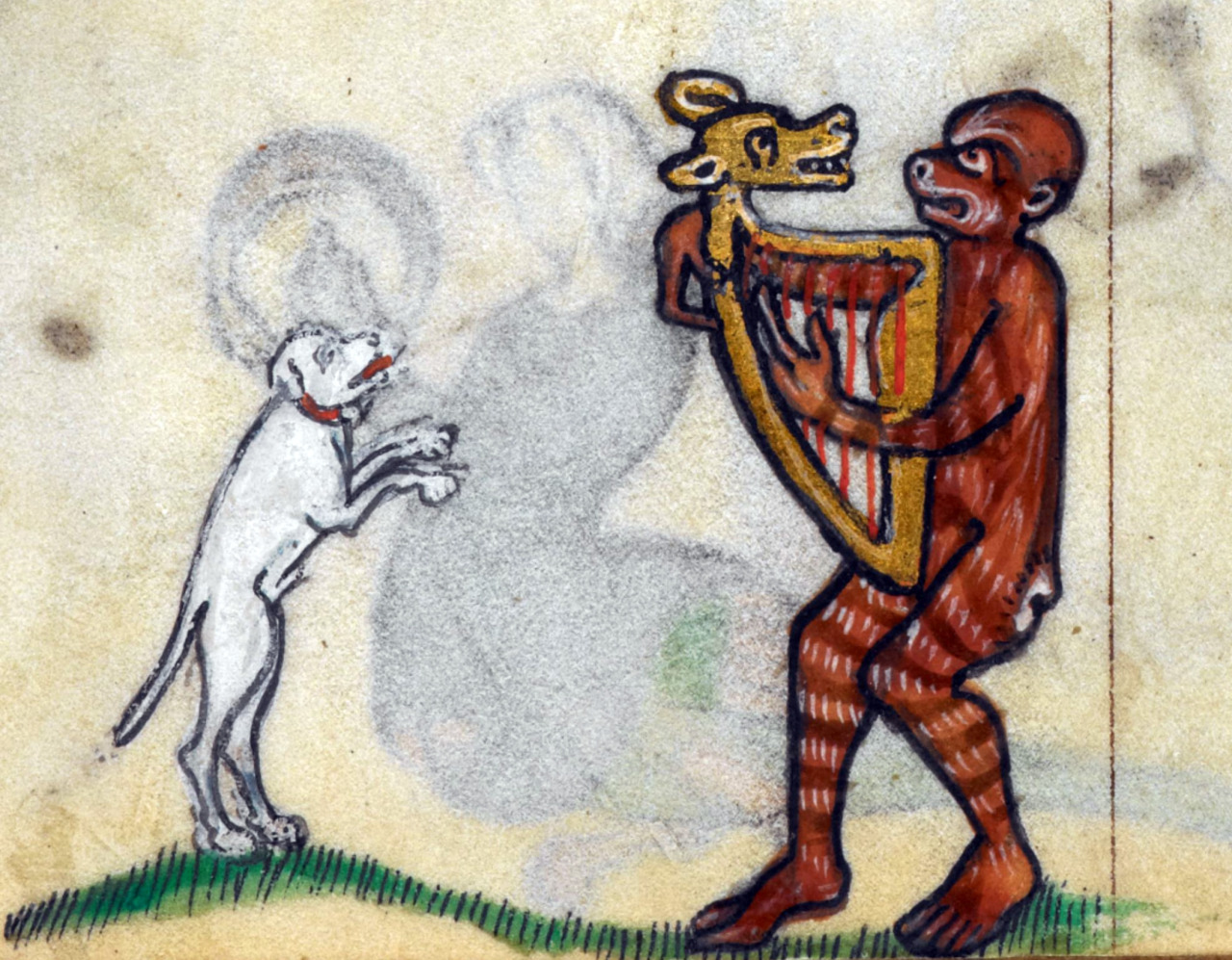
The Maastricht Hours. Netherlands (Liège), 1st quarter of the 14th century. British Library, Stowe MS 17, f. 245r. [bl.uk]
swinsung-cræft, m.n: music. (SWIN-zung-KRAFT)

A rabbit plays the pipe-organ as a dog works the bellows. The Macclesfield Psalter. England (East Anglia), c. 1330-1340. Cambridge, Fitzwilliam Museum, MS 1-2005, f. 15r. [fitzwilliam.cam.ac.uk]
hēafod-wōþ, f.n: the voice (lit. head-sound). (HAY-ah-vod-WOATH)
scēawend-wīse, f.n: a jesting song, song of a jester. (SHAY-ah-wend-WEE-zeh)
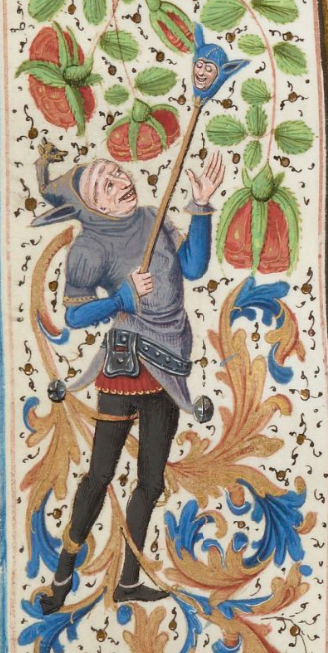
Chroniques sire Jehan Froissart. France, 15th century. Bibliothèque nationale de France, Département des manuscrits, Français 2643, f. 312v. [gallica.bnf.fr]
 Old English Wordhord