wīg-gār, m.n: a lance. (WEE-GAR / ˈwiːj-ˌgaːɹ)
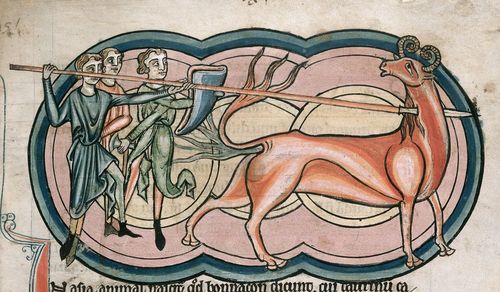
wīg-gār, m.n: a lance. (WEE-GAR / ˈwiːj-ˌgaːɹ)
here-sīþ, m.n: the journey of an army, a military expedition, march. (HEH-ruh-SEETH / ˈhɛ-ɹə-ˌsiːθ)
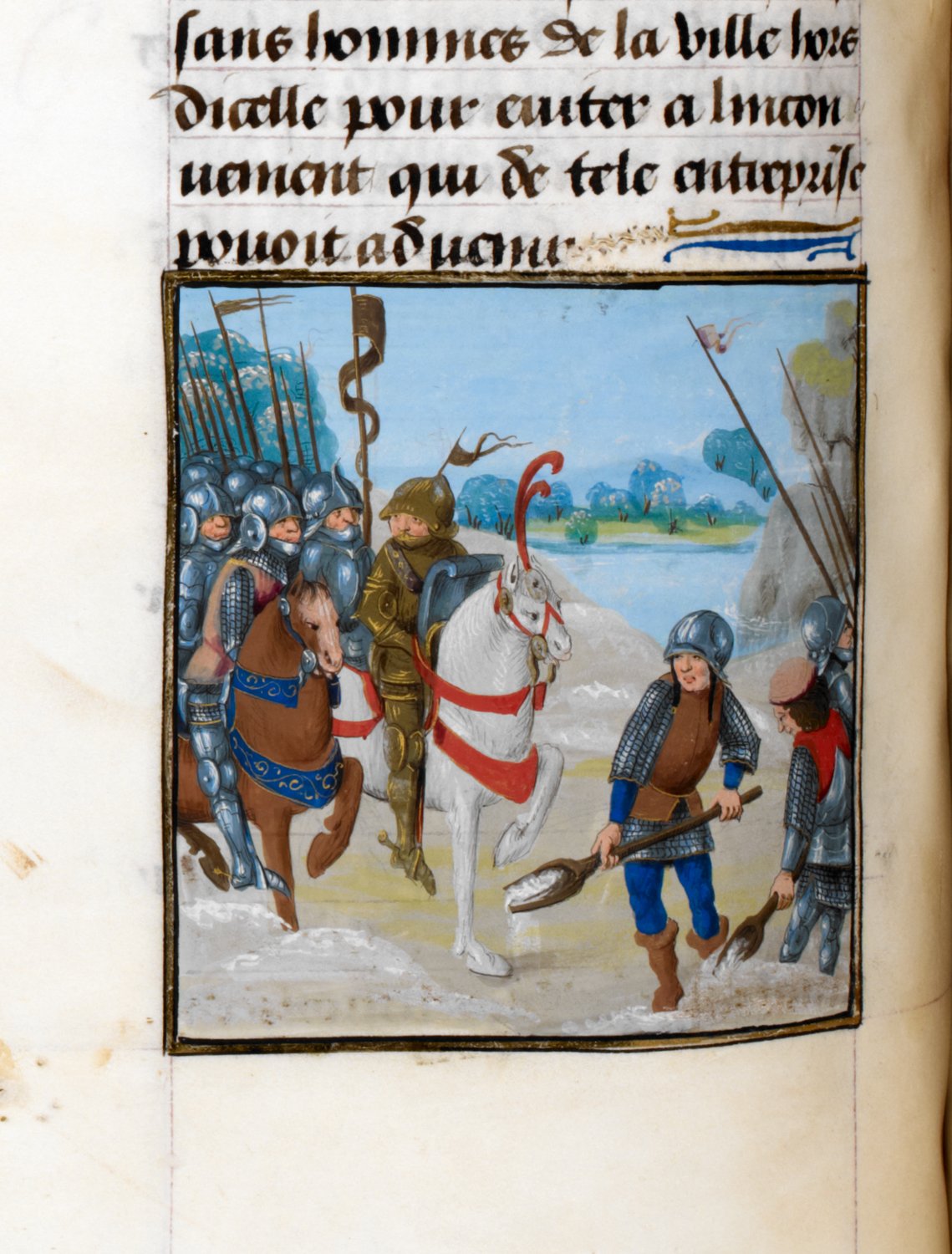
þrȳþ-bord, n.n: a strong shield. (THRUTH-BORD / ˈθɹɝːθ-ˌbɔɹd)
ge-dīþan, wk.v: to put to death, kill; to mortify (in the theological sense). (yeh-DEE-than / jɛ-ˈdiː-θan)
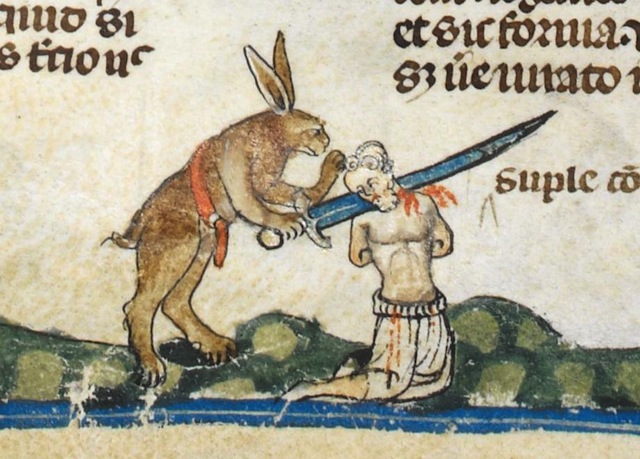
wīg, n.n: fight, battle, war; fighting force (abstract or concrete), valour; troops. (WEE / ˈwiːj)
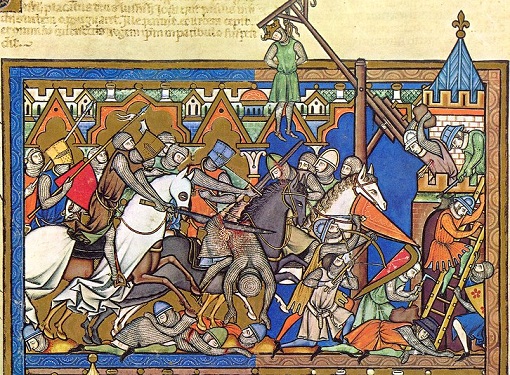
cempa, m.n: a soldier, warrior. (CHEM-pa / ˈtʃɛm-pa)
Today is the feast day of St George.

hearding, m.n: a brave man, warrior, hero. (HEH-ar-ding / ˈhɛaɹ-dɪŋ)
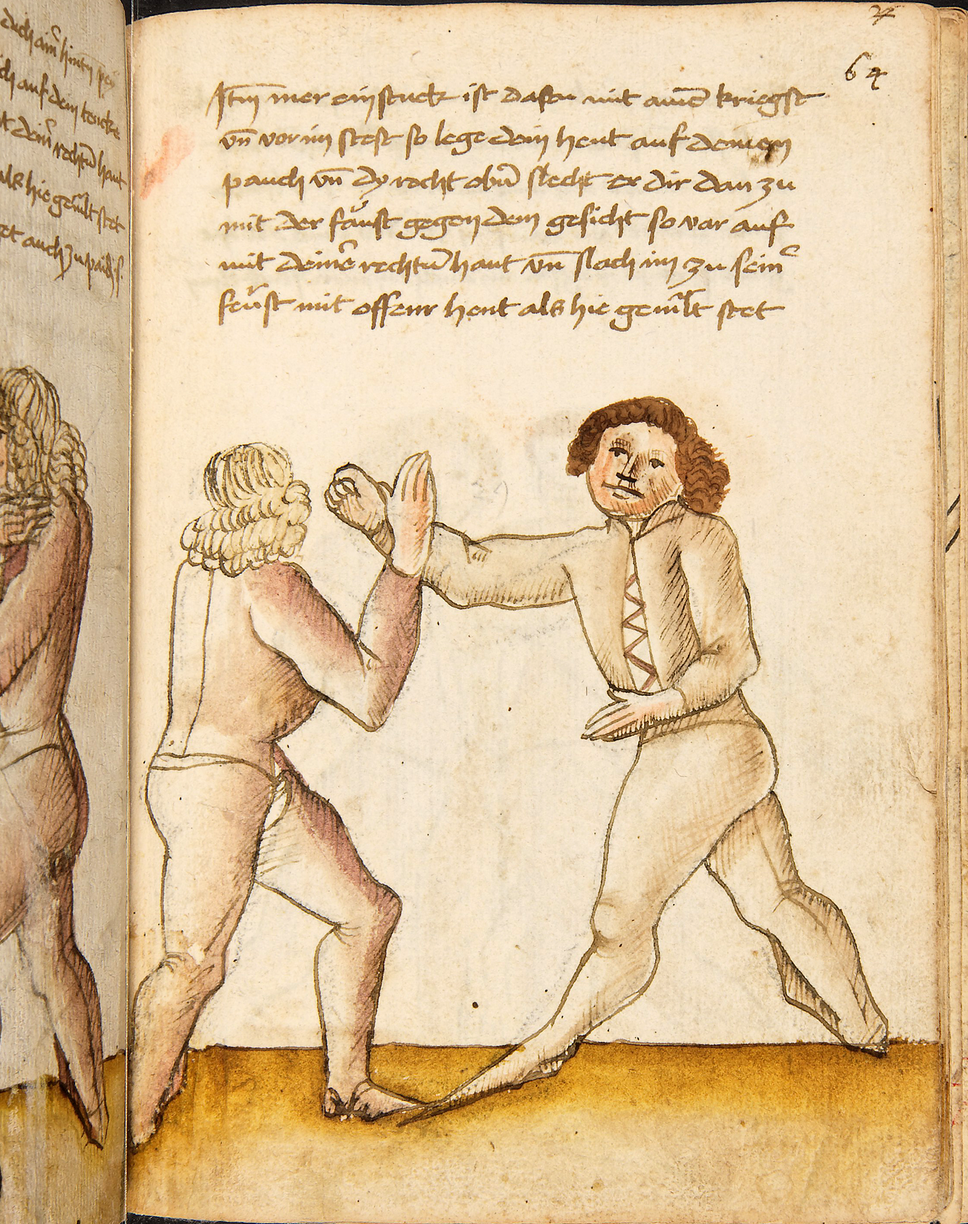
fȳst-gebēat, n.n: a blow with the fist. (FUST-yeh-BAY-aht / ˈfɝːst-jɛ-ˌbeːat)
beadu-cāf, adj: battle-prompt, ready for battle. (BEH-ah-duh-KAWF / ˈbɛa-dʌ-ˌkaːf)
sweord-wyrhta, m.n: a sword-wright, maker of swords, armourer. (SWEH-ord-WUR-h’ta / ˈswɛɔɹd-ˌwɝɹh-ta)
 Old English Wordhord