hearpe, f.n: a harp. (HEH-ar-puh / ˈhɛar-pə)
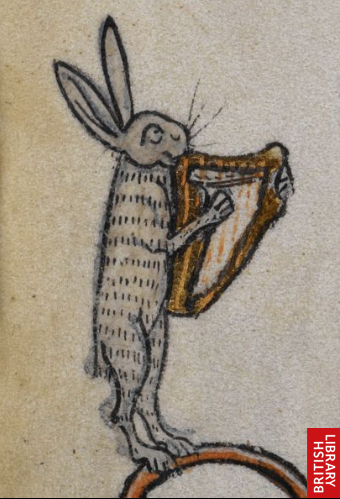
hearpe, f.n: a harp. (HEH-ar-puh / ˈhɛar-pə)
meter-cræft, m.n: the art of making poetry or verses. (MEH-ter-KRAFT / ˈmɛ-tɛr-ˌkræft)
drēam-cræft, m.n: music (joy-craft). (DRAY-ahm-KRAFT / ˈdreːam-ˌkræft)
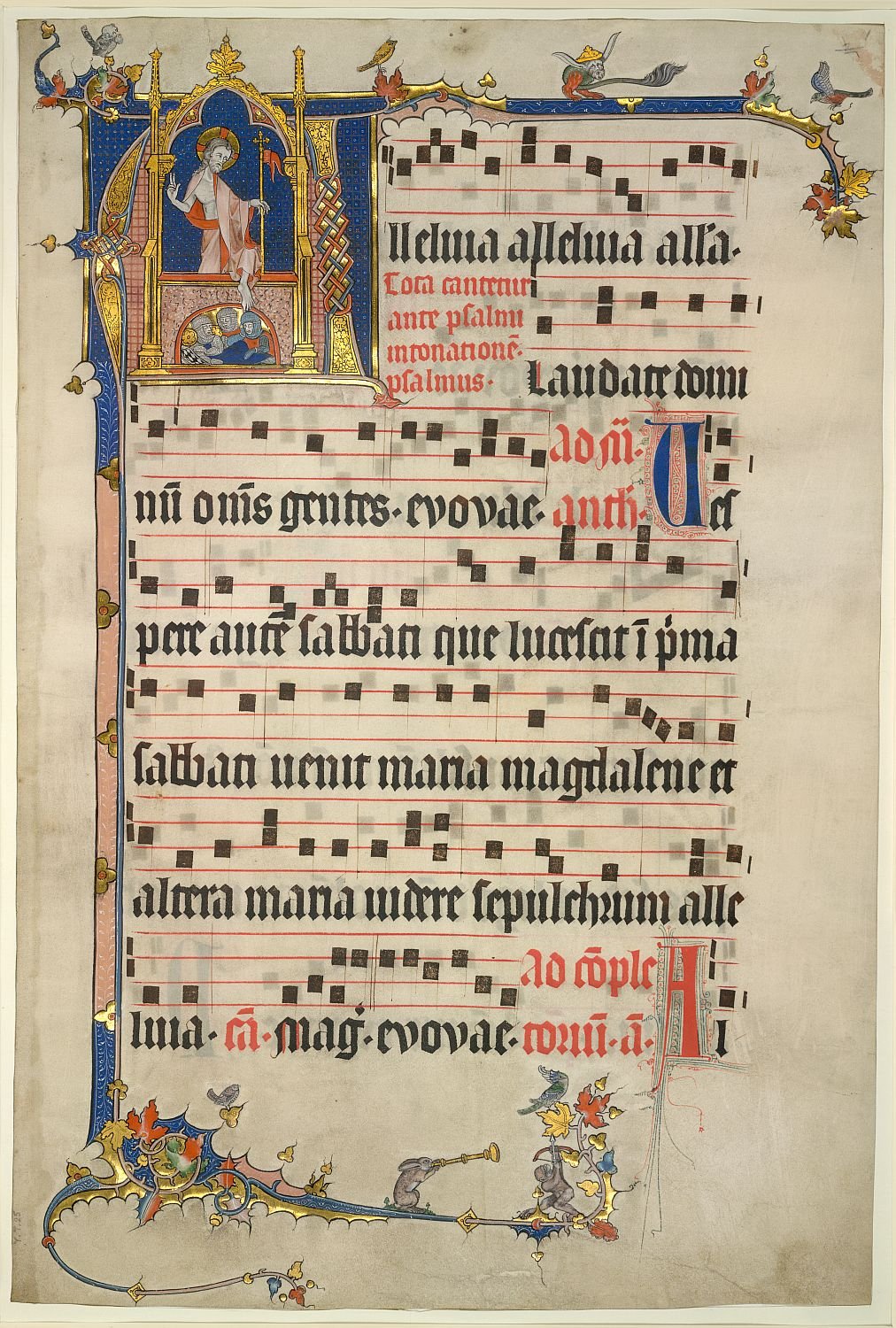
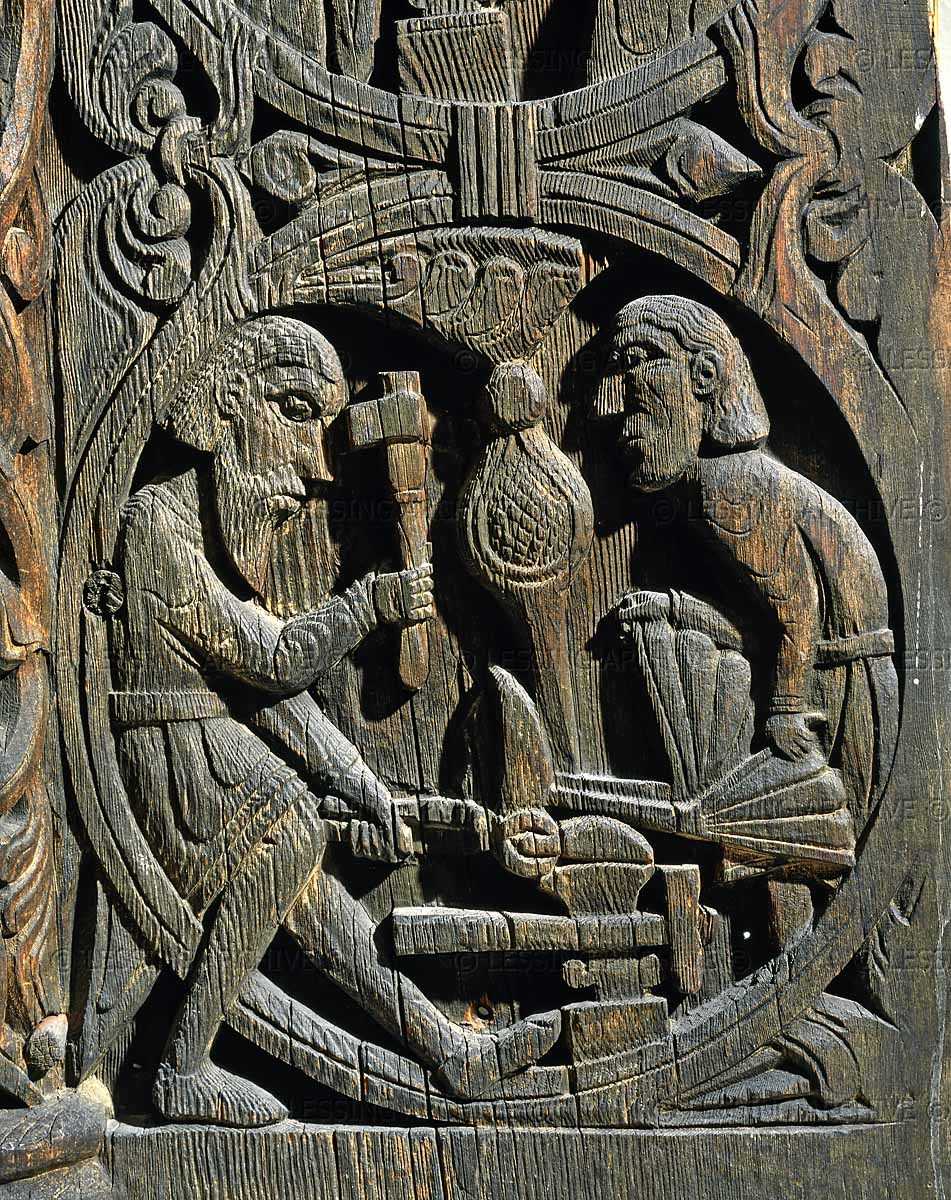
smiþ-cræft, m.n: ‘smith-craft’, the craft of working in metals or wood. (SMITH-KRAFT / ˈsmɪθ-ˌkræft)
māl-sweord, n.n: a sword with inlaid ornament. [MALL-SWEH-ord]
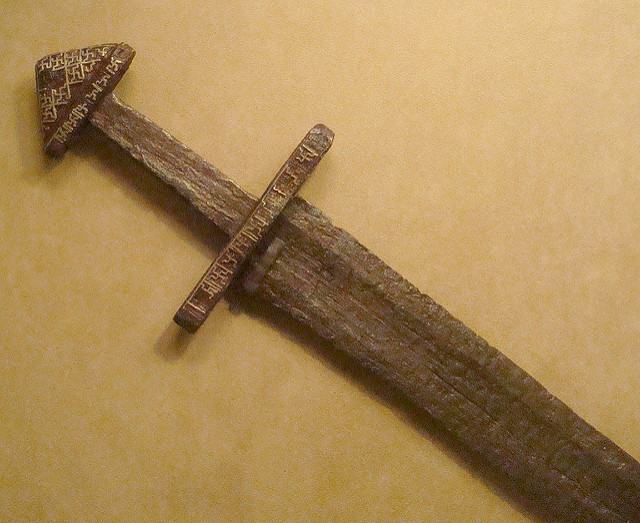
Viking sword, 800-900; pattern-welded iron inlaid with silver wire. Metropolitan Museum of Art. Photo by Neil R (@IslesPunkFan), 2010: CC BY-NC 2.0. [flickr.com]
singan, str.v: to sing, recite, relate musically or in verse; to compose verse, narrate; to sing about, recite or compose a poem about something. (SING-gahn / ˈsɪŋ-gan)
This week’s Wordhord Wednesday post is ‘the wonderful wave-roamer’. Read/hear it on Patreon.
ǣfen-scēop, m.n: an evening bard. [Æ-ven-SHAY-op]
saltian, wk.v: to dance. [SALT-ee-ahn]
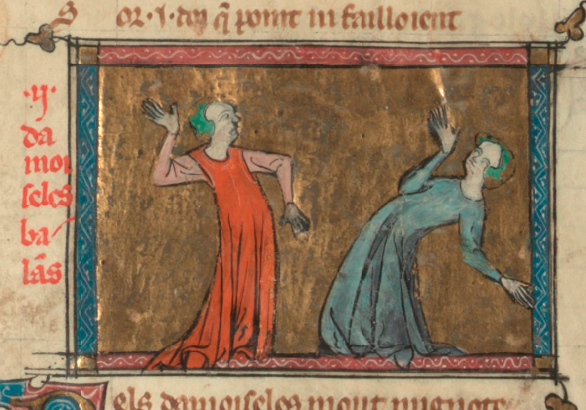
Le Roman de la Rose, by Guillaume de Lorris and Jean de Meung. France, 14th century. Bibliothèque nationale de France, Département des manuscrits, Français 19156, f. 6v. [gallica.bnf.fr]
ac-lǣc-cræft, m.n: an evil art. [AK-læk-cræft]
gomen-wudu, m.n: pleasure-wood, glee-wood, a musical instrument, harp. [GO-men-WOO-doo]
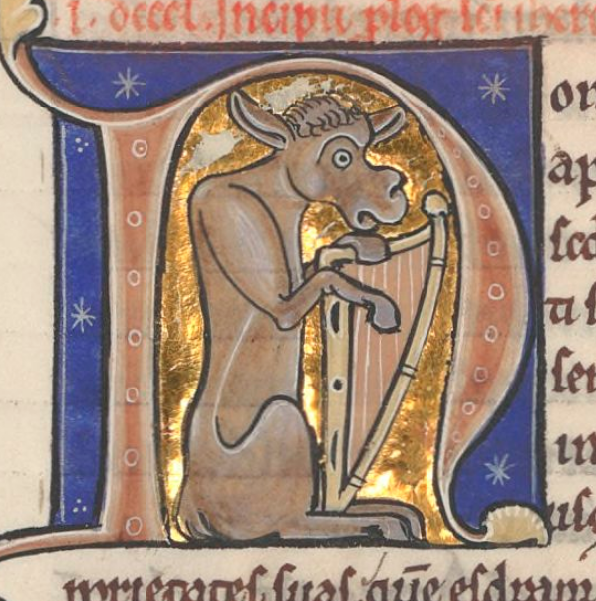
Harp-playing cow in the initial N. Complete Latin Bible, with the prologues of Saint Jerome. 12th century. Bibliothèque de l’Arsenal, MS 4, f. 155v. [gallica.bnf.fr]
 Old English Wordhord