gramatisc-cræft, m.n: the art of grammar. (GRAM-a-tish-KRAFT)
Category Archives: arts + crafts
mǣgwlitian
mǣgwlitian, wk.v: to form, shape. (MAEY-WLI-tee-ahn)
cnotta
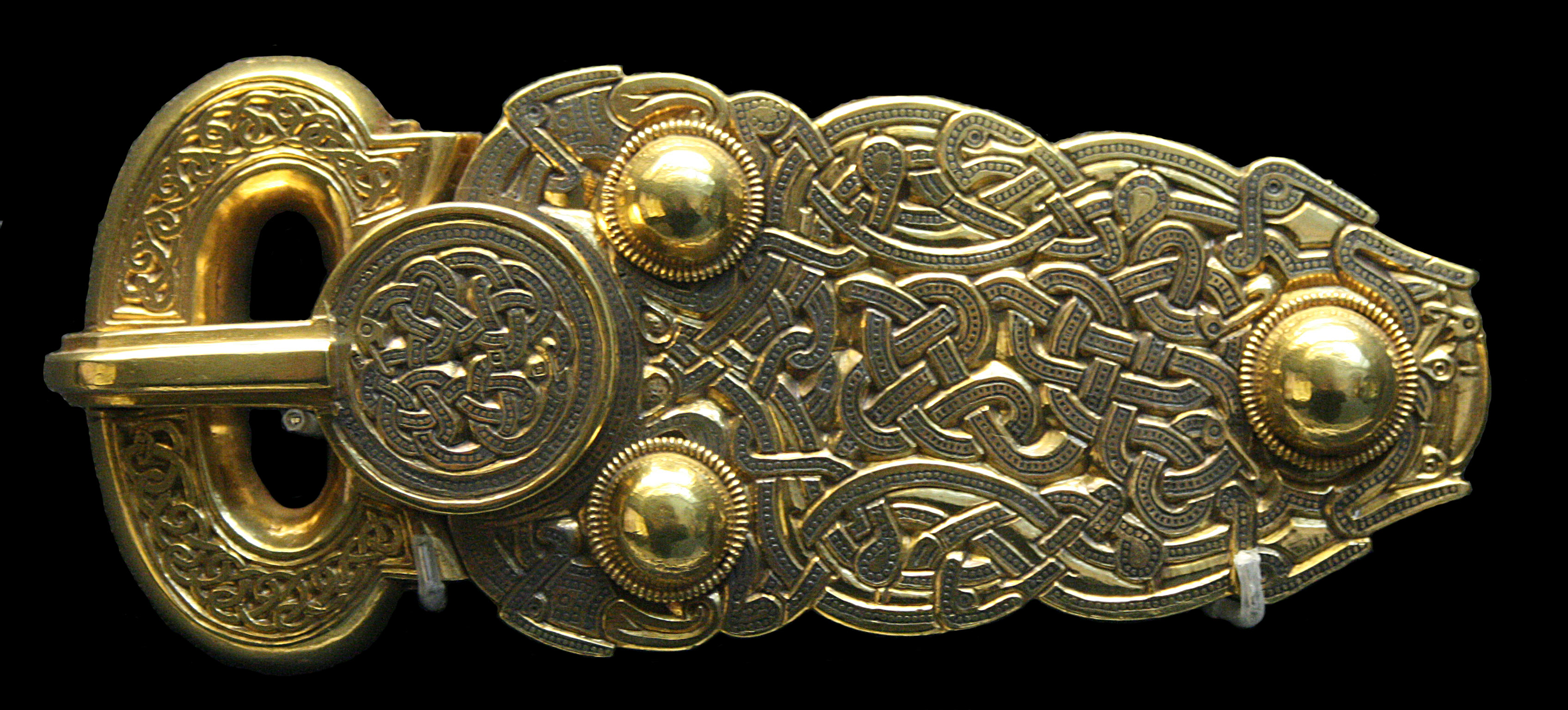
cnotta, m.n: a knot, fastening, knitting. (K’NOT-ta)
hearpe-streng
hearpe-streng, m.n: a harp-string. (HAY-ar-peh-STRENG)
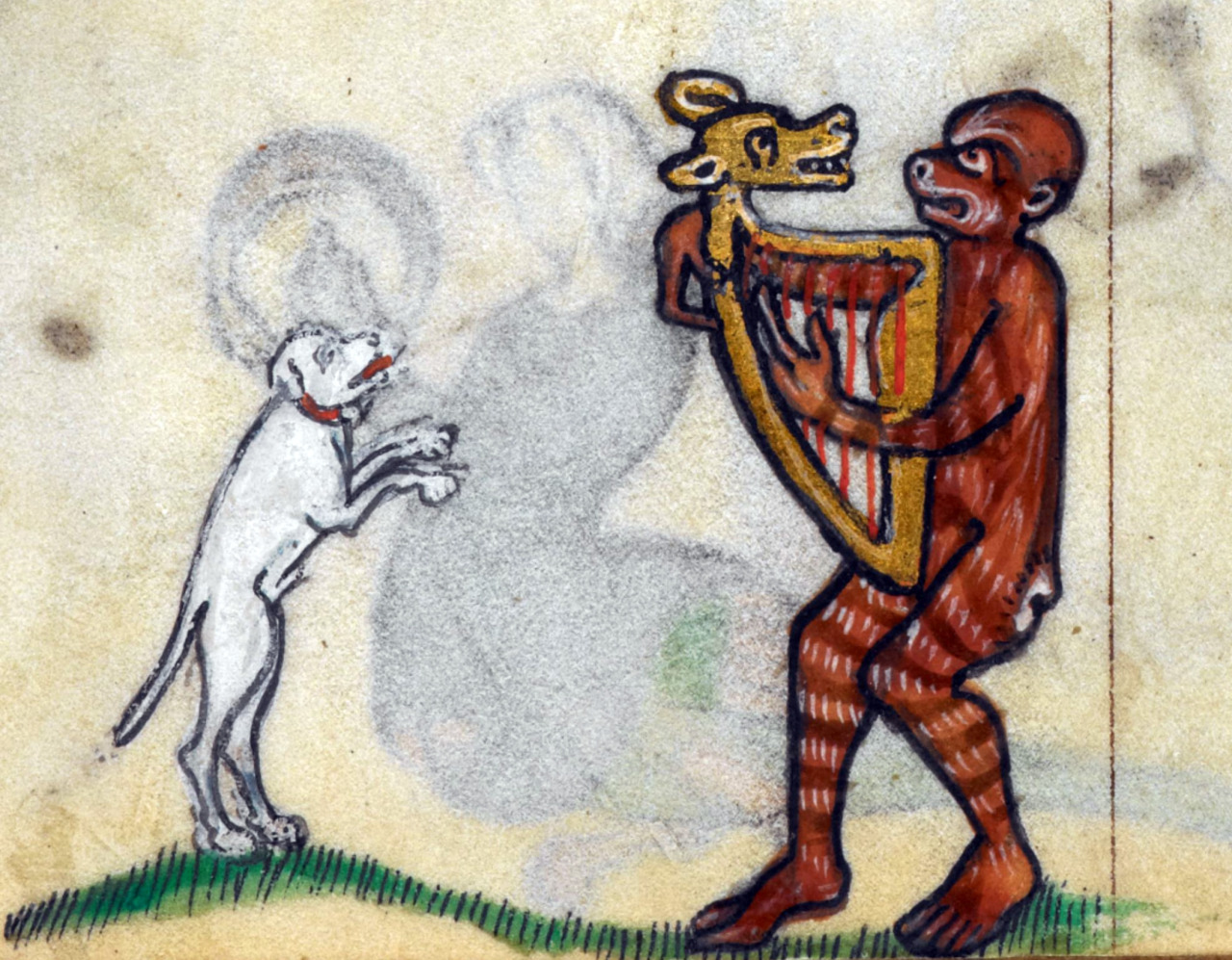
The Maastricht Hours. Netherlands (Liège), 1st quarter of the 14th century. British Library, Stowe MS 17, f. 245r. [bl.uk]
swinsung-cræft
swinsung-cræft, m.n: music. (SWIN-zung-KRAFT)
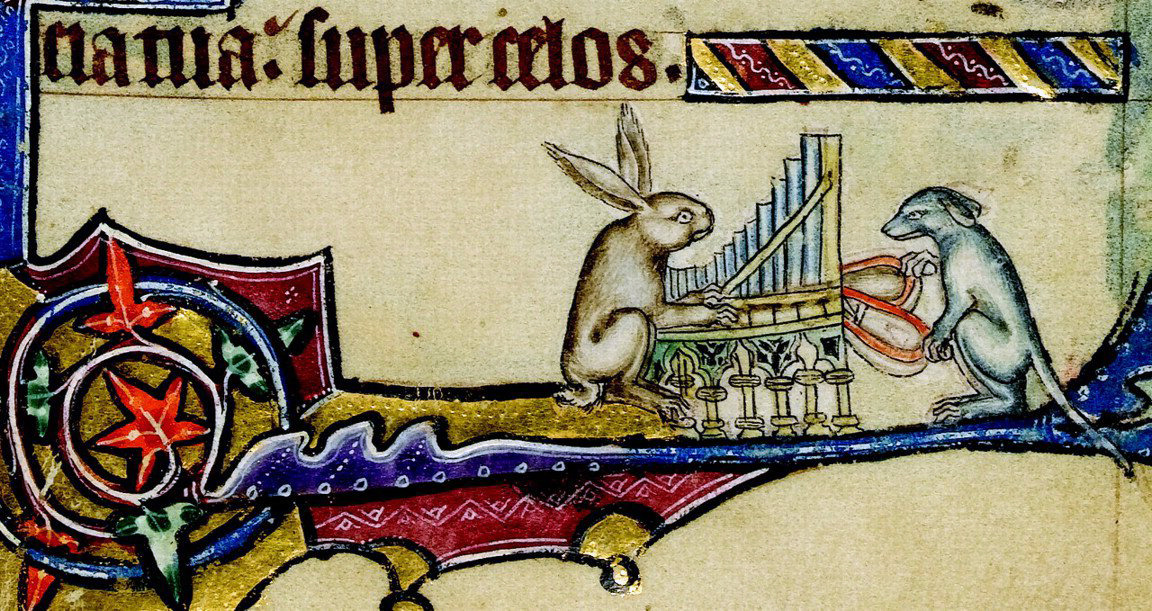
A rabbit plays the pipe-organ as a dog works the bellows. The Macclesfield Psalter. England (East Anglia), c. 1330-1340. Cambridge, Fitzwilliam Museum, MS 1-2005, f. 15r. [fitzwilliam.cam.ac.uk]
hweogul
hweogul, n.n: a wheel. [HWAY-oh-gull]
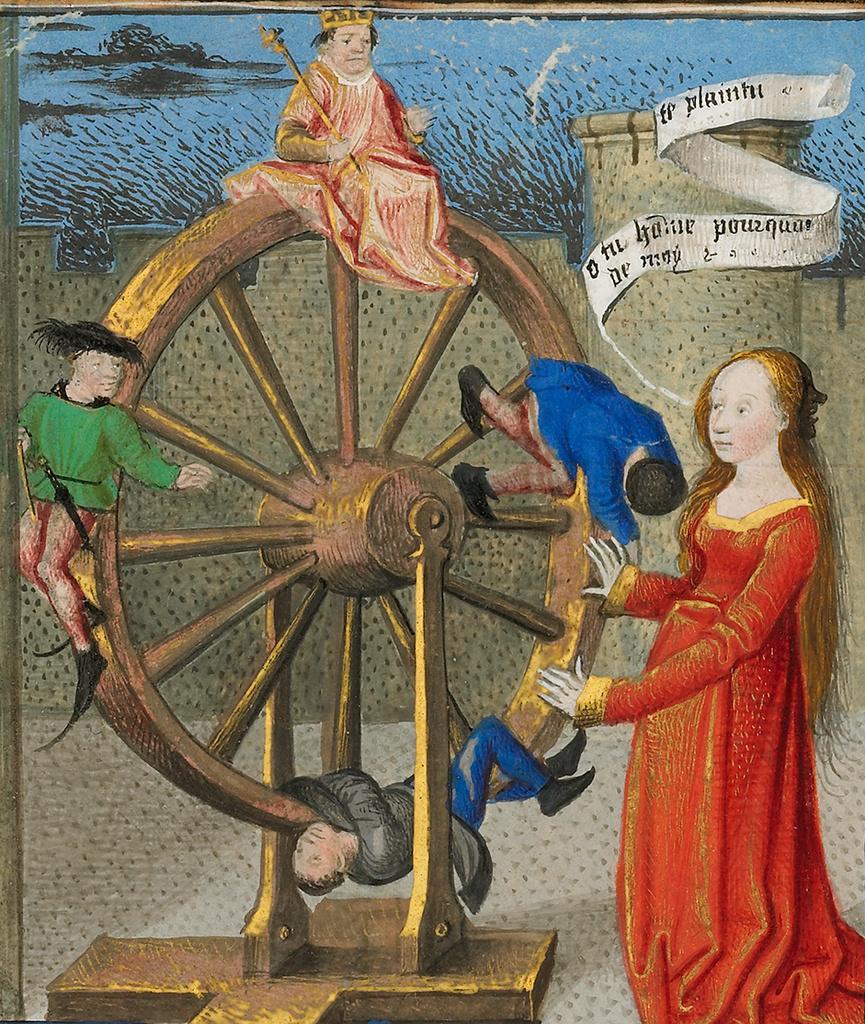
Fortune turns her wheel in Boethius’s Consolation de philosophie. Art by Coëtivy Master (Henri de Vulcop?). France (Paris), c. 1460-1470. Los Angeles, The J. Paul Getty Museum, MS. 42, fol. 1v. [getty.edu]
weorold-cræft
weorold-cræft, m.n: secular (non-religious) craft or art (world-craft). (WEH-oh-rold-KRAFT / ˈwɛɔ-rɔld-ˌkræft)
firen-cræft
firen-cræft, m.n: a sinful craft, wickedness. [FIR-en-KRÆFT]
gliw-bēam
gliw-bēam, m.n: musical instrument (‘glee-wood’), possibly a harp, drum, timbrel, or tambourine. (GLEE-ew-BAY-ahm / ˈgliːw-ˌbeːam)
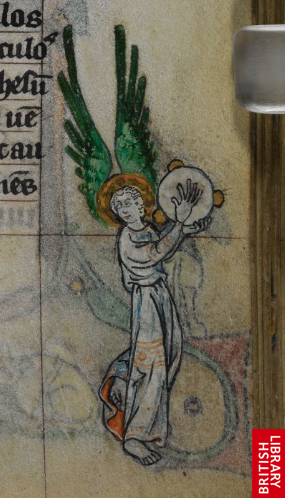
chor-glēow
chor-glēow, n.n: a musical dance, dance. [KHOR-GLAY-oh]
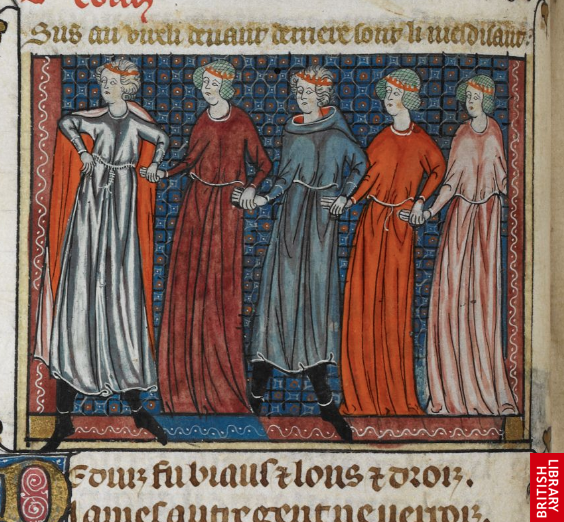
Roman de la Rose, by Guillaume de Lorris and Jean de Meun. France (Paris), c. 1320-c. 1340. British Library, Royal MS 19 B XIII, f. 10v. [bl.uk]
 Old English Wordhord
![[commons.wikimedia.org]](https://commons.wikimedia.org/wiki/File:Belt_buckle.jpg)